Registering a WATV Bought From a Washington Dealer
One of the most exciting days is bringing home a brand-new or new-to-you WATV from a Washington dealer, but that initial excitement can quickly turn to a frustrating bureaucratic headache when you realize the registration process isn't always as simple as driving off the lot. Navigating the paperwork, understanding state requirements, and ensuring you're legal to ride can feel overwhelming. This guide is here to demystify the entire process, walking you through every step of registering a Washington All-Terrain Vehicle (WATV) that you've purchased from a licensed dealer in Washington State, so you can focus on hitting the trails.
Why a Dealer Purchase Changes the Registration Process
Buying your WATV from a licensed dealer in Washington State actually simplifies a good chunk of the registration process, believe it or not. While it might still feel like a mountain of paperwork, dealers are typically well-versed in state regulations and often handle many of the initial steps for you, which is a significant difference compared to purchasing a machine from a private seller. They act as an intermediary with the Department of Licensing, ensuring certain forms are completed and taxes are collected upfront.
The Dealer's Role in Paperwork Submission
When you buy a WATV from a dealer, they usually take on the responsibility of preparing and submitting several key documents to the state on your behalf. This includes the application for your vehicle title and often the initial registration forms. Think of it like buying a new car; the dealership handles the titling and registration paperwork, and often you simply receive your plates or decals in the mail a few weeks later. For WATVs, while you'll still need to follow up on some aspects, the heavy lifting of ensuring correct forms and proper submission falls to the dealer for the initial steps. They typically collect sales tax at the point of sale, preventing you from having to pay a separate use tax later. This can save you a trip to the Department of Licensing (DOL) office just to submit these foundational pieces of paperwork, which is a common task when buying from a neighbor.
Temporary Permits and When You Get Them
Another significant advantage of purchasing your WATV from a Washington dealer is the likelihood of receiving a temporary permit. Many dealers issue these permits right at the time of sale, allowing you to legally transport and even ride your new machine while the official registration and titling process is underway. These temporary permits usually have a limited validity period, often around 60 days, giving the Department of Licensing time to process your permanent registration and mail out your decals and metal tag. It's crucial to understand that a dealer-issued temporary permit typically restricts your riding to off-road trails and designated areas; it does not grant you permission to ride on public roads, even if you eventually plan to get on-road tabs. Always check the specific conditions printed on your temporary permit to avoid any misunderstandings or potential citations. This temporary solution is fantastic for getting out and enjoying your machine sooner rather than waiting for all the official paperwork to clear.
Essential Paperwork from Your Washington Dealer
Even though the dealer handles a lot, it's absolutely vital for you to understand what specific paperwork you should receive from them. These documents are your proof of purchase, ownership, and tax payment, and you'll need them for your records and any future interactions with the Department of Licensing. Don't leave the dealership without ensuring you have all these in hand.
The Manufacturer's Statement of Origin MSO/MCO
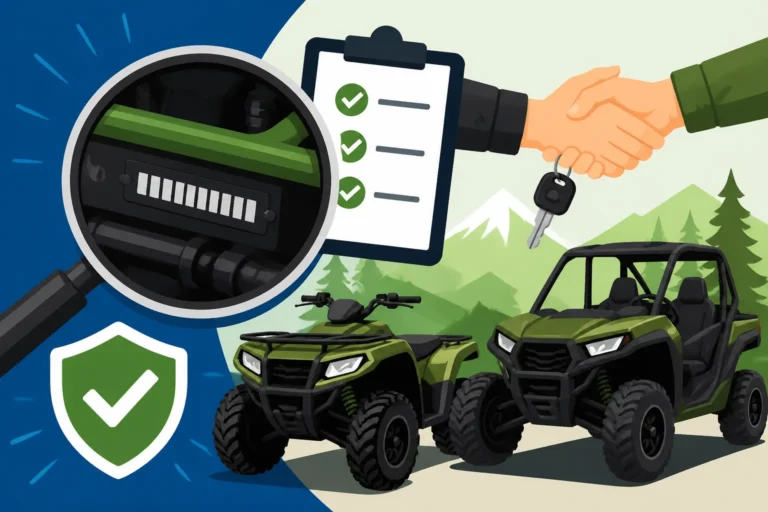
The Manufacturer's Statement of Origin (MSO), sometimes called a Manufacturer's Certificate of Origin (MCO), is essentially the birth certificate for your new WATV. This is the document that establishes the machine's initial ownership from the manufacturer and tracks it through the distribution chain to the first retail purchaser – you. When you buy a brand-new WATV, the dealer will provide you with the MSO, which will then be "assigned" to you. This assignment legally transfers ownership from the dealer to you. It's paramount that this document is correctly filled out, showing your name as the purchaser and the full Vehicle Identification Number (VIN) of your machine. Without a properly assigned MSO, you won't be able to get a title in your name, which is a prerequisite for registration. Make sure to double-check all details on the MSO before you leave the dealership, as any errors can cause significant delays down the road when you try to complete the [Titling a WATV in Washington] process.
Bill of Sale and Purchase Agreement
You'll definitely receive a Bill of Sale or a comprehensive Purchase Agreement from your dealer. This document serves as your official receipt and a legal record of the transaction. It will clearly list the WATV's make, model, year, and VIN, along with the agreed-upon purchase price, any trade-in value, and a breakdown of all associated fees and taxes. This agreement is crucial for proving your purchase, especially if there are any discrepancies or questions later. Unlike private sales where you might need to find a template yourself (resources like LawDepot offer general bill of sale templates for various transactions), the dealer will provide a professional, state-compliant document. Ensure that the document clearly states the amount of sales tax collected, as this is your proof that the tax has been handled. Keep this bill of sale in a safe place, as it's a fundamental piece of your ownership history.
Proof of Sales Tax Payment
One of the biggest conveniences of buying from a dealer is that they are responsible for collecting and remitting sales tax to the state on your behalf. This means you don't have to worry about calculating or paying a separate "use tax" when you go to register, which is typically the case with private party sales. Your Bill of Sale or Purchase Agreement will almost always show the amount of sales tax collected. This document acts as your proof that you've fulfilled your tax obligation. If for some reason the sales tax isn't clearly itemized or included, you'll want to clarify this with the dealer before finalizing the purchase. Having this documentation simplifies the registration process at the Department of Licensing, as they can clearly see the tax has been paid. For general information on tax, you can refer to [Washington ATV Sales Tax Rate].
What You Need to Do After the Dealer's Part
While your Washington dealer takes care of many initial steps, your involvement isn't over once you drive off the lot. There are still crucial actions you need to take to ensure your WATV is fully titled and registered in your name, allowing you to ride legally and without worry.
Titling Your WATV in Washington
Even though a WATV is primarily an off-road machine, Washington State requires it to be titled. The title serves as the official legal document proving ownership. The dealer will typically initiate the titling process by sending the MSO and an application to the Department of Licensing. However, it's ultimately your responsibility to ensure the title is eventually issued in your name. You'll likely receive the actual title document in the mail directly from the Department of Licensing once it's processed. This can take several weeks. If you haven't received your title within a reasonable timeframe (e.g., 6-8 weeks), it's a good idea to follow up with your local licensing office. The title document is different from your registration card, and both are important. For more details on the process, you can refer to [Titling a WATV in Washington].
Applying for Washington ORV Tabs
Once the title process is underway, or sometimes concurrently, you'll need to ensure your WATV receives its annual Off-Road Vehicle (ORV) tabs. These consist of adhesive decals that are affixed to your machine and a small metal tag. The dealer often includes the initial off-road tab fees in the purchase price and handles the application as part of the titling paperwork. However, it's important to confirm this with your dealer. If they don't, or if you're looking to add on-road tabs, you'll need to visit a vehicle licensing office or work with a licensing subagent.
Washington has two types of tabs you might consider:
- Off-Road Tab: This is the basic requirement for riding on most public off-road trails and designated areas. It's an annual registration. You can learn more about its specific requirements and benefits in [Washington's Off-Road Tab Explained].
- On-Road Tab: If you plan to ride your WATV on approved public roads, you'll need to add this optional tab on top of your off-road registration. This comes with additional requirements, including a safety inspection. More details can be found in [Washington's On-Road Tab Explained].
The metal tag is a permanent fixture that you attach to your WATV, usually on the rear. While the adhesive decals are renewed annually, the metal tag itself generally lasts for seven years. You'll receive this along with your initial registration. Information on the cost can be found at [Washington WATV Metal Tag Cost]. Make sure you understand the requirements for [Washington WATV Registration Paperwork] so you have everything ready.
Understanding the Road Use Declaration (If Applicable)
If you have decided to add the on-road tab to your WATV, there's another crucial step you need to complete: the Washington Road Use Declaration. This isn't something the dealer typically handles for you, as it requires your personal declaration and commitment to road safety. This form is a declaration that your WATV meets specific equipment and safety standards to be legally operated on approved public roads. You'll sign this form, essentially attesting that your machine has things like turn signals, mirrors, a horn, and other required safety equipment. Furthermore, signing the Road Use Declaration commits you to getting a safety inspection for your WATV. This inspection ensures your machine is truly road-worthy before you take it onto public streets. You can find detailed information about this form and its requirements in [The Washington Road Use Declaration]. Failing to complete this, or signing it without your machine meeting the criteria, could lead to legal issues if you're caught riding on public roads.
Costs and Common Pitfalls to Avoid
While buying from a dealer streamlines the process, there are still costs involved and potential hurdles to be aware of. Understanding these can help you budget accurately and prevent frustrating delays in getting your WATV fully registered.
Breaking Down the Costs
Even after you've paid the purchase price to the dealer, there are still several fees associated with titling and registering your WATV in Washington:
- Titling Fees: There's a fee to process and issue your certificate of title.
- Registration Fees (Off-Road Tab): This is the annual fee for the off-road decals that allow you to ride on designated trails.
- On-Road Tab Fees (Optional): If you opt for road use, there's an additional annual fee for this tab.
- Metal Tag Fee: The initial metal tag has a small one-time fee, though it's typically replaced only every seven years.
- Sales Tax: As mentioned, the dealer collects this at the point of sale, so while it's a cost, it's typically handled upfront and not a separate step for you later. It's a significant portion of your initial outlay.
- Safety Inspection Fee (If Applicable): If you're getting on-road tabs, you'll pay a fee for the required safety inspection.
It's a good idea to ask your dealer for a clear breakdown of all these fees, especially those they are handling for you, so you know exactly what to expect. For a broader overview of the expenses, check out [Washington WATV Registration Cost].
Missing Paperwork and Delays
One of the most common pitfalls is incomplete or incorrect paperwork. Even with a dealer's help, errors can occur. Make sure you keep all original documents, such as the MSO and Bill of Sale, in a secure place. If any information is missing or incorrect on these foundational documents, it can significantly delay your titling and registration. For example, an MSO with an incorrect VIN or an improperly assigned ownership can halt the entire process. Similarly, if the sales tax wasn't clearly documented as paid, you might face questions from the Department of Licensing. Don't be afraid to meticulously review every document provided by the dealer. While resources like LawDepot are helpful for general legal forms, for specific WATV paperwork from a dealer, rely on their official documents and verify accuracy.
The 15-Day Registration Deadline
Washington State law is quite clear: you have a limited window to register your newly purchased WATV. You generally have 15 days from the date of purchase (as indicated on your Bill of Sale) to ensure your machine is properly registered. This deadline applies whether you bought from a dealer or a private party. While your dealer might get the ball rolling, you are ultimately responsible for ensuring the full registration process is completed within this timeframe. Missing this deadline can result in penalties, which can be an additional, avoidable cost. So, even with a temporary permit, don't sit on your hands! Promptly follow up on any steps the dealer indicated you needed to complete. For further details on this crucial timeline, consult [Fifteen Days From Purchase in Washington].
Road Use Considerations for Your New WATV
If your plan is to eventually ride your WATV on approved public roads in Washington, there are additional requirements and considerations you absolutely must be aware of. This isn't as simple as just getting an on-road tab; your machine needs to be properly equipped and inspected, and you need to understand where you can legally ride.
The Safety Inspection Requirement
Before your WATV can be granted those coveted on-road tabs, it must pass a safety inspection. This is a non-negotiable step designed to ensure your machine is equipped with the necessary safety features to operate alongside other vehicles on public roadways. The inspection typically checks for things like functional headlights, taillights, brake lights, turn signals, mirrors, a horn, and proper tires. It's not a full mechanical inspection like for a car, but it confirms the presence and functionality of specific road-legal equipment. You'll need to take your WATV to an authorized inspection station or a qualified professional. Dealers often have relationships with such inspectors, or can even perform the inspection themselves if they are certified. Keep in mind there's a fee for this inspection, which is separate from your registration costs. To get a better idea of what to expect regarding the cost, check out [Washington WATV Safety Inspection Cost].
Required Equipment for Road Use
Simply put, a standard off-road WATV is not ready for the road. To get those on-road tabs and pass the safety inspection, your machine must be outfitted with specific equipment. This includes:
- Headlights and Taillights: Must be fully functional and meet brightness standards.
- Brake Lights: Clearly visible when the brakes are applied.
- Turn Signals: Front and rear, amber in color, and clearly visible.
- Mirrors: At least one, allowing a clear view of the rear.
- Horn: An audible warning device.
- Muffler: Must meet specific sound limits.
- Spark Arrester: Required for all ORVs on public lands, including roads.
- Windshield or Eye Protection: You'll need one or the other.
- Seat Belts (for utility vehicles): If your machine has seating designed for belts, they must be present and functional.
These requirements ensure your safety and the safety of others when sharing the road. It's a good idea to review [Washington WATV Road Requirements] well in advance so you can make any necessary modifications before your inspection. Many dealers offer packages or can help you outfit your new WATV to meet these standards.
Navigating Open Roads and Counties
Even after your WATV is equipped, inspected, and sports both off-road and on-road tabs, you cannot simply ride on any public road you choose. Washington State law for WATVs on roads is very specific and localized. Counties and cities have the authority to "opt-in" and designate specific roads as open for WATV use. This means a road might be open in one county but closed in an adjacent one. Furthermore, there are speed limits and highway restrictions. Generally, WATVs are restricted to roads with a posted speed limit of 35 mph or less, unless a higher speed road is specifically designated for crossing purposes. It's absolutely critical to research and understand the local ordinances for any area you plan to ride in. Many counties publish lists or maps of their approved WATV roads. Riding on a closed road, even with all the proper equipment and tabs, can result in a significant citation. Always check the official county or city resources. For more detailed information on where you can and cannot ride, see [Washington Counties That Allow WATVs on Roads].
Comparison: Dealer Purchase vs. Private Sale Registration Steps
Understanding the differences between buying from a dealer and a private party can really highlight the advantages a dealer offers in terms of initial registration. Here's a quick overview:
| Feature | Dealer Purchase | Private Sale |
|---|---|---|
| Sales/Use Tax | Dealer collects sales tax at purchase. | Buyer pays use tax at time of registration. |
| Temporary Permit | Often issued by dealer, allowing immediate riding. | No temporary permit issued; must obtain a Washington Temporary ORV Use Permit. |
| MSO/Title Application | Dealer handles initial MSO assignment & title application. | Buyer responsible for getting MSO/title application from seller (if new), or existing title signed over. |
| Bill of Sale | Dealer provides official Purchase Agreement. | Buyer and seller create Bill of Sale (e.g., using a LawDepot template). |
| Paperwork Submission | Dealer typically submits initial paperwork to DOL. | Buyer submits all paperwork to DOL. |
| 15-Day Deadline | Still applies for buyer's follow-up actions. | Buyer responsible for full registration within 15 days. |
This table illustrates how a dealer takes much of the immediate administrative burden off your shoulders, particularly regarding initial tax collection and submission of core titling documents.
Disclaimer
This article is for general informational purposes only and does not constitute professional advice. Laws, prices and regulations vary by location and change over time. Consult a qualified professional for guidance on your specific situation.