Registering an Inherited Machine in Washington
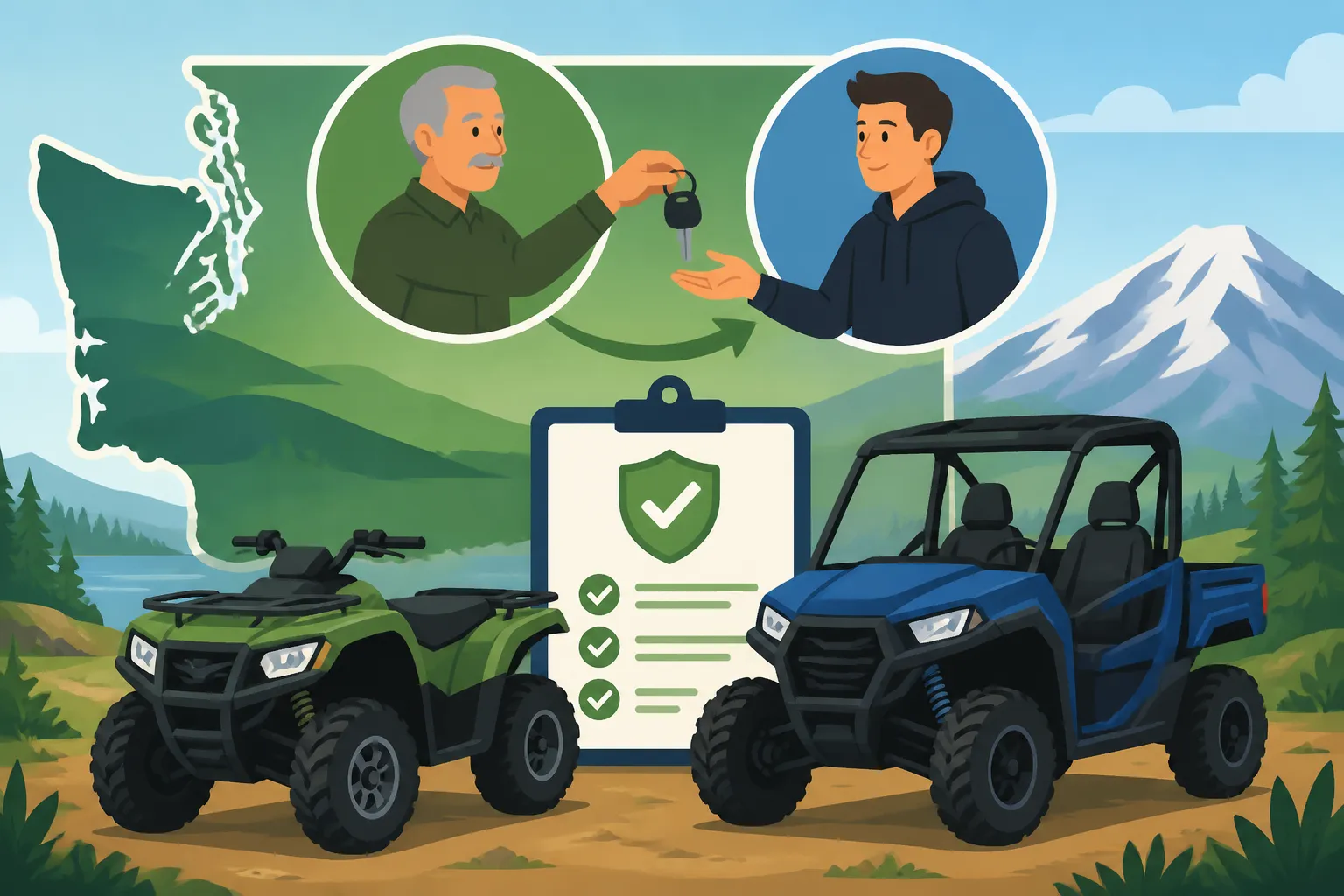
Inheriting an off-road machine, whether it’s a rugged ATV or a versatile side-by-side, can bring a mix of emotions. There’s the bittersweet connection to a loved one, perhaps memories of past adventures, but then the reality sets in: you have to figure out how to make it legally yours and get it ready for Washington's trails. This guide is here to walk you through the often-confusing process of registering an inherited off-road vehicle (WATV) in Washington State, cutting through the red tape so you can focus on the ride.
Understanding the Initial Hurdle: Getting the Title in Your Name
One of the biggest initial hurdles when you inherit a WATV is simply getting the title transferred into your name. Washington State, like many places, is pretty particular about who legally owns a vehicle, and that all starts with the title. Until the title reflects your ownership, you can't really do anything else, like getting those all-important tabs. It can feel like a bureaucratic maze, especially when you're already dealing with personal matters, but breaking it down step-by-step makes it manageable.
The Importance of a Clear Title
Think of the title as the machine's birth certificate and deed rolled into one. It’s the definitive proof of who legally owns that ATV or UTV. Without a clear title in your name, you can’t register it, sell it, or even insure it properly. This is especially critical in Washington, where the Department of Licensing (DOL) needs to see an unbroken chain of ownership. If the previous owner is deceased, the chain is effectively broken until the estate formally transfers it to you. This can be a significant source of frustration for many, as they just want to ride, but the system demands proper documentation first. It's not just about proving you didn't steal it; it's about ensuring all past taxes and fees are settled and that future liability falls on the correct owner.
Navigating the Estate Process
The specific path you'll take to transfer the title often depends on how the deceased individual's estate is being handled. There are generally two main scenarios: probate and non-probate. Probate is the formal legal process where a court oversees the distribution of assets. If the estate is going through probate, you'll likely need a court order or letters testamentary/of administration naming you as the executor or heir, which then authorizes you to transfer the title. This process can be lengthy and require legal assistance.
However, many smaller estates, especially those primarily consisting of vehicles and personal property, might qualify for a simplified non-probate process, often involving an affidavit of heirship or a small estate affidavit. These are legal documents that declare who the rightful heirs are and allow for the transfer of assets without full court supervision. It's worth looking into your specific situation or consulting with an attorney if you're unsure which path applies. Registering an Inherited Machine in Washington often requires understanding these distinctions, and getting advice on the legal side can save you a lot of headaches down the road.
Required Documents for Title Transfer
Once you know the estate process, you'll need to gather the right documents for the DOL. At a minimum, you'll need the original Washington title (if one exists), a completed Affidavit of Inheritance/Lack of Probate for a Vehicle (this is a specific DOL form, often called Form TD-420-040), and a copy of the death certificate. If the machine was jointly owned and the surviving owner is still alive, the process is much simpler, usually just requiring the death certificate and the surviving owner to sign as the new sole owner.
If the estate went through probate, you'll need certified copies of the court orders appointing you as the personal representative or executor, along with the deceased owner's title. If the machine was owned out-of-state, the requirements might vary slightly, but the core principle remains: prove legal inheritance. This might feel like an overwhelming stack of paperwork, but each piece serves to clearly establish your right to ownership.
Gathering Your Paperwork: What Washington Demands
Once you've wrapped your head around the title transfer, the next step is to get all your ducks in a row concerning the specific paperwork Washington State demands. It's not just about proving you're the rightful owner; it's about making sure every box is checked for both the title transfer and the actual registration. This can be the part where people get tripped up, thinking they have everything, only to find they're missing one crucial form.
Proof of Inheritance: Affidavits and Court Orders
As we touched on, proving you're the rightful heir is paramount. For many, this will involve that special Washington DOL form, the Affidavit of Inheritance/Lack of Probate. This document is designed for situations where a formal probate hasn't occurred, and the vehicle's value falls under a certain threshold. It basically allows you to swear under penalty of perjury that you are the legal heir and there are no other claims to the vehicle. It's often where LawDepot can come in handy for creating supporting legal documents like general affidavits of heirship, which, while not a substitute for the DOL form, can help solidify your claim within the estate context. Remember, the DOL form itself needs to be filled out precisely.
If the estate did go through probate, your "proof of inheritance" will be those certified court documents. These show the court's official decree on who inherits what, and the DOL will accept them as irrefutable evidence. Always bring original certified copies, not just photocopies, to avoid delays. The DOL wants to ensure there’s no doubt about the legal transfer before they put your name on the title.
The Existing Title: If You Can Find It (and What If You Can't?)
Ideally, you'll have the original Washington title for the WATV. This piece of paper is gold. When you present it, along with your proof of inheritance, the DOL can process the transfer smoothly. You'll sign it as the new owner and they'll issue a new one reflecting your name. The problem, and a common one, arises when the original title is missing. Perhaps it was lost, misplaced, or simply never found after the passing of your loved one.
Don't panic if the title is missing. Washington has a process for this, but it adds an extra layer of complexity. You will likely need to apply for a "duplicate title" at the same time you're applying for the transfer. This often involves filling out a form called "Affidavit of Loss/Release of Interest" (Form TD-420-040, same form as the inheritance affidavit, but used for a different purpose) where you attest that the original title is lost. This can sometimes involve a waiting period or additional scrutiny, as the DOL needs to ensure no fraudulent activity is occurring. So, while you can proceed without it, finding that original title will definitely expedite things. Understanding [Do You Need a Title for a WATV in Washington?] is critical here, as the answer is almost always a resounding "yes" for proper registration.
Applying for a New Title
Beyond the proof of inheritance and the old title (or affidavit of loss), you'll fill out a Vehicle Certificate of Ownership Application (Form TD-442-001). This is the standard form for most title transactions in Washington. On this form, you'll provide your personal information as the new owner, details about the WATV, and indicate that this is a transfer due to inheritance. This is also where you'll declare the purchase price – or in the case of inheritance, typically a nominal value or fair market value for tax purposes, as you didn't "purchase" it in the traditional sense.
It's crucial to fill out this form accurately and completely to avoid any delays. Mistakes on this form are one of the most common reasons people get sent home from the DOL office to restart the process. Double-check everything, especially the Vehicle Identification Number (VIN) and your personal details. This form is the foundation upon which your new title and subsequent registration will be built. You can find more details on [Washington WATV Registration Paperwork] that often includes this application.
The Role of the Washington Department of Licensing (DOL)
The Washington Department of Licensing (DOL) is the central authority for all vehicle-related transactions, including your inherited WATV. They are the gatekeepers for titles and registrations, and understanding their role, where to find them, and what fees to expect is crucial for a smooth process. It's not always the quickest experience, but going prepared makes a world of difference.
Where to Go: Visiting a Local DOL Office or Subagent
You can't register an inherited WATV online due to the complexity of the title transfer and verification of inheritance documents. Your best bet is to visit a local DOL office or an authorized vehicle licensing subagent. These subagents are often private businesses authorized to perform DOL services, like licensing agencies you see in strip malls. They're usually less crowded than the main DOL offices, but they might charge a small service fee on top of the standard state fees.
Before you go, it's always a good idea to check their specific operating hours and whether you can make an appointment. Walking in prepared with all your forms filled out and documents in hand will greatly reduce your wait time and the chances of having to make a second trip. These locations are the front lines of [The Department of Licensing and Washington ORVs], and they process thousands of transactions daily.
Fees Associated with Title and Registration
Ah, fees. They're an unavoidable part of the process, and when registering an inherited WATV, you'll encounter a few. First, there's the title transfer fee, which is a flat rate charged each time ownership changes. Then there's the cost of the actual WATV registration. This is where you'll likely choose between the off-road tab, the on-road tab, or both, each with its own associated cost. The [Washington WATV Registration Cost] combines all these elements.
You'll also have a metal tag fee, which is a one-time cost for the physical metal tag that mounts to your machine. This tag is generally replaced only every seven years, so it's not an annual fee. Additionally, if you needed to apply for a duplicate title because the original was lost, there's usually a separate fee for that as well. While specific figures aren't quoted here, these fees are generally collected at the time of your visit and can be paid by cash, check, or often credit/debit card, though subagents might have specific card processing fees.
Understanding Use Tax on Inherited Machines
This is often where people get a surprise. Even though you didn't "buy" the machine, Washington State assesses a "use tax" on vehicles acquired in certain ways, and this can include inherited items if they weren't previously taxed. The use tax is essentially the state sales tax applied when no sales tax was paid at the time of acquisition. The amount is usually based on the fair market value of the machine at the time of inheritance. You'll typically declare this value when applying for the title, and the DOL will calculate the tax owed.
It’s an important point to clarify with the DOL or subagent, as many assume that because it was inherited, there's no tax implication. However, the state wants to ensure its revenue, regardless of how the property changes hands. This is a crucial element of [Washington Use Tax on a Private Sale], which, while typically for sales, can sometimes apply to transfers like inheritance depending on the specifics and prior taxation. Make sure to be prepared for this potential cost when you go to register.
Getting Your WATV Ready for the Trails and Roads
Once the title is firmly in your name, you're on the home stretch! Now it's about actually getting that WATV legally ready for its adventures, whether that's hitting the dirt trails or navigating approved county roads. This involves a few more steps, but they are generally straightforward once the ownership question is settled.
Safety Inspections: Is One Required for an Inherited Machine?
For many standard vehicles, an inherited machine doesn't automatically trigger a safety inspection requirement in Washington. However, if the inherited WATV is one that you intend to make street legal – meaning you want to add the on-road tab and ride on designated county roads – then yes, a specific safety inspection is required. This inspection confirms that the machine has all the necessary equipment, like turn signals, mirrors, and a horn, to safely operate on public roadways. This is a critical step for [Washington WATV Safety Inspection Cost] considerations.
If you only plan to use the WATV for off-road trails and never on pavement (other than crossing a road), then a safety inspection typically isn't needed for registration. It's a common misconception that all WATVs need an inspection, but it's specifically tied to on-road use. Always be clear about your intended use when speaking with the DOL.
Choosing Your Tabs: Off-Road, On-Road, or Both?
This is where you decide how you want to use your inherited machine. Washington offers two types of tabs for WATVs:
- The Off-Road Tab: This is the basic requirement for riding on authorized non-highway roads and trails across the state, including DNR lands and most designated ORV parks. It helps fund trail maintenance and access. [Washington Off-Road Tab Cost] covers the yearly fee for this.
- The On-Road Tab: This optional tab allows you to ride on approved county roads and city streets where local ordinances permit. To get this tab, your WATV must pass the aforementioned safety inspection and meet all equipment requirements for street-legal operation. This typically adds a modest fee on top of your off-road tab. You can find more details on [Washington On-Road Tab Cost].
You can choose to purchase just the off-road tab, or both tabs if you plan to utilize county roads. It’s important to note that if you opt for both, they typically expire on the same day, making renewal simpler.
Metal Tag and Decal Placement
Once your registration is complete and fees paid, you'll receive your registration certificate, new decals, and a metal tag. The metal tag is a small, durable plate that needs to be securely affixed to the rear of your WATV. It's designed to be permanent for seven years, identifying your machine. There are specific rules about where this tag mounts, usually in a clearly visible location on the rear.
The decals, which show your current year of registration and whether you have the off-road or on-road tab (or both), need to be placed on the WATV's fender, generally on the left side, where they are visible and won't easily be obscured by mud or gear. The DOL will usually provide instructions or diagrams for correct placement. It's a good practice to keep your registration certificate and proof of insurance (if riding on-road) physically with the machine whenever you ride, stored in a waterproof bag to protect it from the elements. [Carrying the Registration in the Machine] is a legal requirement.
Common Challenges and How to Overcome Them
Registering an inherited WATV can sometimes throw a few curveballs your way. It's rarely a perfectly smooth process, especially if the deceased owner's records weren't perfectly organized. Knowing what these common challenges are and how to approach them can save you a lot of stress and potential delays.
Missing Original Title
As mentioned earlier, a missing original title is one of the most frequent headaches. If you can't locate the physical title document, you'll need to apply for a duplicate title simultaneously with the ownership transfer. The key is to complete the "Affidavit of Loss/Release of Interest" (Form TD-420-040) accurately. You'll sign this form affirming that the original title is truly lost or destroyed.
Sometimes, the DOL may impose a waiting period or require additional verification to ensure the machine isn't stolen or that there aren't outstanding liens. If you have any old registration documents, photos of the VIN, or even maintenance records that clearly show the VIN and the previous owner's name, bring them along. While they might not be substitutes for the title, they can help establish a paper trail and reassure the DOL. Always be honest and thorough in your explanations.
Multiple Heirs
What happens if the WATV was inherited by more than one person, perhaps you and your siblings? This adds a layer of complexity. Generally, all named heirs will need to agree on who will be the registered owner, or if the machine will be sold and the proceeds divided. If one heir wants to keep the machine, the others might need to formally release their interest. This often involves a "Release of Interest" section on the title or a separate bill of sale from the other heirs to the one taking ownership.
If there’s an agreement to sell the WATV, the estate's executor or administrator will typically handle the sale, and a new bill of sale will be issued to the buyer. If you're the heir who wants to register it, make sure you have all other heirs' signatures on the necessary release forms, or a court order specifically awarding the WATV to you. Sometimes, LawDepot can be a helpful resource for drafting simple release of interest documents or bills of sale to formalize these agreements between multiple heirs, ensuring clear documentation for the DOL. Without clear documentation of who has relinquished their claim, the DOL won't proceed with putting just one name on the title.
Out-of-State Inheritance
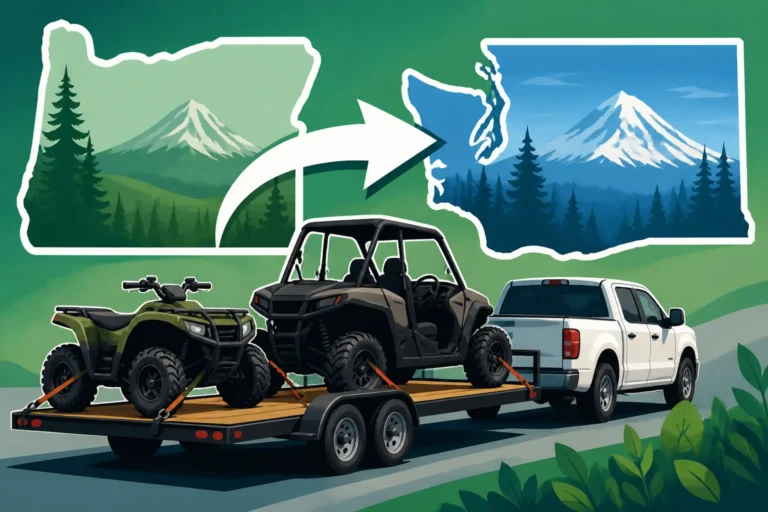
Bringing an inherited WATV into Washington from another state presents its own set of rules. First, you'll still need clear proof of inheritance according to the laws of the state where the deceased resided. This could be their state's version of a probate court order or an affidavit of heirship. You'll need to transfer the title into your name in that state first, if possible, before attempting to register it in Washington. This ensures you have a valid title from another state in your name.
Once you have an out-of-state title in your name, you'll apply for a Washington title and registration. The DOL will require the out-of-state title, your proof of identification, and potentially a physical inspection of the VIN to verify it matches the documents. You'll also likely pay Washington's use tax based on the fair market value. The process is similar to [Registering an Out-of-State Machine in Washington], but with the added layer of proving inheritance from another jurisdiction. Be prepared for potentially longer processing times as the DOL verifies the legitimacy of out-of-state documents.
Keeping Up with Your Registration Annually
Once you've navigated the initial title transfer and registration, you're free to enjoy your inherited WATV! But remember, registration isn't a one-and-done deal. Washington requires annual renewal to keep your machine legal for the trails and roads. Staying on top of this ensures uninterrupted riding pleasure and avoids unnecessary penalties.
Understanding Renewal Cycles
WATV registrations in Washington are generally renewed annually. The expiration date typically aligns with the anniversary of your initial registration. For example, if you registered the machine in June, your tabs will be due for renewal every June. The DOL usually sends out renewal notices by mail a few weeks before your tabs expire, which serves as a helpful reminder.
It’s crucial to pay attention to these notices. Missing your renewal date can lead to riding on expired tabs, which could result in fines if you're stopped by law enforcement. Unlike some states with grace periods, Washington expects you to be current. You can typically renew online, by mail, or in person at a DOL office or subagent, making it fairly convenient. This annual process is what [Washington WATV Registration Renewal] focuses on.
Costs of Annual Renewal
The cost of annual renewal primarily consists of the fees for your off-road tab, and if applicable, your on-road tab. These fees go towards funding trail maintenance, law enforcement, and infrastructure that benefits all WATV riders in the state. While specific amounts are not listed here, these are recurring costs that you should factor into your annual budgeting for machine ownership.
If your metal tag needs replacement (which, as discussed, is typically every seven years), there might be a small additional fee for that in the year it's due. Otherwise, it's primarily the tab fees. The good news is that these annual costs are generally predictable and much lower than the initial title transfer and registration fees.
What Happens If You Skip a Year
Skipping a year of WATV registration can lead to a few issues. First and foremost, riding with expired tabs is illegal. If you're caught, you could face a citation and a fine. These fines can quickly add up, making the cost of renewal seem minimal in comparison. Law enforcement officers, whether it's a local sheriff, state patrol, or a DNR ranger, regularly check for current registration decals at trailheads and during patrols.
Secondly, if your registration lapses for an extended period, you might incur additional late fees when you finally go to renew. While Washington doesn't typically require a full re-registration (including title verification) just for lapsed tabs, it's still an unnecessary expense and hassle. It's always best practice to keep your registration current, even if you plan a season of not riding. This ensures your legal right to ride whenever the mood strikes and keeps you compliant with state law. The consequences of neglecting this can be found in more detail under [Riding on Expired Tabs].
Disclaimer
This article is for general informational purposes only and does not constitute professional advice. Laws, prices and regulations vary by location and change over time. Consult a qualified professional for guidance on your specific situation.