Why the Tag Is Replaced Every Seven Years
It can be incredibly frustrating to keep track of all the different registration requirements and components for your Washington Wheeled All-Terrain Vehicle (WATV). One particular piece of the puzzle that often raises questions is the metal tag – specifically, why it needs to be replaced every seven years. This guide will thoroughly explain the purpose of this metal tag, the reasons behind its specific replacement cycle, and what you need to do when the time comes to get a new one.
Understanding Washington's WATV Registration System
Before we dive into the specifics of the metal tag, it's helpful to understand where it fits within Washington State's overall WATV registration framework. The state has a robust system designed to ensure all off-road vehicles are properly identified and that fees collected contribute directly to maintaining the trails we all love. It's not just about slapping a sticker on and going; there's a thought-out structure behind it.
What is a WATV in Washington?
First things first, let's clarify what we mean by WATV here in Washington. While many folks outside the state might casually refer to these machines as ATVs, side-by-sides, or UTVs, Washington's Department of Licensing (DOL) uses the term "Wheeled All-Terrain Vehicle" or WATV. This encompasses a broad range of off-road machines, including traditional ATVs (quads), side-by-sides, and sometimes even dirt bikes or certain utility vehicles, depending on their specifications and intended use. The critical distinction is that these machines are designed for off-road use, but some can also be made "street legal" with the proper additions and registration. Understanding [Why Washington Says WATV and Not ATV] helps in navigating the local lingo and rules.
When you go to register your machine, whether it's a nimble quad or a spacious side-by-side, you're entering this specific WATV classification. This classification determines which rules apply to your machine, from required equipment to where you can ride. It’s a comprehensive approach to managing the diverse world of off-road recreation.
The "Two-Tab" System
Washington utilizes what's commonly known as a "two-tab" system for WATV registration, though it's really more like two distinct components that often work in tandem. Every WATV owner must register for an off-road tab, which comes with an annual sticker and contributes to the state's nonhighway vehicle account, funding trail maintenance and development. This is the baseline registration for any off-road use.
However, if you want to legally operate your WATV on certain designated public roads and streets in Washington – which, let's be honest, many of us do for trail access or simply getting around a small town – you'll need to add an additional on-road tab. This is often referred to as the "street legal" component. This extra tab allows you to ride on roads where WATV use is permitted by local ordinances, provided your machine meets specific equipment requirements like turn signals, mirrors, and a horn. For a full breakdown, check out [Washington's Two-Tab System].
These two "tabs," or more accurately, registration components, are crucial because they dictate where and how you can ride. The off-road tab is universal for trail use, while the on-road tab opens up new possibilities for legal pavement travel. Both are distinct, but the metal tag ties into both, representing your overall machine registration.
Introducing the Metal Tag
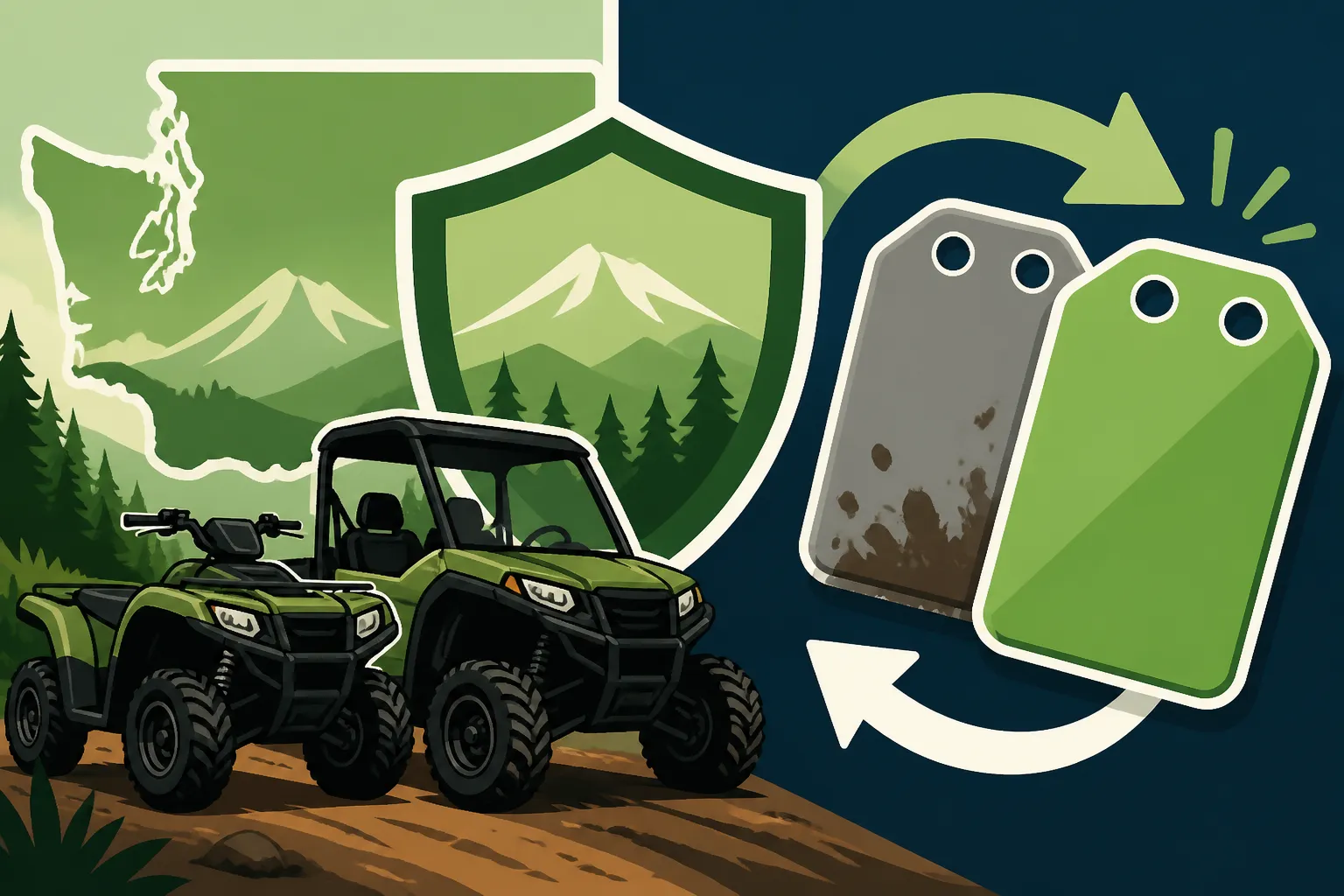
The Washington WATV metal tag is a permanent registration identifier that you bolt onto the front or rear of your machine, depending on its design. Unlike the annual decals that you receive with your off-road or on-road tab renewals, which are just stickers you apply to the machine itself, the metal tag is a physical, durable plate. It displays your WATV's unique registration number, issued by the Washington Department of Licensing (DOL).
This tag isn't just for show; it's a vital part of the registration process. It acts as the primary identification for your machine, much like a license plate on a car, but specific to off-road vehicles. It’s what law enforcement or land managers will look for to quickly verify that your machine is legally registered for use on public lands or approved roads. You can find more details on [Washington's Metal Tag Explained].
While the annual tabs change color and year, the number on your metal tag remains constant for its seven-year lifespan. This consistency helps in tracking and identifying your vehicle over time, regardless of how many times you renew your yearly tabs.
The Purpose and Function of the Metal Tag
The metal tag serves several critical functions beyond simply being a piece of required equipment. It's an integral part of Washington's system for managing off-road recreation, ensuring safety, accountability, and the sustainable funding of trail systems. It connects your machine to you and to the state's regulatory framework.
More Than Just a Number Plate
While it might resemble a miniature license plate, the WATV metal tag carries a specific weight within Washington's recreational vehicle laws. It’s not just a random string of numbers; it's a unique identifier directly linked to your machine's Vehicle Identification Number (VIN) and your ownership records with the Department of Licensing. This connection is vital for various administrative and enforcement purposes.
Think of it as the ultimate identifier for your WATV, providing a clear and visible sign of compliance. When you're out on the trails or navigating an approved county road, this tag quickly communicates to anyone, from a park ranger to a fellow rider, that your machine is properly documented and legal. It removes ambiguity and ensures that if there's ever a question about your machine's status, the tag provides the immediate answer.
Proof of Ownership and Registration
The metal tag, by displaying your WATV's registration number, serves as visible proof that your machine is registered with the state of Washington. This is crucial for verifying legal operation. When a law enforcement officer or land manager checks your vehicle, the tag is one of the first things they'll look for to confirm that it's not an unregistered or stolen machine. While you should always be [Carrying the Registration in the Machine] itself, the tag provides immediate visual confirmation.
Beyond simple registration, the tag is indirectly linked to your proof of ownership. To get a metal tag and register your WATV, you first need to [Titling a WATV in Washington] in your name. This ensures that the person registering the machine is, in fact, the legal owner. This linkage helps prevent theft and makes it more difficult for stolen machines to be registered or sold. If you’re ever selling your WATV, a clear title and current registration, evidenced by the tag, will make the process much smoother. When preparing documents like a bill of sale, ensuring all details match your official registration is vital, and resources like LawDepot can provide templates to make sure your documents are legally sound for a smooth transaction.
Ensuring Traceability and Accountability
One of the most important roles of the metal tag is to ensure traceability and accountability for WATV operators. In the event of an accident, a violation of riding rules, or if a machine is reported stolen, the unique registration number on the tag allows authorities to quickly trace the vehicle back to its registered owner. This system helps maintain order on public lands and ensures that riders adhere to regulations designed for safety and environmental protection.
Without such a durable, long-term identifier, it would be far more challenging to track machines, especially considering the varied environments in which they operate. The tag helps the state monitor WATV use and enforce rules, ensuring that off-road recreation remains a positive experience for everyone. It also helps in situations where a machine might be left abandoned or if a rider needs assistance; the tag provides a rapid way to get information.
Why Seven Years? Deciphering the Replacement Cycle
Now for the core question: why exactly does Washington's metal tag need to be replaced every seven years? This isn't an arbitrary number; it's a carefully considered duration that balances practical concerns with administrative efficiency.
Wear and Tear: The Real-World Impact
Let's be realistic – WATVs are not pampered garage queens. They are built for rugged environments, and they see a lot of action. Rain, mud, dust, rocks, sun, snow, and even the occasional branch strike all take their toll. A metal tag bolted onto the front or rear of a machine is constantly exposed to these elements. Over time, the paint can chip, the reflective coating can fade, and the numbers can become obscured.
Seven years is a reasonable period over which a metal tag can be expected to endure significant exposure and potential damage. While some tags might look perfectly fine after seven years, many will show signs of wear that could compromise their readability. An unreadable or heavily damaged tag defeats its primary purpose: clear identification. The state aims for a cycle that ensures the vast majority of tags remain legible for enforcement purposes throughout their lifespan.
Durability of Materials and Environmental Factors
The metal tags are designed to be durable, but they aren't indestructible. They're typically made of aluminum, which is lightweight and resistant to rust, but still susceptible to physical damage and fading. Consider the harsh conditions: freezing temperatures followed by intense heat, constant vibration, impacts from debris, and corrosive elements like saltwater spray if you ride near the coast.
Over a seven-year period, these environmental factors can degrade the tag's material and its reflective properties. The goal is to ensure that the tag remains effective as a visual identifier in various lighting conditions, including at night with headlights. Beyond just readability, the structural integrity of the tag can also be compromised, leading to it potentially bending, cracking, or even falling off entirely. This seven-year window provides a balance between material longevity and the practical realities of off-road vehicle use in the Pacific Northwest.
Administrative Efficiency and Cost Management
Replacing the metal tag on a set seven-year cycle also introduces an element of administrative efficiency for the Department of Licensing. Instead of having to inspect tags individually or rely on owners to report damage, a fixed replacement schedule simplifies the process. It allows the DOL to anticipate demand for new tags and manage their inventory and distribution more effectively.
From a cost perspective, producing and distributing new tags on a predictable cycle can be more economical than handling sporadic, individual replacement requests that might require more manual processing. The cost for a replacement tag is relatively low, typically around [The $2 Tag Replacement in Washington]. This small fee helps cover the production and distribution, ensuring the system remains self-sustaining without placing a significant financial burden on WATV owners. By setting a regular interval, the state can streamline logistics and keep costs down for everyone involved.
Deterring Fraud and Maintaining Accuracy
Another crucial, though less obvious, reason for the seven-year replacement cycle is to deter fraud and maintain the accuracy of registration records. While less common, an old, faded, or damaged tag could potentially be altered or used in an unauthorized manner. A periodic replacement helps to refresh the entire system, issuing new, up-to-date identifiers.
This cycle also ensures that the state’s registration database remains current. While individual ownership transfers are recorded, a full tag replacement encourages a complete review of the vehicle's registration status. If a machine has changed hands multiple times, or if there have been any discrepancies in its history, the replacement process can prompt an update to the official records. This periodic refresh of physical tags and associated records helps maintain the integrity of the WATV registration system across the state.
The Practicalities of Metal Tag Replacement
So, you've understood why the tag needs replacing. Now, let's talk about the how. When your WATV's metal tag reaches its seven-year mark, you'll need to go through a specific process to get a new one. It's usually straightforward, but knowing the steps can save you time and hassle.
When and How You'll Be Notified
The Department of Licensing (DOL) typically sends out renewal notices well in advance of your registration expiration date. These notices serve as a reminder for your annual tab renewals, but they will also specifically indicate when your metal tag is due for replacement. This notification usually happens in the year your current tag is set to expire. For instance, if you registered your WATV in 2017, you would receive a notification in 2024 about the upcoming metal tag replacement.
It’s crucial to keep your mailing address current with the DOL to ensure you receive these important notices. If you move, updating your address promptly can prevent missed communications and potential issues with your registration. These notices often arrive in the mail, clearly stating the necessary actions you need to take. Don't just toss them aside thinking they're routine; pay attention to any special instructions regarding the metal tag.
The Replacement Process and Associated Costs
When it's time for a new metal tag, the process usually involves visiting a local vehicle licensing office (often referred to as a subagent office). You'll typically need to bring your current WATV registration information, proof of ownership (like your title), and personal identification. In some cases, if your registration is otherwise current and clear, the replacement might be bundled with an annual tab renewal.
The cost for a replacement metal tag is minimal, usually around $2, as mentioned in [The $2 Tag Replacement in Washington]. This fee is separate from your annual off-road or on-road tab renewal fees. You'll complete the necessary paperwork at the licensing office, pay the fee, and receive your new metal tag on the spot. It’s a simple over-the-counter transaction for most people. If you're unsure about the exact paperwork required, it's always a good idea to check the DOL website or call your local licensing office beforehand.
Ensuring Your Documentation Is Up-to-Date
Before you head to the DOL for your tag replacement, it's a smart move to make sure all your WATV documentation is in order. This includes your vehicle title, which should clearly show you as the current owner. If you recently purchased the WATV and haven't fully processed the title transfer, this would be a great time to do so. The state needs to see a clear chain of ownership, so having a properly signed [Washington WATV Bill of Sale Requirements] can be critical.
Sometimes, life gets busy, and paperwork can fall through the cracks. If you've inherited a machine or bought it in a private sale without proper documentation, you might need to take additional steps to get the title in your name before you can replace the metal tag. Resources like LawDepot can be incredibly helpful for creating or reviewing documents such as a bill of sale, ensuring you have a legally sound record of ownership, which is essential for any official registration process. Accurate paperwork protects you and ensures a smooth interaction with the DOL.
Where to Mount the New Tag
Once you have your shiny new metal tag, the final step is to securely mount it on your WATV. Washington state law specifies where the metal tag should be placed to ensure maximum visibility. Generally, it needs to be prominently displayed on either the front or the rear of the machine. For many ATVs and smaller quads, the front brush guard or bumper is a common spot. For side-by-sides or UTVs, it might be on the front or rear, depending on the available mounting points and design.
The key is to ensure it's clearly visible, unobstructed by accessories, cargo, or mud flaps. It should be mounted securely with bolts, not just zip ties, to prevent it from falling off during rugged rides. Refer to [Where the Metal Tag Mounts] for specific guidance if you're unsure. Taking the time to properly affix the tag ensures compliance and prevents the need for another replacement due to loss or damage from improper mounting.
| Aspect of Metal Tag | Description | Importance |
|---|---|---|
| Purpose | Unique, permanent identification for a WATV registration. | Ensures traceability, accountability, and legal operation. |
| Lifespan | Replaced every seven years. | Addresses wear and tear, maintains readability, deters fraud, administrative efficiency. |
| Cost | Minimal fee (typically around $2) for replacement. | Covers production/distribution; keeps system affordable for owners. |
| Placement | Must be securely mounted and clearly visible on front or rear. | Ensures quick identification by authorities and fellow riders. |
| Associated Tabs | Distinct from annual off-road and on-road renewal decals. | Represents the foundation of WATV registration, regardless of annual tab status. |
| Legal Basis | Required by Washington state law for all registered WATVs. | Essential for legal riding on public lands and approved roads. |
Consequences of Not Replacing Your Metal Tag
Ignoring the requirement to replace your metal tag when it's due can lead to various complications, ranging from inconvenient stops by law enforcement to significant legal penalties. It's not just a minor detail; it's a mandatory part of maintaining your WATV's legal status in Washington.
Potential Fines and Penalties
Operating a WATV with an expired or unreadable metal tag can be viewed as operating an improperly registered vehicle. This can lead to citations and fines, much like driving a car with an expired license plate. Law enforcement officers, whether state troopers, county deputies, or Department of Natural Resources (DNR) rangers, are trained to look for proper registration, and an old, faded, or missing metal tag is a clear indicator of non-compliance.
The specific penalties can vary depending on the officer's discretion and the exact circumstances, but they can include monetary fines. Repeated offenses or operating a machine that is clearly unregistered in other ways (e.g., missing annual tabs as well) could lead to more severe consequences, potentially even impoundment of the vehicle in extreme cases. It’s simply not worth the risk. Staying current with your [Washington WATV Metal Tag Replacement] is a simple way to avoid these headaches.
Riding Legally on Washington Trails and Roads
The metal tag is a visual affirmation of your WATV's legal status. Without a current and readable tag, you could be denied access to designated riding areas, state forests, or approved county roads. Park rangers and land managers often check for proper registration at trailheads or during patrols. If your tag is expired or unreadable, they have every right to turn you away or issue a citation.
This can be incredibly frustrating, especially if you've driven a long way to enjoy a day on the trails. Ensuring your metal tag is up-to-date helps guarantee your access and ability to enjoy Washington's fantastic riding opportunities without unnecessary interruptions. It means you can focus on the ride itself, not on worrying about legality.
Impact on Selling Your WATV
If you decide to sell your WATV, having an expired or non-compliant metal tag can create problems. Most buyers, especially those who want to ensure a smooth transfer of ownership and immediate legal use, will look for a machine with current and proper registration. An expired metal tag can raise red flags about the overall registration status of the vehicle and might even deter potential buyers.
Furthermore, when the new owner attempts to [Registering a WATV in Washington] or transfer the title, any issues with the previous registration, including an overdue metal tag replacement, could delay or complicate the process. While not directly your problem once sold, it can certainly make the sale less appealing or even reduce the value of your machine. Providing a machine with all its documentation and registration components in order, including a current metal tag, makes for a much smoother and quicker sale. Tools like LawDepot can also help you draft comprehensive sale agreements, ensuring both parties are clear on the vehicle's status and any transfer responsibilities.
Conclusion
The Washington WATV metal tag, with its seven-year replacement cycle, is more than just a piece of metal; it's a cornerstone of the state's efforts to manage off-road recreation responsibly. From ensuring clear identification and deterring fraud to contributing to trail maintenance through its associated fees, the tag plays a vital role. Understanding why it needs to be replaced, how to do it, and the consequences of neglecting this requirement will save you hassle, fines, and ensure you can continue to enjoy the incredible riding opportunities Washington has to offer. Keep your eyes peeled for that DOL notice, and keep your tag current!
Disclaimer
This article is for general informational purposes only and does not constitute professional advice. Laws, prices and regulations vary by location and change over time. Consult a qualified professional for guidance on your specific situation.