Showing a Discover Pass at a Washington Trailhead
A Discover Pass can be easy to confuse with the tabs on an ATV or UTV, especially when a trailhead has several signs and payment rules. The key is to separate site access from vehicle registration, then display the pass as the land manager requires. Here’s how to prepare before you park at a Washington trailhead.
What a Discover Pass covers and what it does not
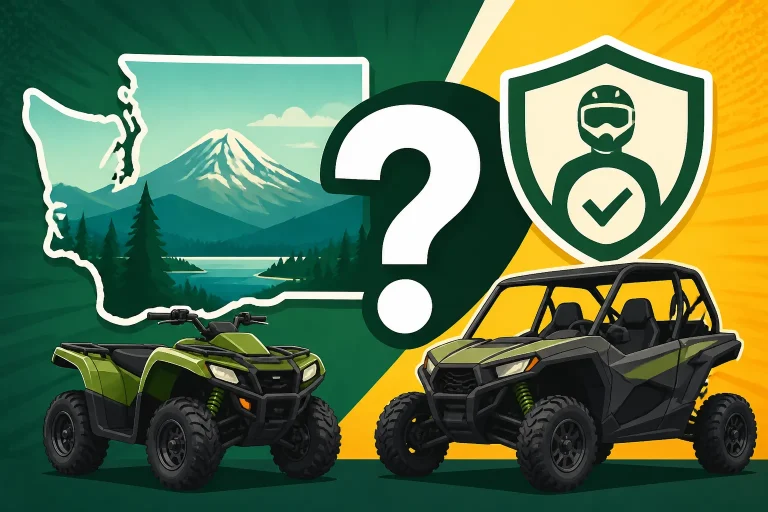
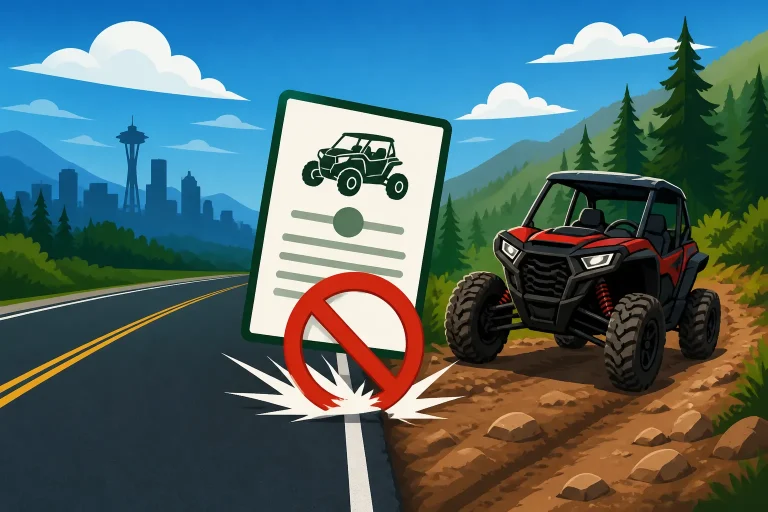
A Discover Pass is an access pass for certain recreation sites, not an ORV registration. The Washington State Department of Natural Resources requires a Discover Pass to access recreation sites on DNR-managed land with your vehicle. DNR manages recreation across state trust lands, and the pass requirement applies to site access—not as a replacement for your machine’s required registration or tabs.
That distinction matters when you’re riding an ATV or UTV. Your machine may need current ORV tabs even if you have a Discover Pass, and having the tabs does not automatically cover any separate parking or site-access requirement. Washington State Parks and Recreation Commission says ORVs at the Riverside State Park Off-Road Vehicle Area need current tabs issued through the Department of Licensing. The same agency says ORV permit tabs are required for non-street-legal vehicles in that area.
For a broader overview of where the pass applies, see Where a Washington Discover Pass Is Required and The Discover Pass and Washington Riders. Before setting out, check which agency manages the destination. A DNR trailhead, a state park, and a federal recreation site may have different access and fee rules. A Discover Pass should not be assumed to cover a site managed by another agency.
The pass also does not make a machine legal for road use. The Washington State Department of Licensing says drivers must carry their off-road vehicle registration in the vehicle while operating it in Washington. Registration and access passes address different requirements, so keep both in mind when planning a ride.
| What you need to check | What it relates to |
|---|---|
| Discover Pass | Access to a recreation site where the pass is required |
| ORV tabs or registration | Whether the machine is registered for off-road use |
| Road-use requirements | Whether the route allows your machine on public roads |
| Site-specific rules | Local conditions such as parking, trail access, and closures |
If you are still sorting out which tabs your machine needs, Washington ORV Permits Explained is a useful place to start. If you plan to ride on roads as well as trails, check the applicable road-use requirements separately.
How to display the pass at the trailhead
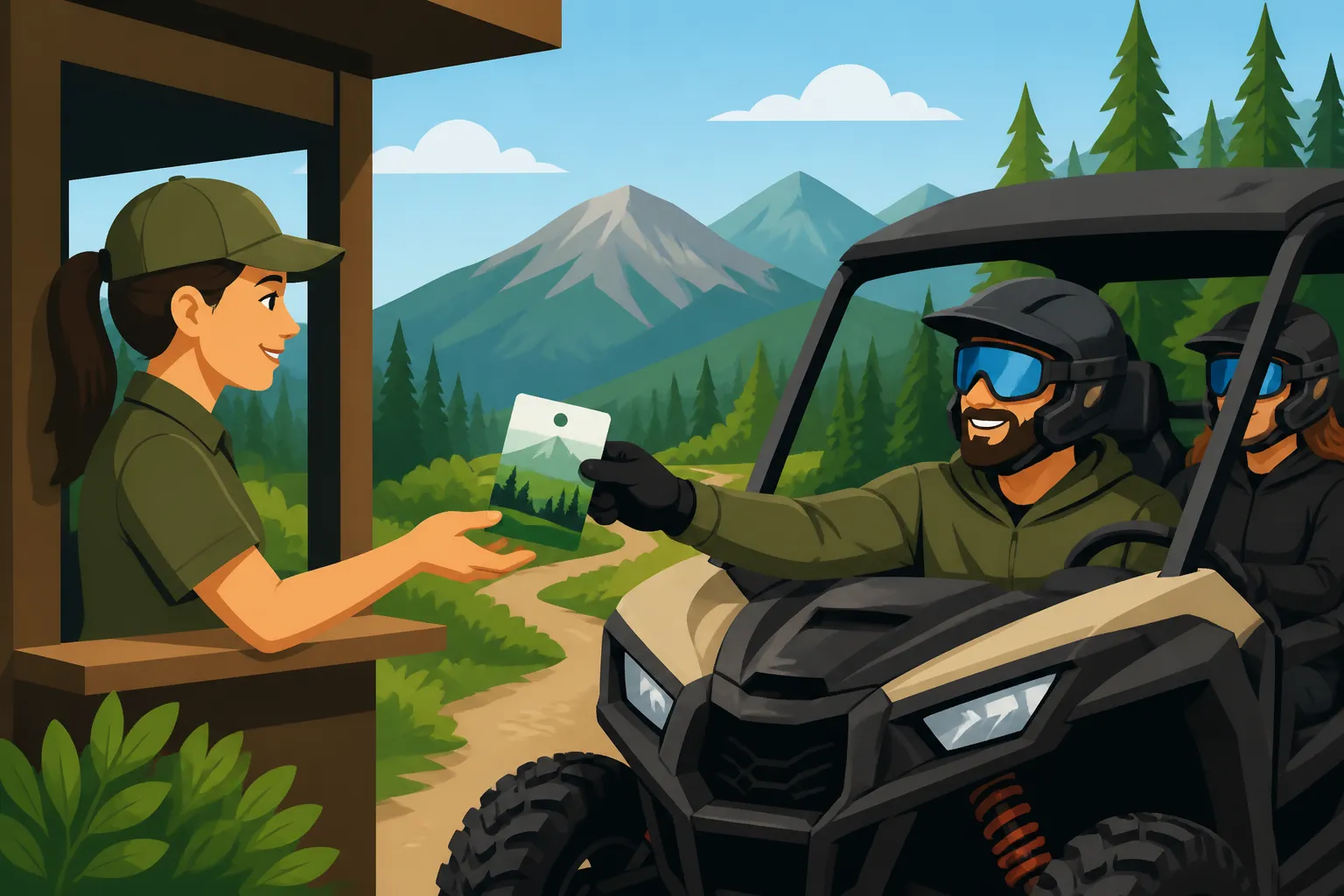
At a DNR site, the pass needs to be displayed in the front windshield while the vehicle is parked. The Department of Natural Resources also says an annual Discover Pass is transferable between two vehicles. That transferability is useful when you arrive in a different vehicle than usual, but it does not mean you can leave the pass tucked away while parked.
A simple pre-parking routine helps:
- Confirm that the trailhead is on land where a Discover Pass is required.
- Make sure the pass is assigned to the vehicle you brought, if you are using an annual pass that can be transferred between vehicles.
- Display it in the front windshield while parked at the DNR site.
- Check the site’s posted information for any additional access or parking instructions.
If you usually tow your ATV or UTV, consider which vehicle will be parked at the trailhead and where its windshield is. Do not assume that having the pass with you—in a wallet, gear bag, or machine storage compartment—is the same as displaying it as required. If the way you arrive makes windshield display unclear, ask the land manager what it accepts for that specific location rather than guessing.
A transparent pass holder from a retailer such as Amazon may help protect a pass from scuffs, but a holder does not change the display requirement. Make sure the pass remains readable and visible, and follow any instructions that come with it or are posted at the site.
The annual pass can be transferred between two vehicles, according to DNR. If you switch vehicles, move the pass and display it in the windshield of the vehicle parked at the site. For more on that situation, see Washington Discover Pass for Two Vehicles. A pass left behind in the other vehicle does not help you meet the display instruction at the trailhead you are using.
Choosing between a day pass and an annual pass
The right option depends on how often you visit places that require a Discover Pass and whether you want to manage an annual pass across vehicles. The Washington State Parks and Recreation Commission lists the annual Discover Pass at $30 and the one-day pass at $10, as of November 2026. Check the official information before buying, since fees and purchase details can change.
| Pass option | Best fit | Display reminder |
|---|---|---|
| Annual Discover Pass | Riders who expect to visit pass-required sites repeatedly | Display it in the front windshield while parked at DNR sites |
| One-day Discover Pass | A visit when you do not need an annual pass | Follow the site’s instructions for displaying it |
If you are deciding based on a single trip, Washington Discover Pass Day Rate explains the day-pass option. For current purchasing details, see Where to Buy a Washington Discover Pass. The pass choice does not change the need to check the rules for the land you plan to visit.
Do not treat “free to ride” as meaning “no pass needed.” The Riverside State Park Off-Road Vehicle Area is a useful example of why the details matter. The Washington State Parks and Recreation Commission says there is no cost to ride in the ORV Area, but a Discover Pass is required for all street-legal vehicles. It also says non-street-legal vehicles need ORV permit tabs to operate in the area. Those are separate requirements, and the conditions at another riding area may be different.
Riverside also illustrates why it pays to identify the route and parking area before you unload. The Washington State Parks and Recreation Commission says only street-legal vehicles are permitted on Inland Road. The ORV area itself has its own rules, including a prohibition on camping. A pass does not override those site-specific restrictions.
Trailhead checks that prevent common mistakes
The main errors are usually simple: confusing registration with site access, assuming one agency’s pass works everywhere, or arriving without displaying a pass where it is required. A short check before leaving home can reduce the chance of having to sort out a problem at the trailhead.
Start by confirming the land manager and the site’s current access rules. DNR says a Discover Pass is required to access recreation sites on its managed land with your vehicle. That is a useful starting point, but it is not a substitute for checking the destination’s own notices. Road access, parking, closures, and riding rules can be separate from the pass requirement.
Next, check the machine’s registration. The Washington State Department of Licensing says off-road vehicle registrations expire one year from the registration date and that drivers must carry the registration in the vehicle while operating it in Washington. If you are riding at Riverside, the Washington State Parks and Recreation Commission specifically requires current Department of Licensing tabs for ORVs. For practical ways to protect the paperwork on a wet ride, see Keeping a Registration Card Dry on a Wet Ride.
Then check who is responsible for the pass when you are towing. If your tow vehicle is the one parked at a DNR site, the pass needs to be displayed in that vehicle’s front windshield. If you have an annual pass that can be transferred between two vehicles, make sure it is with the vehicle you actually brought. Don’t rely on a pass kept in a second vehicle at home or at camp.
Finally, read the posted rules once you arrive. A Discover Pass does not determine which trails are open, whether a road is available to your machine, or what other safety and conduct rules apply. The Department of Natural Resources manages 1,200 miles of trail and growing, so conditions and requirements can vary by location. Washington Trail Maps From DNR can help with planning, but check current notices as well.
For a smooth arrival, keep the questions separate: Is this the correct land manager? Does the site require a Discover Pass? Is the pass displayed as instructed? Does the ATV or UTV have the required tabs and registration? Are the specific roads and trails open to this machine? Answering each one independently is more reliable than assuming that one pass or sticker covers everything.
Sources
- Washington State Department of Licensing — Register off-road vehicles | Washington State Department of Licensing (checked November 3, 2026)
- Washington State Department of Licensing — Registering off-road vehicles and motorcycles | Washington State Department of Licensing (checked November 3, 2026)
- Department of Natural Resources — Recreation | Department of Natural Resources (checked November 3, 2026)
- Washington State Parks and Recreation Commission — Riverside%20State%20Parks%20ORV%20Brochure_0.pdf (checked November 3, 2026)
Disclaimer
This article is for general informational purposes only and does not constitute professional advice. Laws, prices and regulations vary by location and change over time. Consult a qualified professional for guidance on your specific situation.