Washington ORV Areas With Vault Toilets
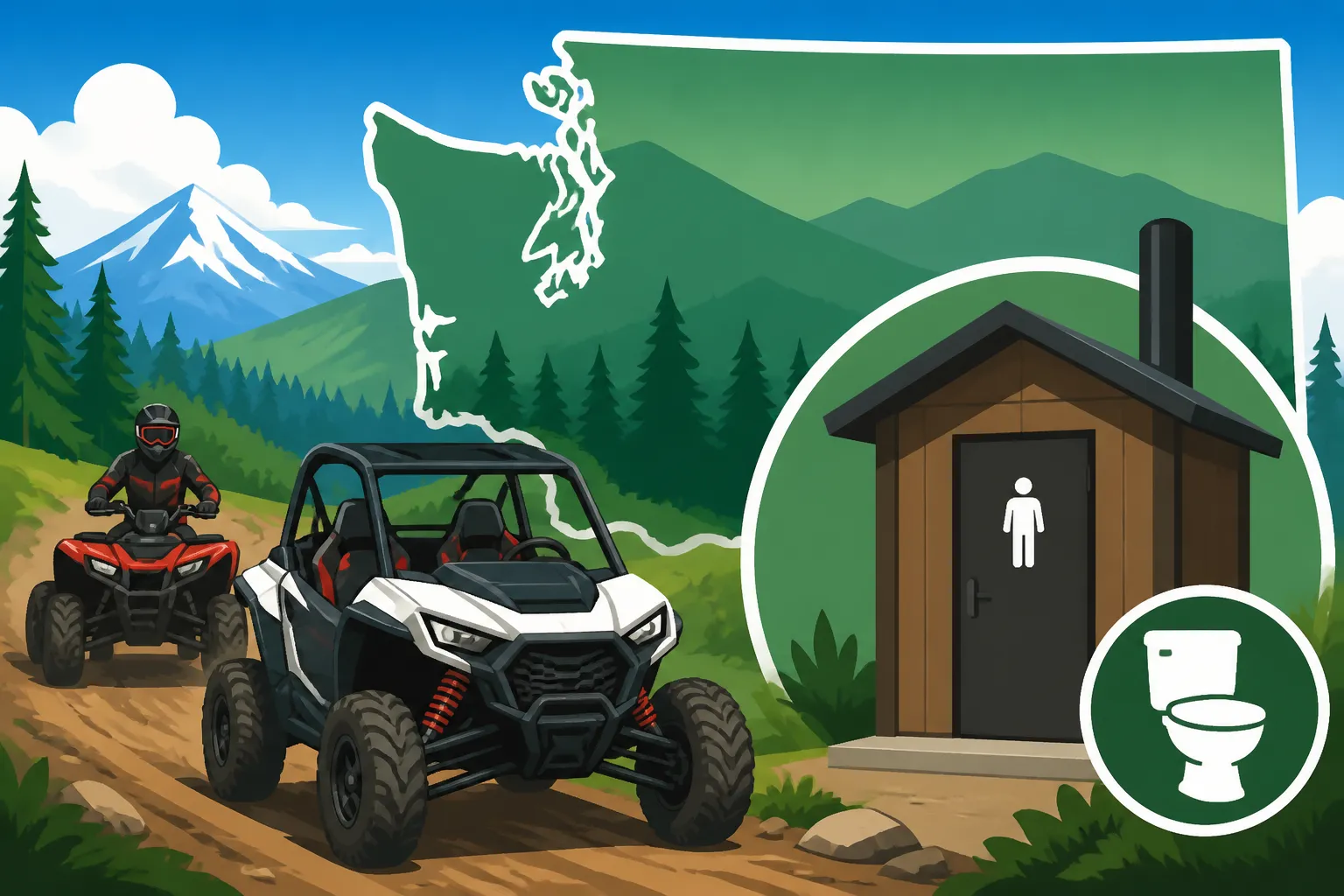
A day of riding can turn uncomfortable fast when the nearest restroom is miles away and the staging area has no obvious facilities. Washington’s ORV areas vary widely: some developed trailheads and campgrounds have vault toilets, while remote routes may have none. This guide highlights places to check first and explains how to plan without relying on a restroom being open.
Washington ORV areas to check for vault toilets
Vault toilets are most likely at developed campgrounds and main staging areas, not along the trails themselves. Even where a riding area has a restroom, it may be a long drive or ride from the part of the trail network you are using. Treat the locations below as useful starting points, then verify the specific access site before loading up.
| Riding area | Where to look first | A practical toilet plan |
|---|---|---|
| Capitol Forest | Porter Creek Campground and developed access or staging areas | Confirm which facility is near your planned entrance; the forest is too spread out to assume one restroom serves every route |
| Tahuya State Forest | Developed staging areas and campground facilities | Use the facility before riding, and do not count on finding another one once you leave the main access area |
| Walker Valley ORV Area | Main ORV staging area | Plan around the base area; trails do not have restroom stops |
| Evans Creek ORV Area | Developed campground and staging area | Check the facility situation before traveling to this more remote riding area |
| Reiter Foothills State Forest | Main access and staging area | Confirm amenities before you go, and have a backup plan if a restroom is unavailable |
Capitol Forest near Olympia
Capitol Forest is a strong place to start if you want to combine a ride with developed camping or staging facilities. The forest has multiple access points and a broad trail network, so the important question is not just whether there is a vault toilet somewhere in the forest. It is whether one is close to your planned parking area and route.
Porter Creek Campground is a useful facility to check when planning an overnight trip. If you are entering from another part of the forest, do not assume a campground restroom will be convenient. A drive between access points can take longer than a map makes it look, especially when you are towing a trailer or traveling on forest roads.
Before you leave, choose your entrance and check the relevant road and recreation information. The [Washington ORV Areas Near Olympia] guide can help you compare nearby riding options, while [Washington's DNR Forests Compared] is useful if you are deciding between different state forest destinations. For broader route planning, [Washington Trail Maps From DNR] can help you identify access roads and recreation areas, but a map should not be treated as confirmation that a restroom is open.
Tahuya State Forest in Mason County
Tahuya is popular with riders looking for forest routes and a mix of terrain. For restroom planning, focus on developed access and staging areas rather than expecting facilities to be scattered around the trail system. A vault toilet at a main area can make a day more manageable, but it may not be close to every loop or riding zone.
If you are visiting with children or a group, make a restroom stop part of your arrival routine. Have everyone use the facility before helmets go on and machines are unloaded. It is much easier than turning around later because a young rider suddenly needs a break several miles into a ride.
Check access and closure information before setting out. Wet weather, maintenance, or other site conditions can affect a trip, and the [Washington Trail Closures to Check First] guide offers a useful reminder to confirm more than just the trail route. If you are deciding whether to camp nearby, [Camping Near Washington ORV Areas] can help you think through the trade-offs between staying at a developed campground and driving in for the day.
Walker Valley ORV Area near Mount Vernon
Walker Valley is a practical option for riders in northwest Washington who want to start from a defined ORV staging area. When planning around vault toilets, think of the main staging area as your likely restroom stop—not the trail network. Once you have ridden away from the parking area, there may be no convenient place to stop.
That distinction matters when a group includes beginners, kids, or riders who prefer frequent breaks. Agree on a turnaround point and make sure everyone knows the restroom is back at the staging area. If your group tends to spend several hours on the trails, take care of bathroom needs before the ride begins rather than assuming the group can quickly return.
Walker Valley conditions and access can change, so check for closures before loading a machine. The [Walker Valley ORV in Washington's Skagit County] guide is a useful companion for trip planning. If you are choosing between this and other destinations around the region, see [Washington ORV Areas Near Seattle] for a wider look at places within reach of a day trip.
Evans Creek and other remote riding areas
Evans Creek is a more remote riding destination, which makes a little extra preparation worthwhile. Look for restroom access at developed campground or staging facilities, and confirm the location in relation to your arrival route. If you are towing a machine, the last thing you want is to reach the area and discover that the facility you expected is inconvenient, closed, or not at the access point you chose.
Reiter Foothills is another place where it pays to check the details instead of assuming every developed trailhead has the same amenities. A restroom may be associated with a particular access area rather than the entire riding network. If you cannot confirm that a facility is available at your chosen lot, plan as though it is not.
For either destination, keep a backup plan: use a restroom before leaving a nearby town, pack basic supplies, and avoid relying on a quick stop once you are deep into the forest. A good route map helps you understand distances and road connections, but it does not establish whether a toilet is open. Tools such as onX Offroad can help you review route context and identify access points; use them alongside land-manager information rather than as a substitute for checking facilities.
How to confirm a vault toilet before your ride
A search result or a marked point on a map can be helpful, but restroom details are not always updated at the same time as trail information. Confirm the exact staging area or campground you intend to use, especially if the trip depends on an accessible restroom. This is particularly important for families, riders with medical needs, and anyone traveling a long distance.
Check the exact access point, not just the forest name
A large forest can have several entrances, campgrounds, and staging lots. Finding a restroom listed for Capitol Forest does not tell you whether it is near the entrance you plan to use. Before your trip, write down the name of your parking area and check whether the facility is associated with that specific site.
It also helps to consider the route between the restroom and your riding area. For example, a toilet at a campground may be close by road but still require a lengthy drive from a different trailhead. If you are coordinating a group, share the planned parking location so nobody assumes a facility at one access point will be available at another.
Use an area map to understand the layout, then look for current information from the land manager or campground operator. onX Offroad can be handy for reviewing access roads and how different points connect, but restroom availability is a separate detail worth confirming directly.
Look for closures and seasonal changes
A restroom shown on a map may not be usable during every visit. Maintenance, weather, site work, or seasonal operating conditions can affect access. A gate closure can also make a facility unreachable even if the restroom itself is still present.
Check access notices close to departure, especially after storms or when traveling in a quieter season. Have a second option in mind, such as a restroom in the nearest town or at another developed stop along your route. If the closest alternative would require a long detour, decide in advance whether that changes your riding plan.
Do not mistake a vault toilet for a full-service restroom. These facilities typically do not have running water or sinks, and supplies may be limited. Bring hand sanitizer and a small amount of toilet paper in a sealed bag, even if you expect the facility to be stocked.
What to expect from a vault toilet
Vault toilets are simple facilities designed for outdoor recreation areas. They can make a remote riding day much more comfortable, but they are not the same as restrooms at a visitor center or a full-service campground. Knowing the difference helps prevent unpleasant surprises when you arrive.
Plan for a basic, no-flush facility
A vault toilet generally uses a sealed holding tank rather than a flush system. There may be no running water, sink, or electrical lighting. The facility can also feel different from a conventional restroom in warm weather or after heavy use, so a quick stop before the ride is often more appealing than waiting until you are far from the staging area.
Carry hand sanitizer, tissues, and a small bag for any personal waste you need to pack out. Do not leave wipes or other products behind unless a facility clearly provides a disposal method for them. These sites are maintained for shared public use, and leaving supplies or trash can create extra work for whoever services the area.
If you are visiting with a child who has never used a vault toilet, explain what to expect before you arrive. A brief heads-up about the lack of a flush handle or running water can prevent a worried moment at the door.
Consider access needs and group size
A vault toilet’s location and design can matter as much as its presence. The path from a parking area may be uneven, muddy, or difficult to navigate, and some facilities may not meet the needs of every rider. If someone in your party needs a specific type of accessible restroom, verify the details rather than relying on a general listing.
Large groups should plan breaks deliberately. If several people all need the restroom at once, one facility can create a bottleneck before the ride starts. Encourage everyone to use the stop before unloading, and keep the group together until riders are ready to depart.
For children and newer riders, build in a final restroom stop before leaving the staging area. Once machines are started and the group is moving, getting back to the parking lot may take more time than expected. This is one of those small details that can save a ride from becoming an early turnaround.
A simple restroom plan for a Washington ORV day
The easiest way to avoid uncertainty is to treat the restroom as part of your route plan. Before departure, identify the parking area, confirm the nearest facility, and decide what you will do if it is closed or unavailable. That takes only a few minutes and is especially helpful when riding somewhere remote.
Use a before-you-unload checklist
Before the first machine leaves the trailer, work through a short routine:
- Confirm the exact staging area or campground you are using.
- Check whether a vault toilet is listed or confirmed at that location.
- Look for closures or access changes that could block the facility.
- Have everyone use the restroom before riding.
- Pack hand sanitizer, tissues, and a small trash bag.
- Identify a backup restroom on the drive in or near the riding area.
This routine is useful even when you have visited the area before. A familiar riding destination can still have different access conditions on a later trip, and a restroom that was easy to reach from one entrance may be far away from another.
Match the plan to the people riding
A solo adult may be comfortable relying on a basic vault toilet at the staging area. A family with young children, a large group, or someone with a medical need may need a more dependable plan. Consider how long the ride will last, how far the group will travel from the parking area, and whether turning around would be easy.
For a beginner-friendly outing, select routes that allow the group to return to the staging area without a complicated detour. The [Washington Riding Areas Good for Kids] guide can help you think about the broader needs of a family ride, while [Washington Trail Difficulty Ratings] can help match the route to the group’s experience. A restroom plan is only one part of a comfortable day, but it is an easy one to overlook when everyone is focused on machines and trails.
If the toilet is unavailable, do not assume the surrounding forest is an acceptable substitute. Follow posted rules, respect the land, and use an appropriate restroom or facility instead. A little planning keeps the trip more comfortable for your group and helps protect the places everyone came to enjoy.
Disclaimer
This article is for general informational purposes only and does not constitute professional advice. Laws, prices and regulations vary by location and change over time. Consult a qualified professional for guidance on your specific situation.