Riding Near a Salmon Stream
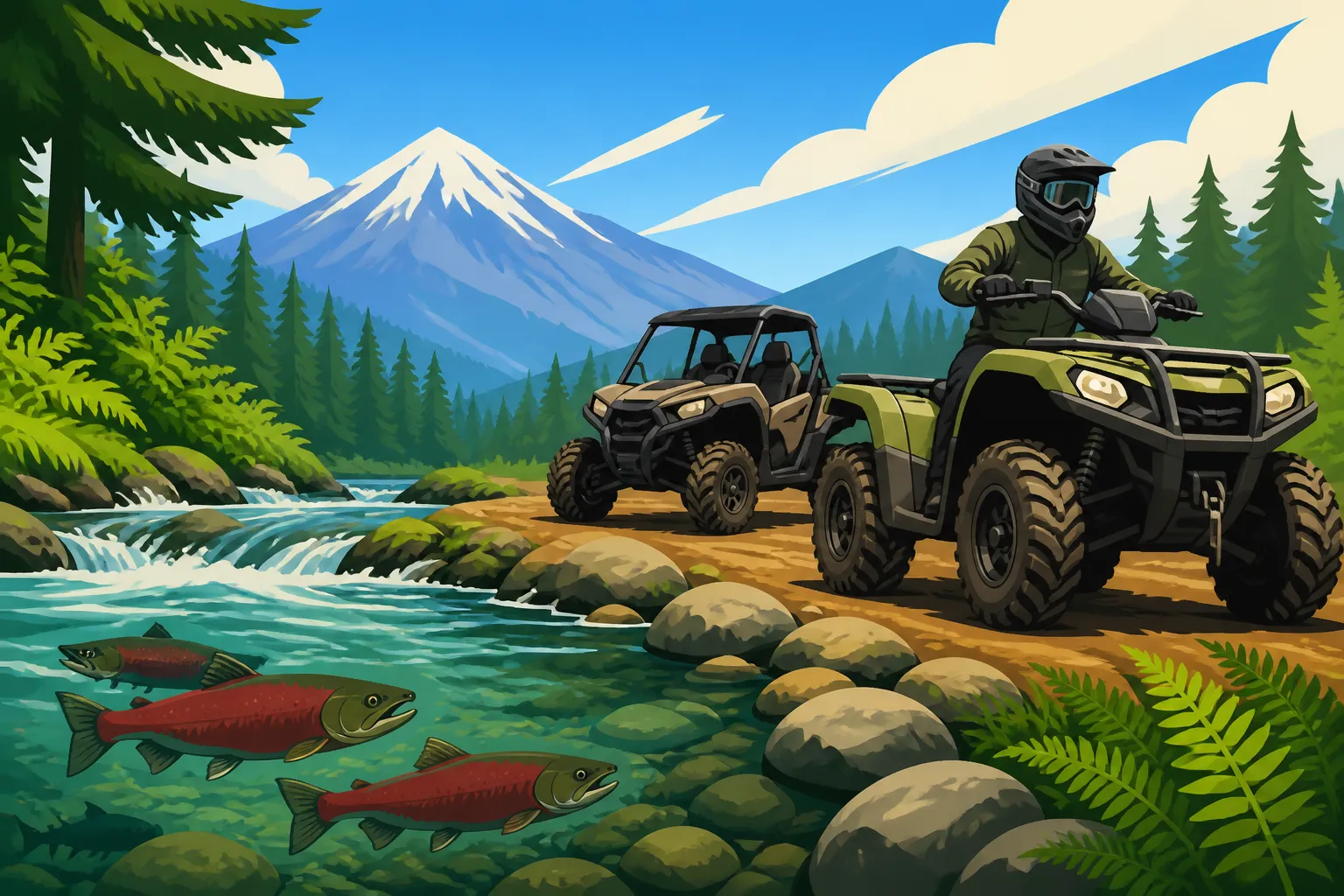
A ride that follows a creek can look harmless until tires cut into a soft bank or muddy runoff clouds the water. In Washington, salmon streams may run beside forest roads, trail systems, and private timberland, so the safest route is not always obvious. This guide explains how to plan, ride, and clean up responsibly near salmon habitat without guessing about access rules.
Plan a route that stays away from streambanks
Check access, closures, and the exact route
Start with the land manager’s current map and notices, not just a line on a general navigation app. A road or trail that appears rideable may be closed, seasonally restricted, or open only to certain users. Rules can differ between Washington Department of Natural Resources land, national forest land, county roads, and private timberland. Review [Washington Rules for Riding DNR Land] and Washington Rules for Riding a Forest Road before setting out.
A mapping app such as onX Offroad can help you orient yourself and see how a planned route relates to roads and nearby terrain. Treat it as a planning aid, not proof that a route is open or that riding beside a stream is allowed. Compare what you see with the land manager’s current information, and check Washington Trail Closures to Check First before loading your machine.
Look closely at where the route approaches water. A trail may cross a stream at a built bridge or designated ford, then continue well away from the bank. Another track that looks like a shortcut may be an informal path worn into the slope. Don’t assume the second route is permitted just because tire marks are visible.
Learn where the route meets salmon habitat
Salmon streams are not limited to large rivers. A small, shaded creek can provide important habitat, and a stream may be difficult to spot on a broad-area map. On the ground, watch for water channels, damp depressions, gravel bars, exposed roots, and narrow openings in the trees that lead down to the bank.
When a route follows a stream for a long distance, consider choosing a different trail or road rather than riding close to the water. Giving the stream corridor space helps avoid bank damage and reduces the chance that dust, soil, or debris will wash into the channel. The appropriate buffer can vary with the land, location, and applicable rules, so don’t rely on a universal distance.
If a map or sign leaves you uncertain, stop before entering the sensitive area. You can review the Reading a DNR Recreation Map guidance and contact the relevant land manager for clarification. Pausing to check is far easier than trying to explain a mistaken route after the fact.
Ride to protect the water and the banks
Stay on established, authorized routes
Keep your ATV or UTV on the designated road or trail, even when a dry-looking patch beside it seems like an easier way around a puddle. Repeated detours widen routes, break down streamside plants, and can leave bare soil exposed to rain. On a wet day, a shallow-looking rut can also conceal soft ground that collapses under a vehicle.
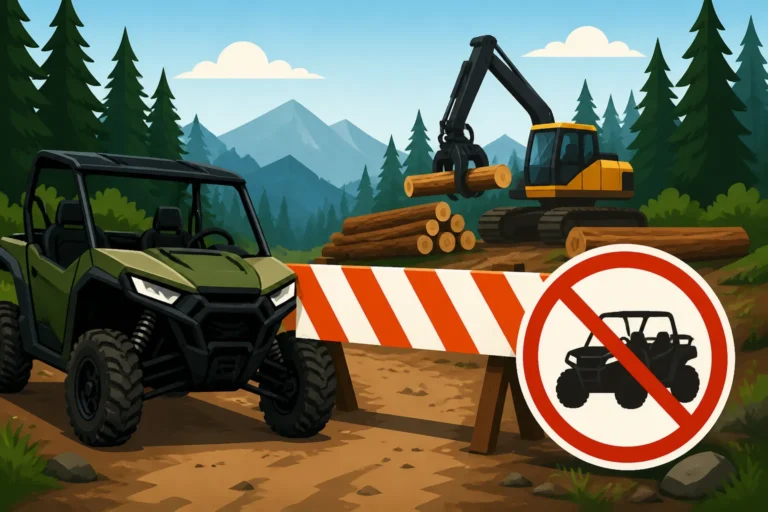
Avoid riding on streambanks, gravel bars, wet meadows, and the edges of channels unless a specific route is clearly designated for that use. Do not create a new ford or use an informal crossing. If a trail is blocked by water, fallen timber, or erosion, turn around and choose an authorized alternative instead of pushing through or cutting a bypass. [Washington Rules for Riding Off a Designated Trail] offers useful context on why leaving a route can create both access and resource problems.
Approach legal crossings slowly and follow signs and barriers. Use the crossing as designed rather than driving along the channel or stopping in the water. If the crossing looks damaged, deeper than expected, or unsafe, don’t assume that another route through the stream is acceptable. Turn back and report the issue to the land manager when appropriate.
Keep sediment, fuel, and waste out of the stream
Sediment can cloud water and cover the gravel and small spaces that aquatic life depends on. This is one reason to avoid spinning tires on wet soil, braking hard on loose banks, or climbing out of a channel where no authorized crossing exists. Smooth, steady riding on the established surface is gentler than accelerating aggressively and correcting a slide.
Check your machine for leaking fuel, oil, coolant, or brake fluid before the trip. A small leak may be easy to overlook in a parking area but can become a serious concern near water. Carry waste out with you, including food packaging and used maintenance materials. Don’t wash a machine, helmet, or muddy gear in a stream.
If you notice a spill, damaged crossing, or fresh bank collapse, move away from the water and notify the land manager. Avoid trying to repair a crossing yourself: adding rocks, digging a channel, or moving woody debris can make conditions worse or violate site rules.
| Situation | Safer choice | Avoid |
|---|---|---|
| Route runs near a stream | Stay on the signed, established route | Riding down the bank or along a gravel bar |
| Water covers a trail | Turn around and find an authorized alternative | Making a new ford or bypass |
| Crossing appears damaged | Stop and check with the land manager | Testing an improvised route through the channel |
| Machine has a fluid leak | Fix it before riding near water | Continuing and hoping the leak is minor |
| Trail is muddy beside the stream | Use another open route if available | Spinning tires or widening the trail |
Prepare for changing conditions and unclear access
Check conditions before you leave
A route can change after heavy rain, high water, a washout, or maintenance work. A crossing that seemed manageable on a previous trip may be unsafe or closed now. Review access information before departure and again at the trailhead. Posted signs and barriers matter even when an older paper map or saved digital track shows the route as open.
When you use onX Offroad to plan, compare the proposed route with current land-manager notices and any local signs. If the route’s status is unclear, don’t use the app’s displayed line as permission to ride. The same caution applies to tracks shared by friends: a route that was open on one trip may later be restricted, damaged, or closed.
Weather also affects the ground around a stream. Rain can soften banks and increase runoff, while dry conditions can make loose soil especially dusty. In either case, slowing down and staying on the firm, authorized surface helps limit disturbance. If conditions make the route difficult to ride without leaving the trail, turning around is a sensible call, not a failed outing.
Make a simple decision at the trail
When you reach a streamside section, pause long enough to answer three questions: Is this route clearly open? Is there a designated crossing if one is needed? Can the machine stay on the established surface without cutting into the bank or channel? If you can’t answer confidently, don’t proceed into the sensitive area.
An app such as onX Offroad can help you orient yourself when the trail network is confusing, but signs, closures, and land-manager guidance should determine whether you continue. If you’re riding with a group, agree ahead of time that the lead rider will stop when access is uncertain. That prevents the familiar situation where one machine makes a questionable turn and everyone else follows before anyone has checked.
Avoid treating another rider’s tracks as evidence of permission. Tracks can persist after a closure or reflect someone else’s poor decision. If you see fresh damage, don’t add to it. Note the location and report it through the appropriate land-management channel.
Finish the ride without carrying problems to the next place
Clean your machine between riding areas
Mud, seeds, and plant fragments can cling to tires, racks, skid plates, and trailer floors. Before moving to another riding area, remove visible soil and debris where it is practical and allowed. This helps reduce the spread of invasive plants and keeps dried mud from dropping onto roads or into another trail system. See Washing a Machine Before You Leave for more on cleaning up after a ride.
Do the cleaning away from streams, wetlands, storm drains, and other places where wash water could carry sediment into natural waterways. Follow site rules for any wash area, and collect or contain runoff when required. A high-pressure rinse beside a creek may seem convenient, but it can push mud and residue straight toward the water.
Clean your boots, riding gear, and trailer as well as the machine. A small patch of mud can carry seeds or fragments that are easy to miss when you are packing up in a hurry. A few minutes of cleanup at the end of the day can help protect the next place you ride.
Leave the area ready for the next rider
Pack out trash, close gates you were instructed to close, and keep parking and staging areas clear. Don’t leave straps, broken parts, or food waste behind. If a sign or crossing needs attention, report it rather than adding a homemade marker or modifying the trail.
It can be frustrating to turn around after driving a long way, especially when the stream crossing is only a short distance ahead. Still, a blocked or uncertain route is a good reason to change plans. Choose an open alternative, ride a different area, or make the streamside section part of a future trip after confirming access. Responsible riding helps keep routes usable and reduces pressure on the habitat that makes these places worth visiting.
Disclaimer
This article is for general informational purposes only and does not constitute professional advice. Laws, prices and regulations vary by location and change over time. Consult a qualified professional for guidance on your specific situation.