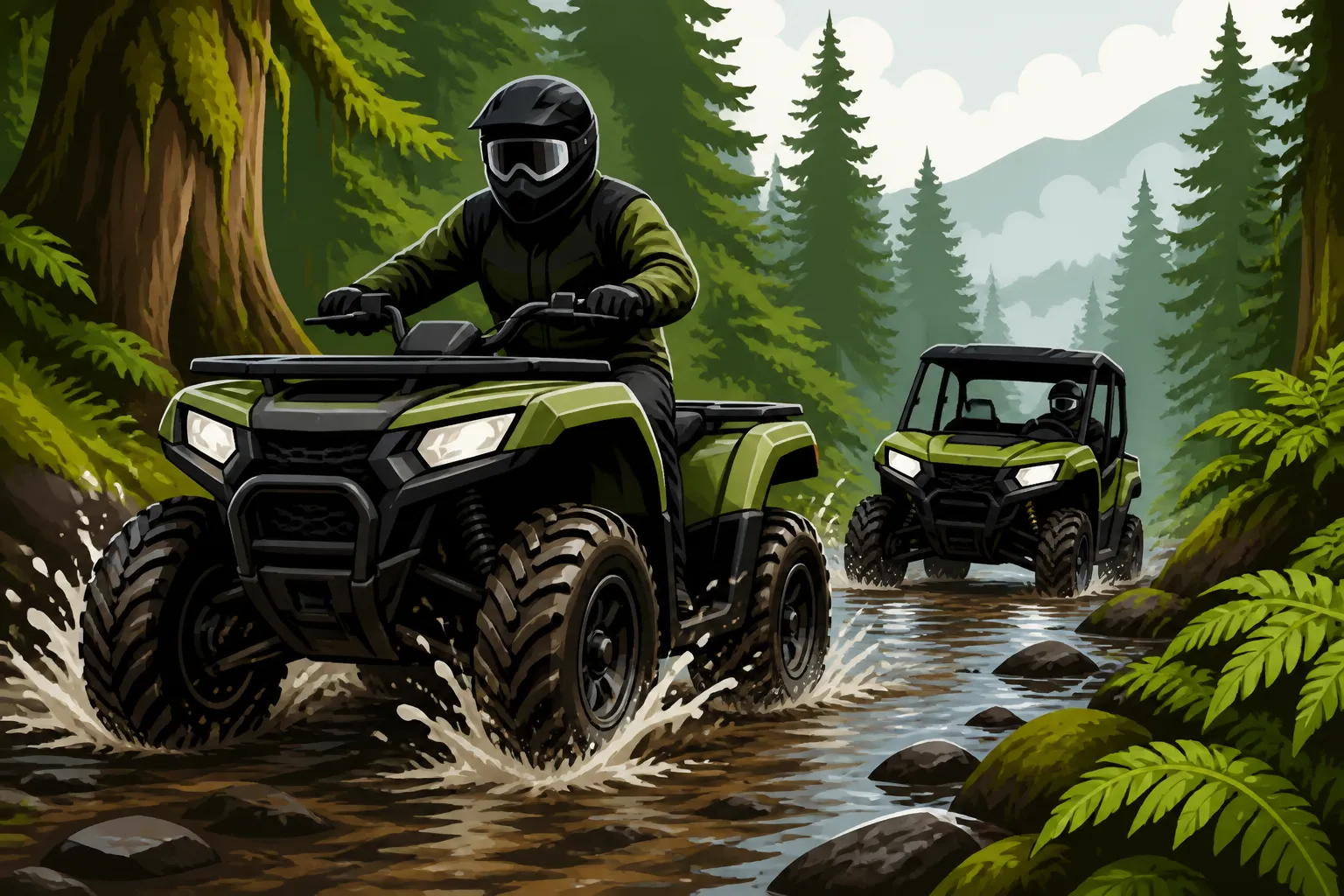
Riding a Wet Forest Trail
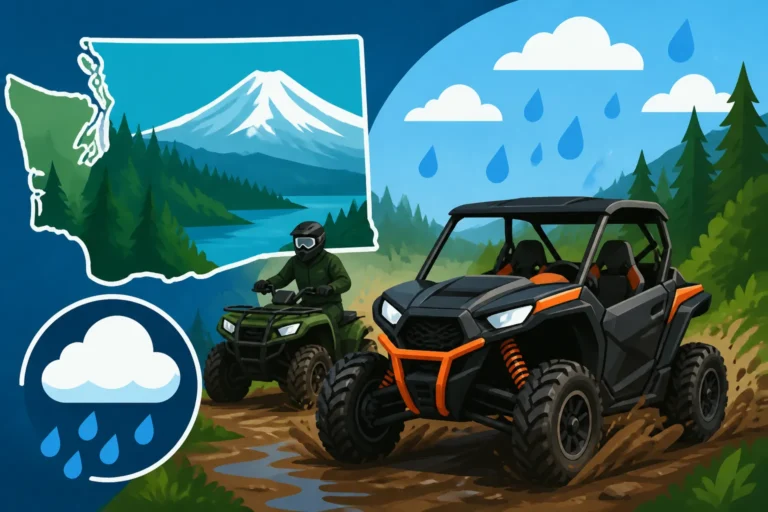
A wet Washington forest trail can change from firm gravel to slick clay, exposed roots, and standing water in a short stretch. That makes it harder to judge traction, braking distance, and whether a route is still suitable for your machine. This guide covers how to prepare, ride more smoothly, protect the trail, and decide when turning around is the better call.
Check the route and conditions before you leave
Confirm that the trail is open and appropriate for your machine
Rain does not automatically close every trail, but storms, timber work, damaged bridges, and seasonal restrictions can affect access. Check current land-manager notices before loading up, and pay attention to closure signs at the trailhead or gate. A route shown on an older map may not reflect a new closure or a change in access.
Start with the trail system’s official information, then use a map to understand the route and nearby alternatives. [Washington Trail Closures to Check First] is a useful companion when you are planning around closures, while [Washington Trail Maps From DNR] can help with route planning on DNR-managed land. An app such as onX Offroad can also help you review the route and identify land boundaries; compare its map information with posted notices and official updates rather than treating any one map as the final word.
Check that the trail is suitable for your vehicle’s width and skill level. A narrow route with deep ruts may be manageable on a small ATV but frustrating or impassable in a wide side-by-side. [Washington Trail Difficulty Ratings] can help you think through how trail difficulty is described, but remember that rain can make a familiar route feel substantially harder.
Look at more than the rain forecast
A forecast tells you whether rain may fall during your ride; it does not tell you how much water is already on the trail. Recent heavy rain can leave saturated ground, swollen crossings, fresh washouts, or soft shoulders even after the sky clears. A short shower on a well-drained gravel road may be less consequential than several days of rain on a shaded clay trail.
Before you go, consider the route’s elevation, terrain, and drainage. Low spots can collect water, while steep sections may become slippery when runoff moves soil across the surface. In western Washington, shaded forest routes can stay damp after rainfall has stopped. East-side trails may dry faster in some conditions, but local shade, soil, and recent weather still matter.
If conditions are uncertain, make a flexible plan. Choose a shorter route with a simple turnaround point, and let someone know where you expect to ride. onX Offroad or another mapping tool may help you identify alternate routes, but keep a printed or offline backup if you expect weak cell service. Do not count on being able to search for a detour once you are deep in the forest.
Pack for a slow, wet ride
Wet-weather rides tend to take longer. You may need to stop to check a muddy section, wait for another rider, or backtrack when a trail becomes too difficult. Bring water, food, warm layers, rain protection, a first-aid kit, and a way to contact help that fits the area and your group. Keep important items secured in a dry bag or another water-resistant container.
A few practical checks before departure can prevent common trailhead headaches:
- Check tire condition and pressure according to your machine’s guidance and the terrain you expect.
- Confirm that brakes, throttle, steering, lights, and the winch—if fitted—are working properly.
- Secure cargo so it cannot shift on rough, slick ground.
- Carry basic recovery gear and know how to use it without putting a person in a pinch point.
- Bring a change of gloves and a dry layer for the trip home.
Be realistic about the group. A newer rider may be comfortable on a dry trail but uneasy on slick roots or a muddy hill. Set the route to the least experienced rider, not the most confident one.
Ride smoothly on slick ground
Use steady controls and leave extra room
Wet trails reward smooth inputs. Abrupt acceleration can spin the tires and dig a hole; sudden braking can make a wheel slide. Keep your speed moderate, look ahead, and use gradual throttle and braking. Leave more space than usual between machines so you have room to respond if the rider ahead slows or loses traction.
On a slick incline, avoid stopping in the steepest or softest section if you can safely keep moving at a controlled pace. If you do need to stop, pause somewhere stable rather than blocking the route or sitting on a blind corner. When you set off again, use gentle power instead of trying to climb out with a burst of throttle.
Do not follow another machine’s line automatically. Its tires may have churned the surface into loose mud, or the track it chose may be too narrow for your vehicle. Watch for firmer ground and avoid steering sharply across a slope. If the trail is beyond your comfort level, backing out while conditions are still manageable is often safer than trying to force your way through.
Treat roots, clay, and standing water as hazards
Exposed roots can be slick when wet, especially on turns or sloped ground. Approach them with a controlled speed and keep the machine as straight as the trail allows while crossing. Avoid hard braking or sharp steering directly on top of a root. [Root Balls and Slick Clay] offers more context on two surfaces that can become unpredictable in wet forest conditions.
Mud can hide rocks, holes, branches, and changes in depth. A puddle that looks shallow from the seat may conceal a rut or soft shoulder. If you cannot see what lies beneath the water, do not charge through it. Look for a safe way to assess the crossing from solid ground, and never put yourself in a position where a sudden drop or current could pull you off balance.
Water crossings deserve particular caution. Do not enter fast-moving or unfamiliar water just because another machine crossed earlier. Conditions can change quickly, and the other vehicle may have a different ground clearance or setup. If you cannot confidently assess the depth, bottom, and exit, turn around.
| Trail condition | Main concern | Safer response |
|---|---|---|
| Slick exposed roots | Loss of traction or a sideways slide | Slow down, keep steering smooth, and cross deliberately |
| Soft clay | Tires spinning and deepening ruts | Use gentle power; turn around if the surface gives way |
| Hidden puddle | Submerged hole, rock, or branch | Check from stable ground or avoid it |
| Muddy hill | Sliding, wheel spin, or inability to stop | Use a controlled approach and retreat if traction is poor |
| Fast or unfamiliar water | Loss of control or an unsafe crossing | Do not enter unless you can assess it safely |
Keep spacing and visibility in mind
Rain, mist, and forest shade can reduce visibility. Mud thrown from another vehicle can make it harder to see, and tight trails may limit where you can safely pull aside. Maintain enough distance to see the path ahead and avoid riding so close that a sudden stop becomes a collision.
Agree on simple group signals before leaving. Make sure everyone knows where to regroup and what to do if a rider falls behind. If the group becomes separated, avoid sending riders speeding down an unfamiliar trail to catch up. Stop in a safe place, communicate if possible, and follow the plan you agreed on at the start.
Protect the trail and your machine
Avoid making ruts deeper
A wet trail can be vulnerable even when it is open. Repeated wheelspin and aggressive attempts to power through soft ground can turn a shallow rut into a deeper channel that collects more water and becomes harder to maintain. Stay on the designated route, avoid widening it around mud, and do not cut across vegetation to get around an obstacle.
If your tires start spinning, ease off rather than digging harder. Look for a safe way to regain traction, or back out if you can do so without putting anyone at risk. Do not assume that riding through a muddy section is harmless simply because it is already muddy. The more saturated the soil, the easier it may be to damage.
Pay attention to posted limits and route rules, and do not ride around a closure barrier. If a route appears damaged or unsafe, report the problem through the land manager’s channel when possible. [Washington Rules for Riding a Forest Road] can help distinguish general forest-road considerations from rules that may apply to a specific location.
Reduce the chance of getting stuck
Before entering a muddy section, identify a reasonable exit and consider whether your machine can turn around there. Avoid stopping in the middle of a narrow trail, where another rider may have limited room to pass or help. If you become stuck, stop spinning the tires and assess the situation before attempting recovery.
Keep people clear of winch lines and recovery straps, and use equipment only as intended. A hurried recovery can cause more damage than the stuck machine, especially when people stand near a loaded line or work beneath an unstable vehicle. If you are riding with others, decide who will direct the recovery and keep everyone else at a safe distance.
A good turnaround point is not a failure. If the ground is too soft, the hill too slick, or water too high, returning on the route you know is safer than pushing farther into terrain where recovery may be difficult. That judgment is especially important when you are far from the trailhead or riding without reliable communication.
Clean up carefully after the ride
Mud and plant material can cling to tires, skid plates, footwells, and underbody panels. Clean your machine before moving between riding areas when practical, and avoid carrying soil or seeds from one trail system to another. [Washing a Machine Before You Leave] and [Invasive Weeds and a Dirty Machine] cover why a cleanup routine matters beyond appearance.
After a wet ride, inspect more than the visible bodywork. Check around the radiator, air intake, brakes, suspension, and underbody for packed mud or debris. Follow the owner’s manual for cleaning and maintenance; forceful water directed at sensitive seals or electrical connections can create its own problems. If the ride involved deep water or unusual noises, take time to inspect the machine before the next outing.
Let muddy gear dry fully before storing it. Wet gloves, straps, and clothing can become unpleasant quickly, and damp equipment left packed away may be harder to clean later. A quick post-ride routine—unload, rinse responsibly, inspect, dry, and repack—can make the next trip much less of a chore.
Decide when to continue and when to turn around
Use a simple trail decision check
At each difficult section, pause and ask a few practical questions: Can I see the route through the obstacle? Is there firm ground on the other side? Can my machine fit without leaving the designated trail? Can I turn around safely if traction disappears? Is everyone in the group comfortable with the risk?
If you cannot answer those questions confidently, do not let the pressure to keep up make the choice for you. A rider may feel awkward turning back when others seem ready to continue, but a muddy obstacle can become a much larger problem after the machine is committed. Make stopping and reassessing an ordinary part of the ride rather than a decision that requires someone to argue for it.
Use your map to keep track of where you are, but do not let a route line persuade you to continue into unsafe conditions. onX Offroad can be one tool for reviewing your planned route and orientation; local signs, trail conditions, and sound judgment still determine whether it is safe to proceed. If a trail is blocked, closed, or substantially damaged, do not create a new route around the problem.
Choose a manageable plan for the day
For a first wet-weather ride, choose a familiar area and a route that offers an early exit. Keep the first outing short enough that you can assess how your machine handles the surface before committing to a longer loop. If the trail is more demanding than expected, change the plan while you still have daylight and energy.
A useful wet-ride plan includes:
- A checked route and a backup option.
- A clear turnaround point.
- A meeting plan if the group becomes separated.
- A check-in time with someone who is not on the ride.
- Enough daylight and supplies for a slower return.
The best wet forest ride is not necessarily the one that covers the most miles. It is the one where everyone gets back safely, the trail is left in good condition, and the machine is ready for the next trip. When rain has made the ground unpredictable, a shorter ride—or a day at home—can be the sensible choice.
Disclaimer
This article is for general informational purposes only and does not constitute professional advice. Laws, prices and regulations vary by location and change over time. Consult a qualified professional for guidance on your specific situation.