What the Mud Flats Are Like in August
August can make Washington’s Mud Flats look deceptively easy: the edges may be firm and dusty while the low ground still holds soft, sticky mud. That contrast is what catches riders out. This guide explains what conditions may feel like, how to prepare an ATV or UTV, and what to check before driving out so you can choose a safer line—or decide to turn around.
What the Mud Flats Can Be Like in August
Expect a mix of firm ground and hidden soft spots
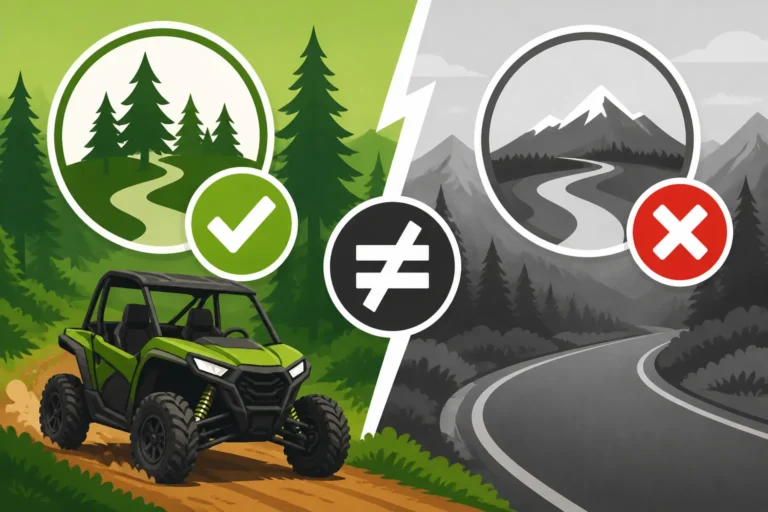
August is a summer riding month, but it does not make every part of a flat dry or predictable. A hard-looking surface can sit beside a shallow depression that stays wet, and a crust of dried mud may cover softer material underneath. The change can happen over just a few vehicle lengths. If you’re riding with friends, one machine may cross a section easily while a heavier UTV or a different tire setup sinks or spins.
The most useful mindset is to treat the flats as a patchwork rather than one uniform surface. Look for changes in color, texture, water sheen, and vegetation. A dark, smooth patch may be wetter than the ground around it; a deeply rutted track can also conceal a soft center or a hole. If you’re unsure, stop somewhere firm and inspect the route on foot before committing. Keep a generous distance from anyone already testing the same section so you have room to react if they bog down.
Conditions can shift with recent weather, drainage, and where other riders have traveled. A route that worked during a previous August visit is not a guarantee for this one. Recent rain may leave low areas soft even when the surrounding ground feels dry, while repeated traffic can deepen ruts and turn a once-passable line into a recovery problem. The broader seasonal pattern is covered in [The Washington Mud Flats Open July to October], but use current land-manager notices and local conditions for your actual ride plan.
August heat changes the ride, even when the ground looks wet
A wet-looking trail can still be a hot, dusty outing. On the approach and on firmer stretches, sun exposure, warm air, and dust can make the ride tiring. Once you’re focused on steering around mud, it’s easy to forget how long you’ve been out or how much water you’ve used. Bring drinking water for everyone, plan breaks, and avoid assuming that a puddle or wet patch is a safe source of water.
Heat also affects the machine and the people riding it. Keep an eye out for warning lights, unusual smells, loss of power, or a temperature reading that starts climbing. Mud packed around a radiator can restrict airflow, while dust on the approach can add another maintenance headache. If the machine begins running hot, stop on stable ground and let it cool according to the owner’s manual rather than pushing farther into a difficult section.
How to Prepare Your ATV or UTV for Mud
Choose a line before you choose speed
The instinct to accelerate through a soft section can be strong, especially when a friend has just made it across. But speed can hide changing ground until you’re already committed, and aggressive throttle can dig a machine deeper if the tires lose traction. Approach slowly enough to assess the surface, pick a route that avoids deep ruts where possible, and keep your wheels pointed where you want the machine to travel.
For a UTV, remember that the vehicle’s width can limit your options. A narrow-looking route may have a soft shoulder, vegetation, or an abrupt edge that makes turning awkward. Avoid squeezing between other machines or attempting a pass in a place without clear, firm space. For an ATV, shifting your body position may help you stay balanced, but don’t lean so far that you lose control or put yourself in the path of a roll or sudden slide. If you can’t identify a safe line, waiting or turning around is a legitimate choice.
Before the outing, review maps and access information rather than relying on a pin someone sent months ago. onX Offroad can help you study route options and terrain context while planning, but map information is not permission to ride wherever a line appears. Check the current rules for the land you’ll visit and obey signs, gates, and closures. For general comparisons of seasonal surface conditions, [Washington Trails With Mud] and [Riding Sand After a Rain] offer useful context, though neither replaces an on-site assessment.
Bring recovery gear and know when not to use it
A basic recovery plan starts before a machine gets stuck. Ride with at least one other capable person when possible, tell someone where you’re going, and agree on a turnaround time. Carry a suitable recovery strap and gloves, and know the attachment points and recovery procedures for your own machine. A winch may be useful on some setups, but it must be used with appropriate equipment and a sound anchor. Never wrap a strap around a person or attach it to a part not designed for recovery.
If a machine begins to bog down, stop before repeated wheelspin turns a small problem into a deep hole. Check that everyone is clear of the vehicle and recovery line, assess the ground around the machine, and avoid standing in the path of a tensioned strap. A recovery attempt that feels rushed or improvised can put riders at risk. If you don’t have a safe plan, get help rather than escalating the situation.
Mud also travels home with you. Before leaving, knock heavy material from tires and undercarriage where permitted, then inspect the machine after the ride. Pay attention to radiator areas, guards, brakes, bearings, and moving parts. A thorough cleanup helps you spot damage and reduces the chance of carrying seeds or soil into another riding area. See [Washing a Machine Before You Leave] for more on cleaning between locations.
Plan the Trip Around Access and Trail Conditions
Check closures and land rules before loading
A destination name on a map does not guarantee that every access road or riding area is open. Seasonal conditions, maintenance, fire restrictions, land-management work, and temporary closures can affect where you can travel. Check the managing agency’s current alerts before you load the trailer, then look again before riding if conditions have changed. A closure sign at a gate takes priority over an older map or a route shared by another rider.
Use onX Offroad as a planning aid to compare possible routes and keep your group oriented, not as the final authority on access. Confirm that the route is open and that your vehicle is allowed on it. Washington riders may encounter different rules on public, private, and trust lands, so don’t assume a road or track is open simply because it is visible. For broader planning, [Washington Trail Closures to Check First] and [Washington Rules for Riding DNR Land] are useful starting points.
A destination may also have separate requirements for riding access and vehicle parking. Confirm what passes, tabs, or permits apply to your situation, and keep required paperwork with you. If you’re visiting from outside Washington, check the rules before setting out rather than assuming your home-state registration covers every requirement here. [Washington ORV Permits Explained] provides additional background for planning a ride.
Build in a conservative turnaround plan
Before leaving home, agree on a route, a check-in plan, and a time to head back. Share the plan with someone who is not riding with you. Set a turnaround point that leaves enough daylight and fuel for the return trip, and don’t let the group’s most confident rider set the pace for everyone else. If a route is already soft, visibility is poor, or a machine is having trouble, shorten the ride rather than pressing on to reach a planned destination.
For a first visit, keep the outing simple. Choose a manageable section, ride at a pace that lets everyone watch the surface, and avoid splitting up without a clear plan for rejoining. A phone map or GPS may help with orientation, but signal and battery availability can vary. Download or save what you need before departure, carry a charging option if appropriate, and bring a paper backup or another navigation method when the route warrants it. onX Offroad may be helpful for reviewing a planned route, but it should sit alongside—not replace—basic navigation preparation.
Quick August Ride Checklist
Use this table as a final check, not as a substitute for local rules or an on-site judgment. If any essential item is missing, or if the route looks less stable than expected, change the plan.
| Before or during the ride | What to check | Why it matters |
|---|---|---|
| Before loading | Current access notices and closures | A familiar route may be closed or restricted |
| Before departure | Fuel, water, weather, and daylight | Heat and delays can make a short outing longer |
| At the riding area | Signs, gates, and permitted routes | A visible track is not automatically open to riding |
| Before crossing soft ground | Surface, rut depth, and a safe way back | A dry crust can hide soft mud underneath |
| With your group | Recovery gear and a clear plan | Improvised recovery can create additional hazards |
| After the ride | Mud around cooling and moving parts | Packed debris can affect operation and hide damage |
Know when a turnaround is the best call
Turning around can feel disappointing when you’ve already driven to the riding area, but it is often the decision that keeps a difficult spot from becoming a long recovery. Reconsider the route if water is deeper than expected, the bottom is hidden, ruts are getting deeper, or a machine has already struggled on the approach. Also reassess if someone in the group is tired, overheated, uncomfortable, or no longer confident about the route.
A good ride is not measured by how far you push into mud. It’s measured by whether everyone gets back safely with machines that can be cleaned, checked, and ridden again. When the ground is uncertain, patience, spacing, and a willingness to choose another route are more useful than horsepower. onX Offroad can help you keep a plan in view, but your best guide on the flats is careful observation and the judgment to stop when conditions don’t feel right.
Disclaimer
This article is for general informational purposes only and does not constitute professional advice. Laws, prices and regulations vary by location and change over time. Consult a qualified professional for guidance on your specific situation.