Camping in the Open Dunes
Camping at Washington’s open dunes can feel wonderfully remote, but the same wide-open landscape makes it easy to lose track of property boundaries, road access, and where motorized riding is allowed. This guide explains how to plan an overnight visit near Juniper Dunes, choose a suitable campsite, ride responsibly, and avoid the common mistake of treating every patch of sand as open public land.
Plan a Juniper Dunes camping trip before you leave
Know the difference between open riding land and wilderness
Juniper Dunes, north of Pasco in Franklin County, is a distinctive place to ride: open sand, scattered juniper, and long views across an eastern Washington landscape. But “open dunes” does not mean every dune, track, or flat spot is available for camping or motorized use. The area includes land with different owners and management rules, and the Juniper Dunes Wilderness has restrictions that differ from those in motorized riding areas.
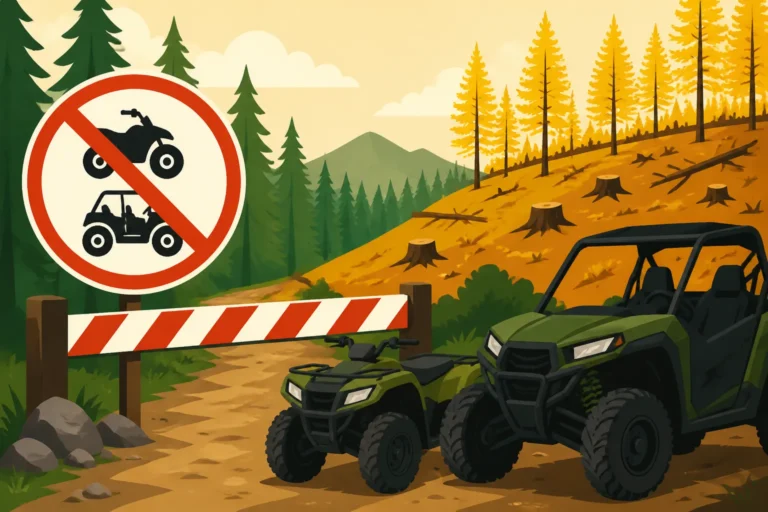
Before choosing a route or campsite, identify the boundary between the motorized area and the wilderness. Motorized travel is not allowed in designated wilderness. A track that looks rideable on the ground may approach or cross a boundary that is not obvious from the seat of a machine. Make a plan around a current land-management map, posted signs, and any seasonal notices—not just tire tracks left by other visitors.
That distinction matters when you set up camp, too. A quiet patch of sand can look like a natural overnight spot without being a legal campsite. Confirm that camping is permitted on the specific parcel and that you can reach it without crossing private land or entering a restricted area. For a closer look at the boundary issue, read [Where the Dunes End and Wilderness Begins]. If you are still sorting out where riding is allowed, [Juniper Dunes in Eastern Washington] offers useful area context.
Check access, land status, and current conditions
Getting to a riding area is not the same as having permission to travel every road that leads through it. Access routes around Juniper Dunes can involve land ownership and posted conditions that are not apparent from a general map. Read signs at gates and road entrances. Do not bypass a locked gate, drive around a closure, or assume that a route is public because another vehicle used it.
Prepare for the possibility that the final approach will be rough, sandy, or unsuitable for a low-clearance vehicle. A loaded trailer can make a difficult stretch even harder, especially if the sand is soft or recent weather has changed the road. If you are unsure about your tow vehicle, trailer, or machine, ask an experienced local rider or land manager about the access route before committing. Turning around early is far better than getting a truck and trailer stuck where recovery is complicated.
Digital mapping can help with orientation, but it should not be your only authority for access or land ownership. Riders may use a tool such as onX Offroad to examine routes and nearby boundaries, then compare what they see with official maps and signs on the ground. Treat onX Offroad as a planning aid, not as permission to cross a property line or ignore a closure. For general trip planning beyond this one riding area, [Camping Near Washington ORV Areas] is a helpful companion.
Choose a campsite that fits the landscape
Keep camp on land where overnight stays are allowed
At a dispersed camping destination, it is tempting to pick the first level spot that looks sheltered from the wind. Pause before unloading. Confirm that the land is open to camping, that the site is outside wilderness and other restricted areas, and that access to it is allowed. If ownership is unclear, do not guess. Move to a location you can verify or contact the relevant land manager before your trip.
A good campsite also leaves room for other visitors and avoids sensitive ground. Keep vehicles and trailers on established, appropriate travel surfaces rather than creating a new route across vegetation or fragile terrain. Avoid setting up in a way that blocks a road, trail, gate, or turnaround. Open sand can make it difficult to judge how much space a group occupies, so agree on a compact camp layout before everyone starts unloading.
Do not treat a convenient place to park as proof that overnight camping is allowed there. Some areas may be open to riding but have separate camping rules, and conditions can change with closures or management decisions. Check the current rules for the parcel you intend to use. The distinction between motorized access and camping permission is one reason [Washington Rules for Riding Federal Land] can be useful alongside area-specific information.
Expect a primitive overnight, not a developed campground
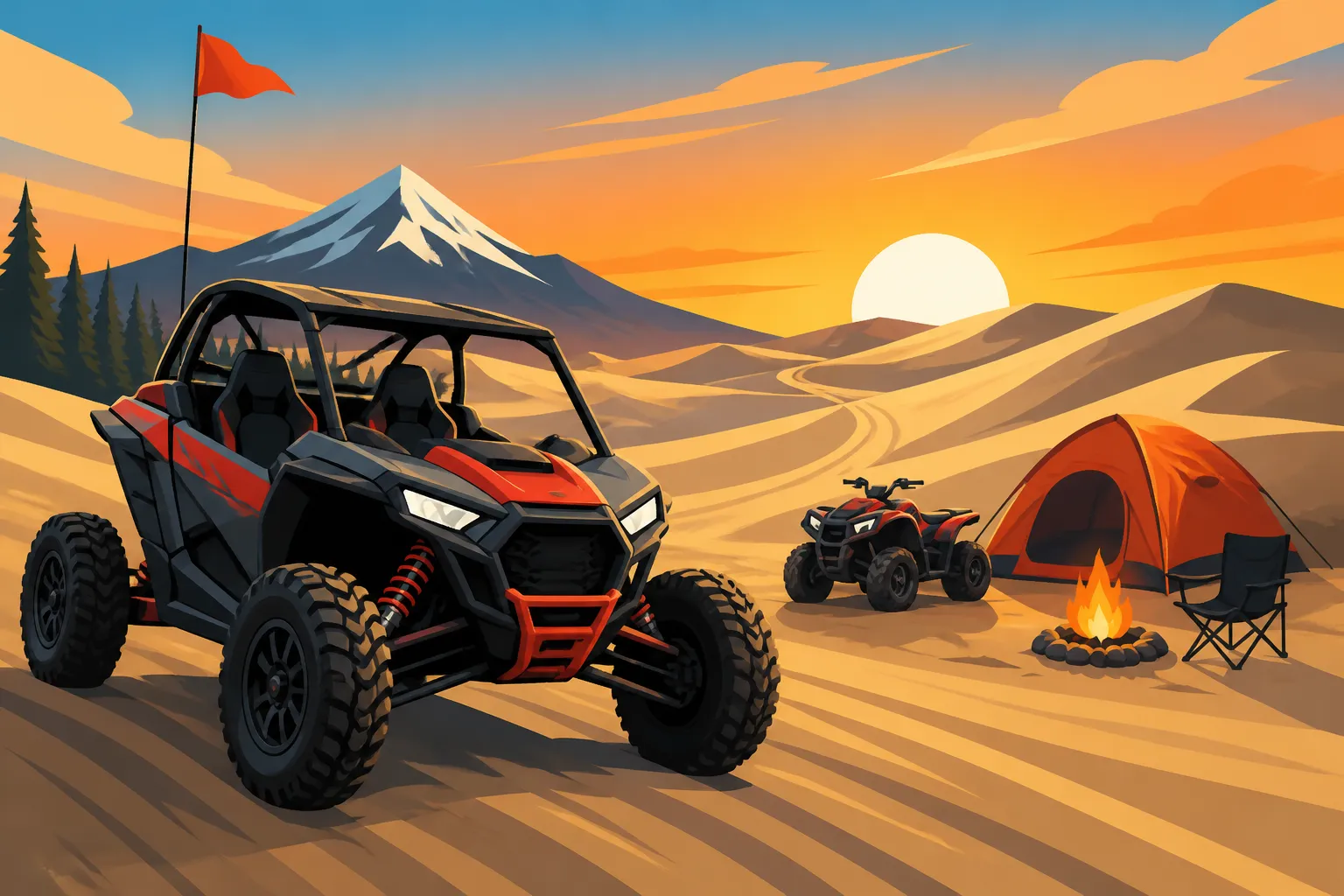
Plan for a basic, self-supported stay. Do not count on a water tap, restroom, trash service, fire ring, or reliable cell coverage at an open-dunes campsite. Bring the water, food, lighting, first-aid supplies, and waste-storage gear your group needs. Pack out everything you bring in, including food scraps and small items that are easy to lose in sand.
Wind is a practical concern, not just a comfort issue. Sand can work its way into tents, cooking equipment, and storage bins, and gusts can make loose gear a hazard. Stake or weigh down shelter securely, keep food and equipment contained, and avoid leaving lightweight items unattended. A ground cloth, sealed storage containers, and a way to protect sleeping gear can make a noticeable difference after a windy evening.
Nighttime can also make the area feel more remote than it did during the day. Arrive with enough daylight to choose a site, get organized, and identify the route back to the access road. Keep a headlamp where it is easy to reach, and store keys, essential medication, and a charged phone in a consistent place. If your group depends on navigation, download or prepare the information you need before losing service. onX Offroad may help you keep track of a planned route, but carry a backup navigation option and do not rely on a phone battery lasting through a long riding day.
| Camping consideration | Plan for | Why it matters |
|---|---|---|
| Land status | Confirm the parcel and camping rules | Riding access does not automatically permit camping |
| Route in | Check access and closures before towing | Soft sand, gates, and private land can change the approach |
| Water and supplies | Bring what your group needs | Do not count on developed campground facilities |
| Wind and sand | Secure shelters and loose equipment | Gusts can disturb camp and damage exposed gear |
| Navigation | Prepare offline information and a backup | Service and battery life may be unreliable |
| Waste | Pack out all rubbish and food scraps | Remote sites may have no trash service |
Ride and camp responsibly in open sand
Keep machines within permitted areas
Open dunes invite exploration, but riding wherever the surface looks smooth can cause problems. Stay within the area designated for motorized use, follow signed routes and closures, and avoid entering wilderness. If a route becomes uncertain, stop and check the map rather than continuing in the hope that the boundary will become clearer farther ahead.
Sand can also hide hazards that are easy to miss from a distance. Changes in slope, soft pockets, vegetation, and other riders can affect visibility and control. Give other machines plenty of space, avoid cresting a dune blindly, and regroup in a safe place rather than stopping in the middle of a travel route. A machine that loses traction or becomes stuck can quickly create a hazard for the next rider.
Before leaving camp, make sure your group knows the general route and where you will meet if separated. Agree on a simple turnaround plan and a check-in time. This is especially helpful when riders have different experience levels or machines with different ranges. For additional area-specific planning, [Juniper Dunes in Spring] covers seasonal considerations that may affect a visit.
Leave the site in better shape than you found it
A remote camp can accumulate clutter quickly. Keep a bag or bin for rubbish, secure food scraps, and check the surrounding area before packing up. Small items such as twist ties, wrappers, bottle caps, and broken tent stakes are easy to overlook in sand. Walk the camp once before departure, then look again from the vehicle to spot anything left behind.
Respect wildlife and vegetation by keeping a sensible distance and avoiding unnecessary disturbance. Do not cut branches for shelter or drive through plants just because a route seems shorter. If you bring a pet, keep it under control and pack out its waste. Be considerate of other visitors: loud generators or late-night riding can carry across open terrain and disrupt a camp that may be farther away than it appears.
Fire use deserves special caution in dry eastern Washington conditions. Rules can depend on the land manager, location, and fire restrictions in effect. Never assume that a fire is permitted simply because there is an existing ring or a previous visitor had one. Check current restrictions before leaving home, follow posted rules, and fully extinguish any permitted fire. If conditions are dry or windy, choosing not to light one is the safer option. For changes that may affect a trip, review [Washington Trail Closures to Check First] before loading your machines.
Prepare for the practical challenges of an overnight ride
Pack for sand, changing weather, and recovery
An overnight trip needs more than camping gear. Bring supplies for minor mechanical trouble, a tire issue, or a machine that gets bogged down. A recovery strap, shovel, and basic tools can be useful, but only if someone in the group knows how to use them safely. Keep equipment secured so it does not shift in a trailer or become loose during travel.
Think through how sand may affect your gear and machine. Store food and small equipment in closed containers, and avoid setting bags directly where blowing sand can collect. Check your machine before the ride and again when you return to camp. Sand and dust can make it harder to notice a loose fitting, leak, or other developing problem, so a quick inspection is worth the time.
Dress for more than the warmest part of the day. Conditions can feel different after sunset, and wind can make camp less comfortable even when daytime temperatures seem mild. Bring layers, eye protection, and suitable riding gear, and make sure everyone in the group has enough water for the planned ride. If someone is new to sand riding, take time to discuss how the surface behaves and agree on a conservative pace.
Make a simple trip plan and share it
Before departing, tell someone who is not on the trip where you are going, who is in your group, and when you expect to return. Give them a way to respond if you miss that check-in. Within the group, confirm who is carrying first aid, who has navigation, and who will make decisions if the route or conditions change.
Use maps to plan, but verify important details with the land manager and on-site signs. onX Offroad can be part of that process for reviewing a route, while official information remains essential for closures, access rules, and current boundaries. Keep an offline map or paper backup available in case a device is damaged, loses power, or cannot get a signal. If your planned route depends on a road that crosses private property, confirm that you have permission before going.
A practical final check is to ask four questions: Is this exact site open to camping? Can we reach it using an authorized route? Are we staying outside restricted areas? Do we have enough water, supplies, and navigation for a self-supported stay? If any answer is uncertain, resolve it before unloading. [Why Juniper Dunes Charges Nothing] can also help explain why access arrangements and fees may differ from those at developed recreation sites.
Disclaimer
This article is for general informational purposes only and does not constitute professional advice. Laws, prices and regulations vary by location and change over time. Consult a qualified professional for guidance on your specific situation.