Riding Around an Active Timber Sale
An active timber sale can turn a familiar Washington ATV or UTV route into a work zone with hauling trucks, blocked roads, fresh logging, and changing access. The safest plan is not to improvise around a closure. This guide explains how to check conditions, read signs and maps, and decide when to reroute or turn back.
Why active timber sales change a ride
Logging traffic creates hazards that can appear quickly
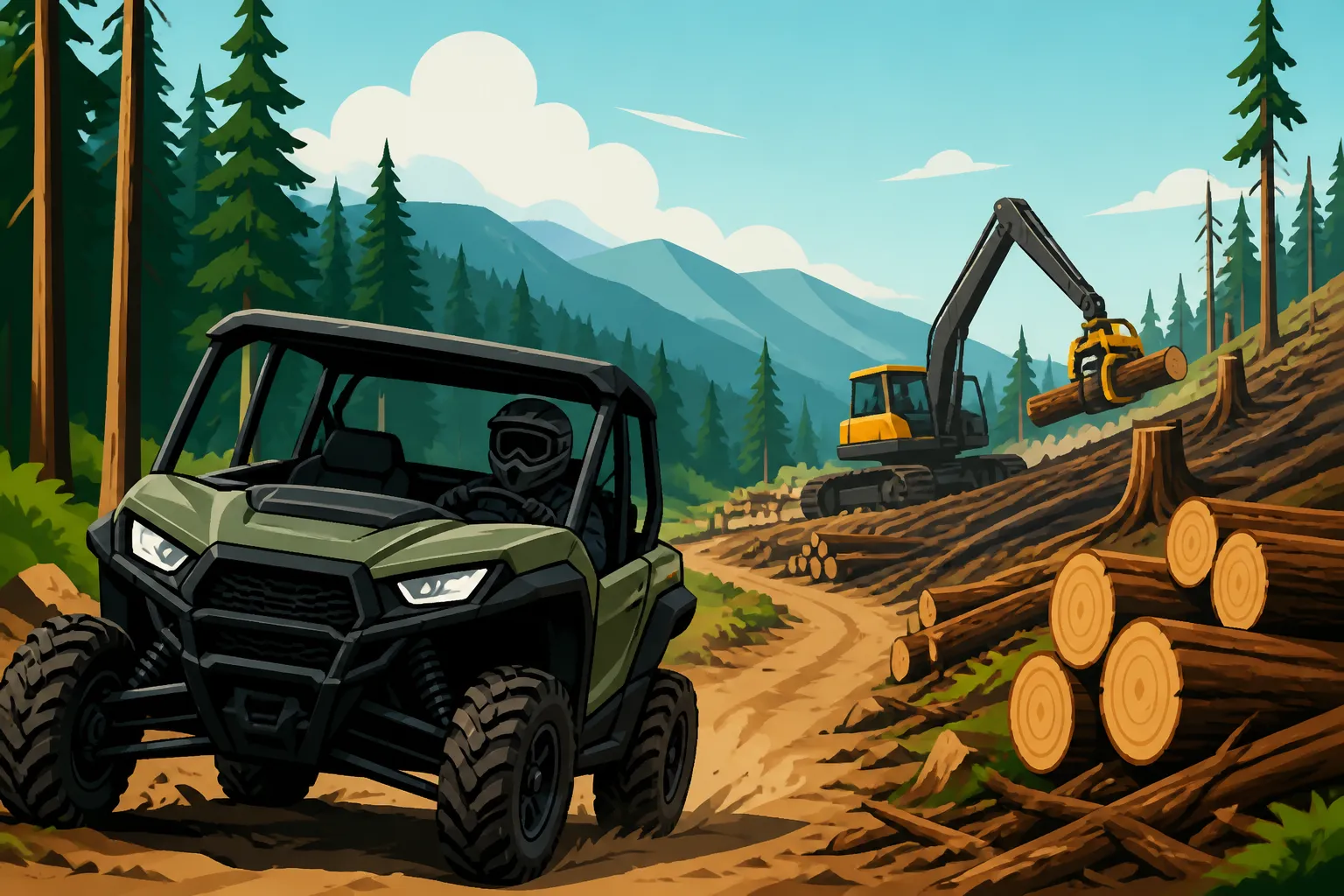
A road that feels quiet on a weekend can become a working haul route when a timber sale is active. Logging trucks may be long, heavy, and difficult to stop on loose gravel. They can also raise dust, limit visibility, and need more room to turn than a recreational vehicle. On narrow forest roads, a truck coming around a blind corner can leave very little space to react.
Conditions can change over the course of a day. A route you rode last month might now be used to move logs, equipment, or crews. Freshly cut timber, machinery, mud, and road work can also create hazards that are hard to spot from a distance. Even if the road appears passable, that doesn’t mean it is open to recreational use or safe to enter.
If you encounter a truck, give it room and follow any directions from the operator or a flagger. Don’t assume you can squeeze past, and don’t stop where you block a gate, turnout, or work access. For more on sharing these roads safely, see [Meeting a Log Truck on a Gravel Road].
A closure sign is a boundary, not a suggestion
A timber operation may require a road or trail to close temporarily. Signs, barricades, locked gates, and posted notices may identify the closure and its limits. Treat them as instructions to stop, even if you can see a route continuing beyond the barrier or other riders have gone through.
It can be tempting to think a closure only applies during work hours, or that a small vehicle can slip around a gate without causing trouble. That assumption can put you in the path of equipment or trucks, interfere with operations, or take you onto land where access isn’t allowed. Don’t move a barricade, follow a vehicle through a gate, or ride around a closure on an unmarked track.
If a closure notice is unclear, stay out of the affected area and look for information from the land manager or timber company. The practical approach is simple: when you can’t tell whether your route is open, don’t treat uncertainty as permission. [Reading a Closure Notice Posted at a Gate] offers more guidance on what to look for.
Not every forest road has the same access rules
A forest road can cross land managed by different owners or agencies, and a road that looks public on a map may have access restrictions. State-managed land, federal land, private timberland, and county roads can each have distinct rules. An open segment on one side of a boundary doesn’t automatically mean the road stays open beyond it.
This matters in popular riding regions such as Capitol State Forest, Reiter Foothills, and Ahtanum State Forest. The landscape may look continuous, but ownership, management, and current closures can change along a route. A timber company’s gate or a posted notice should be taken seriously even if your map shows a connected road network.
Before you leave home, identify who manages the area and check the applicable access information. If a route crosses private timberland, don’t assume that a public-looking road or an old track grants permission to ride. For a broader look at changing access, read [Trails Closed for Timber Work] and [Washington Rules for Riding Private Timberland].
How to check a route before you unload
Start with current land-manager notices
Check the land manager’s recreation pages, alerts, maps, or posted closure information before loading the machines. Look for notices about timber work, road maintenance, fire restrictions, storm damage, and seasonal closures. If you’re heading to a large riding area, check both the access roads and the trails you plan to use; an open staging area doesn’t guarantee every route from it is open.
Build in time for a second check on the day of your ride. Work schedules and conditions can shift, and a notice you saw earlier may not reflect a new sign at the entrance. If the information is incomplete, call or contact the relevant office when possible rather than relying on assumptions. [Checking Alerts Before You Load Up] is useful when you’re planning around changing access.
An old screenshot, saved route, or memory from a previous trip is not a substitute for current information. This is especially true after heavy rain, windstorms, or a period of active logging, when a road can be altered or closed. If you find a closure notice at the trailhead that conflicts with what you expected, follow the notice and revise your plan.
Use digital maps as planning aids, not permission
Digital mapping tools can help you understand the shape of a riding area, find nearby roads, and plan a backup route. A tool such as onX Offroad may be useful for comparing your planned line with other mapped roads, but a map can’t confirm that a route is open today or that you have permission to use it. Check the land manager’s current information and follow signs on the ground.
It helps to use the map before you arrive, not while you’re stopped in a narrow road or trying to make a decision near a gate. Mark a few possible turnarounds and alternate routes in advance. If your route depends on a particular connector road, identify another way back to the staging area before the ride starts. You can also compare a digital route with an official recreation map, such as the guidance in [Reading a DNR Recreation Map].
Be cautious when a map shows a road where the ground tells a different story. A road may be closed, gated, private, washed out, or restricted to work vehicles. For example, a route line on your phone might appear to connect two parts of a forest, but a current closure notice could make that connection unusable. [Riding a Road Shown Open on an Old Map] explains why mapped access can be misleading.
| What you find | What it may mean | Safer response |
|---|---|---|
| Posted closure or barricade | The road or trail is closed to the public | Stop and choose another route |
| Logging truck or active equipment | The area is being used for work | Give workers and vehicles space; leave if access is uncertain |
| Gate with unclear status | Access may be restricted or controlled | Don’t bypass it; check with the land manager |
| Map route with no current access information | The route may be outdated or restricted | Verify through current notices and signs |
| Freshly disturbed road or cut timber | Conditions or access may have changed | Turn around if the route feels unsafe or unclear |
Plan a turnaround, not just an arrival
A good ride plan includes a point where you’ll stop and reconsider. If you see fresh signs, a closed gate, active equipment, or a haul truck, use a safe, visible turnout to pause. Don’t stop just over a blind rise or in a place where a truck may need to turn. If there’s no safe place to wait, continue only far enough to get out of the way and then reassess.
Tell everyone in the group what the plan is before the ride begins. Agree that any rider can call for a turnaround if conditions look unsafe. This avoids the awkward pressure to keep going because someone has already unloaded, driven a long distance, or wants to reach a particular trail. A short detour is frustrating; getting caught in an active work area is worse.
Choose a backup destination when you’re planning, especially if the primary route depends on one access road. In the foothills east of Seattle, for example, a closure near your intended entrance may make it sensible to switch to another permitted riding area rather than search for an unofficial way in. [Washington Trail Closures to Check First] can help you think through the pre-ride check.
What to do when you encounter an active sale
Stop early and read the situation
If you notice logging activity, don’t ride closer just to see what is happening. Slow down, keep a clear distance from trucks and equipment, and look for signs from a safe spot. Pay attention to whether a flagger is directing traffic, whether vehicles are entering or leaving the route, and whether the road is blocked farther ahead.
If you reach a closed gate, don’t walk or ride around it to investigate. A gate may be there to prevent public access during active hauling, or because the landowner has restricted entry. Even when you don’t see workers, the operation may be active elsewhere on the route. [What to Do at a Locked Timber Company Gate] covers the sensible next steps.
If the area is open but trucks are using the road, make a judgment based on visibility, width, traffic, and any directions posted. If you can’t pass safely or don’t know whether recreational riding is allowed, turn around. A mapped route is not worth a close encounter with a loaded logging truck.
Don’t create a new route around the closure
When a gate blocks the planned route, riders sometimes look for a spur, skid road, or narrow trail that appears to go around the obstruction. That can lead onto private land, into an active work zone, or onto a route that isn’t designated for riding. It may also damage soft ground or vegetation and make access problems worse for other riders.
Stay on routes that are clearly open and permitted. Don’t cut across a timber unit, follow equipment tracks, or use an unmarked road just because it reconnects with a road on your map. The fact that a track exists doesn’t tell you who created it, who controls it, or whether the public can use it.
If you’re unsure whether a gate is temporary, whether a route is open outside work hours, or whether a detour is allowed, ask the land manager or timber company rather than guessing. [Riding Past a Timber Sale Gate] explores why crossing a gate can be a serious mistake, while [Why a Forest Road Closes During Active Hauling] gives more context on closures during work.
Keep your group together and leave calmly
A closure or encounter with work traffic can unsettle a group, especially if riders are spread out or the planned route has become a dead end. Keep the group together, communicate clearly, and avoid sending one person ahead to “check” a road where equipment may be operating. If you need to turn around, do it in a safe place where everyone can maneuver without blocking the roadway.
Use the same care when leaving as when entering. Don’t rush past a truck, crowd a worker, or stop in a haul route to discuss what to do. If you need to check your map, pull well clear of traffic and keep sightlines open. A mapping app such as onX Offroad can help you review your planned alternatives, but follow current signs and instructions over the route displayed on a screen.
After the ride, make a note of what you encountered and check for updated information before returning. A gate that was closed during a work period may be managed differently later, but don’t assume it has reopened until you confirm. If your planned route was blocked, use an officially open alternative rather than trying to piece together a shortcut through active timber work.
A practical pre-ride checklist
Before heading out, check the land manager’s current alerts and identify the ownership or management of your planned riding area. Confirm that your intended trails and access roads are open, and save a backup route that does not depend on bypassing a gate or crossing restricted land. A map, including onX Offroad, can support that planning, but it cannot replace current access information.
At the entrance, read every posted notice and be ready to change plans. During the ride, watch for haul trucks, equipment, fresh road work, and signs that differ from what you expected. If access is unclear, turn around or contact the appropriate manager rather than pushing farther into the work area.
The most reliable rule for riding around an active timber sale is also the easiest to remember: workers and closures take priority over your route. A flexible plan protects you, the people doing the work, and future access for other Washington riders.
Disclaimer
This article is for general informational purposes only and does not constitute professional advice. Laws, prices and regulations vary by location and change over time. Consult a qualified professional for guidance on your specific situation.