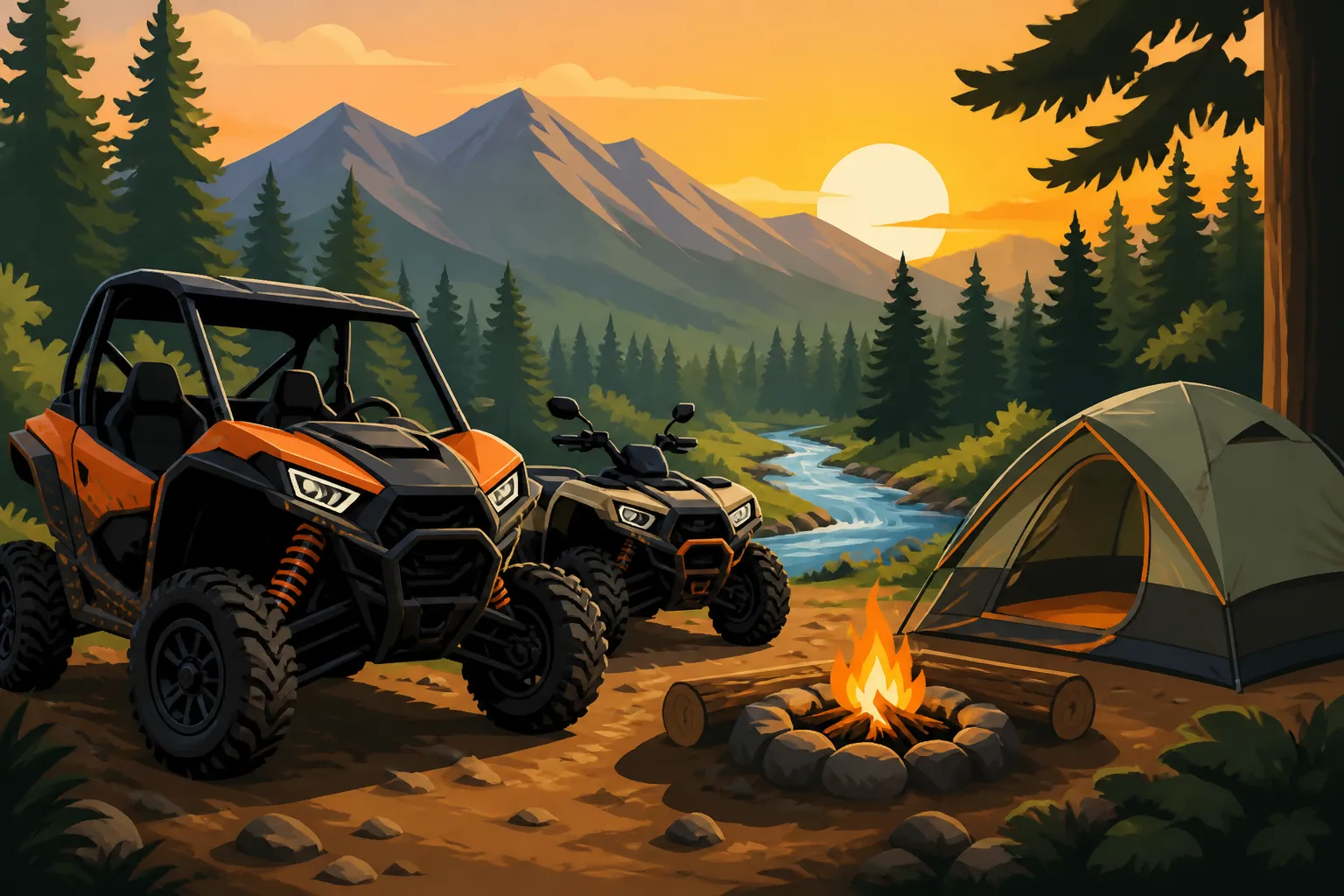
Camping at Porter Creek
Camping at Porter Creek can make a Capitol State Forest ride feel much easier: you can settle in near the riding area instead of turning every trail day into a long drive. The tricky part is that campground conditions, forest access, and trail closures can change. This guide covers what to plan, what to pack, and how to ride responsibly from camp.
Planning a Porter Creek camping trip
Know what kind of campground experience to expect
Porter Creek is a camping option in Washington’s Capitol State Forest, a large working forest west of Olympia. It’s a practical base for riders who want to spend time exploring forest roads and motorized trails, but it’s best to plan for a more rustic experience than you’d find at a full-service RV park. Don’t assume there will be hookups, potable water, showers, or a staffed office. Confirm the facilities and site conditions before leaving home, and bring what you need to be self-sufficient.
A comfortable plan starts with the assumption that services may be limited. Fill water containers before you arrive, pack food that doesn’t depend on refrigeration, and bring a way to manage rubbish and wastewater. If you need electricity for medical equipment, have a reliable backup plan rather than counting on campground amenities. For more on nearby facilities and overnight options, see [Porter Creek Campground in Washington's Capitol Forest] and [Camping Near Washington ORV Areas].
Also think about the type of vehicle and trailer you’re bringing. A long trailer can be awkward on narrow forest roads, especially if the surface is uneven or wet. Before departure, check your tow vehicle’s fuel, lights, tires, and spare, and make sure the machines are secured for the drive. If you’re towing over a mountain pass to reach the forest, leave extra time and check the route for conditions that could affect a loaded rig.
Check access, site conditions, and forest notices
A campground listing or a familiar route from a previous trip isn’t a guarantee that access will be unchanged. Forest roads can be affected by storm damage, timber operations, maintenance, or recreation closures. Before you load the machines, check the latest information from Washington State Department of Natural Resources and any posted notices for Capitol State Forest. Pay attention to both the campground and the roads you plan to use to reach it.
Online maps can help you understand the general layout, but they shouldn’t be treated as permission to ride a road or trail. A route that appears on a map may cross private property, pass through a closed area, or be unsuitable for your machine. onX Offroad can be useful for reviewing routes and keeping track of where you are, but compare what you see there with official forest information and signs on the ground. Save maps for offline use if your phone may lose service.
Build a flexible itinerary. If a trailhead or forest road is closed, having a second ride plan can keep the weekend from turning into a frustrating search for an open route. Check [Washington Trail Closures to Check First] and [Washington Trail Maps From DNR] as part of your pre-trip routine. Once you arrive, treat signs and barriers as the final word; don’t ride around a gate because a digital map shows a line continuing past it.
Bringing an ATV or UTV to camp
Sort out machine paperwork and riding access
Before the trip, make sure each ATV or UTV is set up for the kind of riding you intend to do. Washington registration, decals, and other requirements depend on how the machine is registered and where it will be used. Don’t assume that being trailered to a campground removes the need for the right registration or that one machine’s paperwork covers another. Review [Washington ORV Permits Explained] and [Washington's Off-Road Vehicle Rules Explained] if you’re unsure what applies.
A Discover Pass and ORV registration serve different purposes, so check which passes or permits are needed for the specific places you’ll park and ride. Requirements can vary by land manager and location. Keep registration paperwork protected from rain and mud, and carry any required documents while riding. A sealed pouch or waterproof document sleeve can help prevent a soggy card from becoming unreadable after a wet day.
If you plan to ride on public roads as well as trails, don’t assume that a road is open simply because it is paved or connects two riding areas. Road access rules can depend on the county, city, roadway, posted speed, and machine equipment. Read [Washington Rules for Riding a Forest Road] and [Which Washington Roads Posted 35 mph Are Open] before planning a route that uses pavement or connects to a public road. When in doubt, keep the ride to routes clearly authorized for your machine.
Load the gear that matters at a forest campground
Capitol Forest weather can make a small packing mistake feel much bigger. A dry afternoon can turn into a cold, damp evening, and muddy gear is hard to manage in a crowded vehicle. Pack rain layers, warm clothing, sturdy footwear, headlamps, and a change of clothes that stays sealed in a dry bag. Bring extra gloves for riding and another pair for camp; wet gloves are miserable and can make it harder to handle controls safely.
For machine care, bring basic tools, a tire repair kit suitable for your tires, a small first-aid kit, and supplies for securing loose parts. A compact air compressor or tire gauge can be useful if you adjust tire pressure for different terrain, but use settings recommended for your machine and tires. A tow strap may help with a recovery, but only use it when you understand the equipment and have a safe plan. Avoid improvising a recovery with a strap attached to an unsuitable point.
Make the campsite easier to manage by separating riding gear from sleeping and cooking gear. Store fuel safely and away from heat or flame, and follow the land manager’s rules for fuel storage and campfires. Keep food secured so it doesn’t attract wildlife, and take all rubbish with you if disposal facilities are unavailable. For a broader overview of the area and its riding options, [Washington's DNR Forests Compared] can help you think about how Capitol Forest fits into a longer riding trip.
| Before you go | Why it matters | Practical step |
|---|---|---|
| Check campground and road notices | Access and conditions can change | Review DNR information before departure |
| Confirm machine registration and passes | Requirements depend on where and how you ride | Check each machine and destination separately |
| Plan for limited amenities | Services may not be available at camp | Bring water, food, lighting, and waste supplies |
| Save maps offline | Mobile reception may be unreliable | Download maps and carry a backup navigation option |
| Pack for wet weather | Mud and rain affect camp comfort and riding | Keep spare layers and bedding in dry bags |
Riding responsibly from Porter Creek
Choose routes that match your group and machine
A good ride plan is about more than picking the longest loop. Match the route to the least experienced rider, the narrowest trail that your machines can safely use, and the group’s comfort with mud, elevation, and changing weather. A family outing with a new rider may be better on a shorter, familiar route than on a full-day loop chosen only because it looks exciting on a map.
Before leaving camp, agree on the route, turnaround time, and what the group will do if someone gets separated or a machine has a problem. Keep the group together at junctions, and stop in a safe place to check maps rather than trying to navigate while moving. A ride leader can carry the route information, while another person keeps a second copy. onX Offroad can help with route awareness, but use it as a planning aid rather than a substitute for trail signs, closures, or good judgment.
Road and trail conditions can change quickly after rain. Slick roots, ruts, standing water, and soft shoulders can turn a familiar route into a more demanding ride. If the ground is getting badly chewed up, turn back rather than widening the trail to get around a muddy section. That choice protects the forest and often prevents a small obstacle from becoming an expensive recovery. For seasonal planning, [Washington Riding Seasons by Forest] and [Washington Riding in the Wet Season] offer useful context.
Share the forest and leave the campsite ready for the next group
Capitol State Forest is a working landscape as well as a recreation area. You may encounter logging trucks, gates, active operations, hikers, cyclists, equestrians, wildlife, and other motorized riders. Slow down when visibility is limited, give other users room, and follow signs that restrict access. A quiet road can still be an active haul route, so don’t assume that no traffic is coming just because you haven’t seen a vehicle yet.
Noise, speed, and dust matter around camp and on shared roads. Keep speeds low near occupied campsites and staging areas, use the designated routes, and avoid revving a machine unnecessarily. If you meet a large truck on a narrow road, find a safe place to pull over and give it room rather than trying to squeeze past. Riding responsibly makes it more likely that these places remain welcoming to different forest users.
At the end of the trip, pack out rubbish, secure the fire only as permitted, and leave the site clean. Look over the machines for mud, seeds, and plant material before hauling them away, especially if you rode in wet or brushy areas. Cleaning before moving to another forest can help reduce the spread of invasive weeds. If you plan to ride another area on the same weekend, [Washing a Machine Before You Leave] explains why a quick cleanup is worth the effort.
Making the trip smoother
Build a simple plan for the ride days
For a weekend visit, avoid trying to fit every route into one trip. Choose one primary ride for each day and leave time for unloading, checking machines, meals, and unexpected delays. The first ride can be a shorter loop that helps everyone get familiar with the terrain and signage. If conditions are good and the group is comfortable, add mileage later rather than starting with an ambitious route.
Set a check-in routine before leaving camp. Tell someone where you expect to ride and when you plan to return, especially if your group is small or your phone coverage is uncertain. Carry water, snacks, a charged phone, a basic first-aid kit, and a way to contact help appropriate to the area. If someone in the group has a medical condition, make sure the ride leader knows what to do and where necessary medication is stored.
Be ready to change plans without treating it as a failure. A closure, mechanical issue, or sudden downpour may mean a shorter day. That’s a much better outcome than continuing onto a route that’s unsafe or closed just because it was on the original itinerary. A flexible plan is one of the most useful things you can bring to a forest ride.
Leave room for the unexpected
A camping trip is more enjoyable when the schedule has breathing room. Arrival can take longer than expected if the trailer needs attention or a forest road is rough. Set up camp before dark when possible, and avoid planning a first ride that leaves no time to check the machines or review the local rules. Keep keys, registration papers, and essential tools in consistent places so you’re not searching for them in the rain.
For many groups, the most comfortable routine is to unload, set up camp, confirm the next day’s route, and then do a short local check ride only if time and conditions allow. In the morning, review the weather and any new notices before heading out. If the ride requires a long drive from camp to the starting point, account for that time instead of treating the whole day as trail time.
Porter Creek works best as part of a thoughtfully planned Capitol Forest visit, not as a promise of a particular trail being open or a particular facility being available. Check access information, bring the basics, ride within your group’s ability, and leave the site in good shape. Those small preparations make it easier to enjoy the forest even when the weather or route plan changes.
Disclaimer
This article is for general informational purposes only and does not constitute professional advice. Laws, prices and regulations vary by location and change over time. Consult a qualified professional for guidance on your specific situation.