Washington ORV Camping With Hookups
Finding Washington ORV camping with hookups can be trickier than finding a place to ride. Many trailhead and forest campgrounds are basic sites without water, power, or sewer, while RV parks with full hookups may sit a drive away. This guide explains how to pair a ride area with a comfortable base camp, what to verify before booking, and how to avoid a frustrating arrival.
What to expect from ORV camping with hookups in Washington
Hookups are often separate from the riding area
A common planning snag is assuming that a campground beside a trail system will also have RV hookups. In Washington, many public ORV recreation sites are designed around access to trails rather than full-service RV camping. You may find a parking or staging area, a basic campground, or nearby dispersed camping, but not necessarily electrical, water, and sewer connections.
That distinction matters when you are traveling with a larger RV, relying on power for medical equipment, or trying to keep a refrigerator running without a generator. A site can be close to the trails and still be a poor fit if it has no hookups—or if the campground does not allow the kind of trailer you are bringing.
A workable plan is often to stay at a private RV park or developed campground in a nearby community, then tow your machines to the riding area each day. For Capitol State Forest, start your lodging search around Olympia, McCleary, and Shelton. Riders heading to Walker Valley can look around Mount Vernon and the Skagit Valley. For Tahuya and Green Mountain, check the broader Bremerton, Belfair, and Shelton area. Those towns are useful starting points, not a guarantee that a particular campground has the facilities or access you need.
If you are comparing several regions, [Camping Near Washington ORV Areas] can help you think through the tradeoff between sleeping close to the trails and staying somewhere with more developed services.
Know what “hookups” means before you reserve
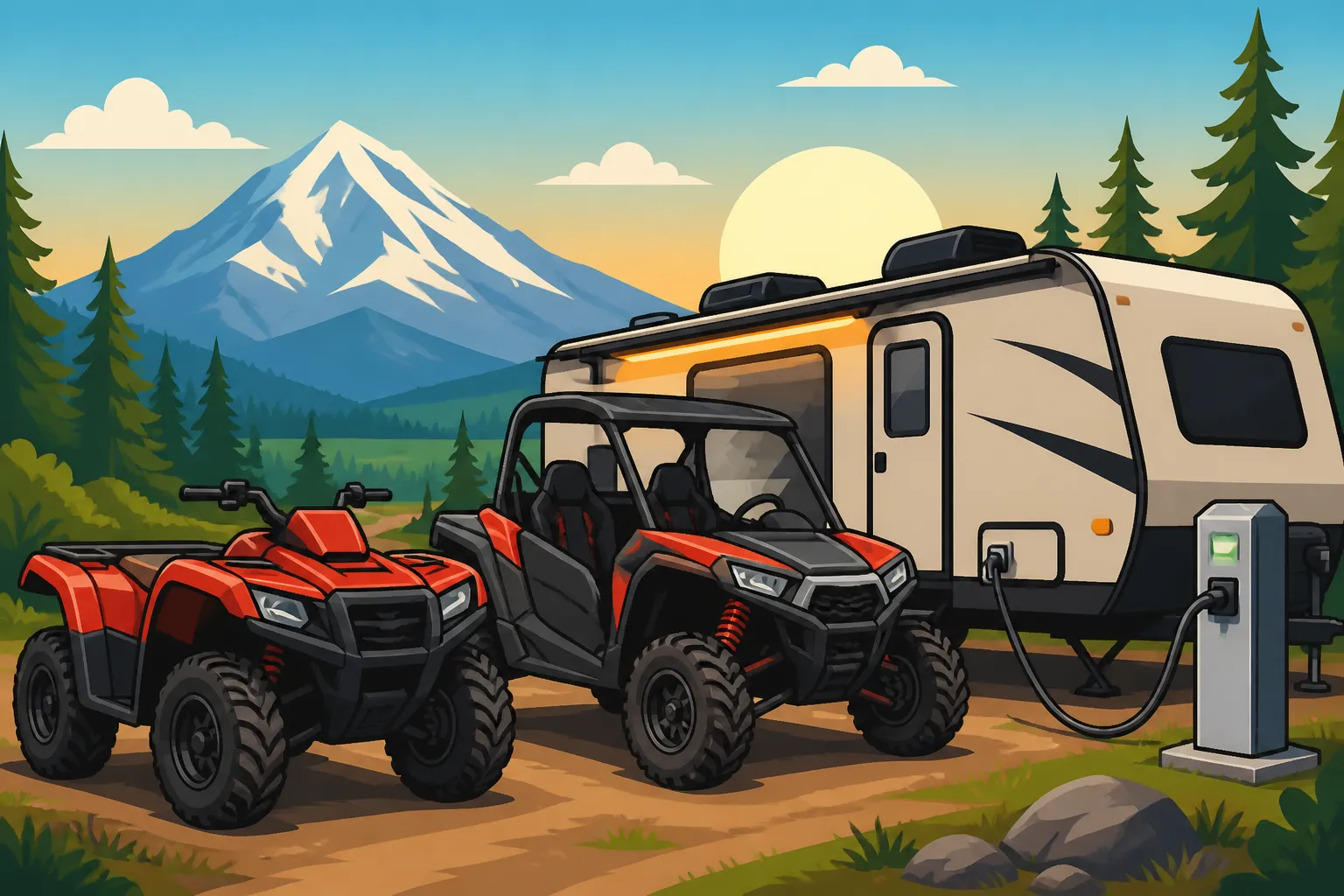
“RV hookups” is not a single, consistent package. One campground may offer electric service but no water or sewer at the site. Another may have water and electrical connections but require you to use a central dump station. Some places advertise RV access while having limited space, tight turns, or rules that make a long tow vehicle and trailer difficult to manage.
Before booking, confirm the exact services at the site, not just the general campground. Ask whether the connection is available at your assigned site, whether the electrical service matches your RV’s needs, and whether water is seasonal. If you need sewer service, check whether it is connected at the site or available only at a dump station. Also ask about generator rules in case you end up at a site without power.
A quick call can save you from arriving after dark and discovering that your “full-hookup” reservation is actually a dry camping space. For a longer list of practical overnight considerations, see [Washington ORV Areas With Showers]. Showers and hookups are separate amenities, so confirm each one directly.
| What you need | What to confirm before booking |
|---|---|
| Electrical service | Whether the site has power, what type of connection it offers, and whether your RV is compatible |
| Water | Whether water is connected at the site or available only from a shared tap |
| Sewer | Whether there is a site connection or a central dump station |
| Trailer space | Site length, turning room, parking for the tow vehicle, and room for an ORV trailer |
| Riding access | Distance and drive time to a legal staging area, not just the nearest trail on a map |
| Rules | Generator hours, quiet hours, machine unloading rules, and whether ORVs may be operated inside the campground |
Choosing a base camp near Washington riding areas
South Sound and Olympic Peninsula riding
For Capitol State Forest, camping in or near Olympia can make sense if hookups and everyday services are priorities. The forest offers a large riding area, but the campground or staging area you use may not provide the RV services you want. Plan on driving between your RV site and your chosen trail access point, and confirm that the route works for your tow vehicle and trailer.
Tahuya State Forest and Green Mountain are another option for riders looking around the Kitsap Peninsula and Hood Canal. Belfair, Bremerton, and Shelton can be useful communities to search when you want developed camping and access to riding areas. The best base depends on which trailhead you plan to use, how much daily towing you are comfortable with, and whether you need groceries, fuel, or other services nearby.
Riders coming from the Seattle-Tacoma area can compare destinations using [Washington ORV Areas Near Tacoma] and [Washington ORV Areas Near Olympia]. Treat travel time as a range rather than a promise: weekend traffic, road construction, trailer speed, and the final approach to a recreation area can change how long the drive takes.
North Sound, Cascades, and eastern Washington
Walker Valley ORV Area is a popular North Sound destination, and Mount Vernon or nearby Skagit Valley communities can serve as a practical base if you want to stay in an RV park rather than camp at a basic recreation site. Check the route from your selected campground to the staging area before reserving. A campsite that looks close on a map may still require a longer drive on roads that are less convenient with a trailer.
For Evans Creek near the foothills east of Tacoma, consider searching around Buckley, Enumclaw, and other nearby communities. The public recreation site and the closest developed RV option may not be the same place. Check access conditions and any required passes before leaving your campsite; the requirements for parking at a trailhead can differ from the rules at a private RV park.
Eastern Washington trips need a little different planning. Riders heading toward Ahtanum near Yakima or Juniper Dunes near Pasco should think about heat, shade, water, and the distance between services as well as hookups. [Washington ORV Areas Near Yakima] gives you a starting point for comparing the Ahtanum area with other options. For Juniper Dunes or Beverly Sand Dunes, identify your intended staging area first, then look for an RV base that suits your machine-hauling setup.
How to plan the trip without a last-minute surprise
Match the campground to the ride you actually want
Start with the riding area, not the campground listing. Decide where you intend to ride, identify an appropriate staging point, and then search for camping within a drive you are willing to repeat each day. This avoids booking a comfortable site that is inconvenient for your ride—or a nearby site that cannot accommodate your RV.
Use an official recreation or land-management map to check access and closures. A trail shown on a third-party map may cross land with different rules, or a road may be closed for a reason that is not obvious from the map. Tools such as onX Offroad can help you explore routes and understand the general layout, but use official notices to confirm current access. For Washington forest areas, [Washington Trail Maps From DNR] is a useful companion topic, and [Washington Trail Closures to Check First] is worth reviewing before you load the trailer.
Then check your full travel chain: campground entrance, the route to the riding area, staging-lot access, and space to park and unload. If your RV is large, look for narrow roads, steep grades, low branches, tight turns, or limited turnaround space. A short route on a map can be stressful if it involves a difficult final stretch with a long trailer.
Reserve with the right questions
When you contact a campground, explain what you are bringing: the RV length, tow vehicle, ORV trailer, and number of machines. Ask whether the site can hold the whole setup without blocking the road or occupying an additional space. Some booking systems show the RV site but do not make it clear where a trailer or second vehicle can be parked.
Ask about machine-related rules, too. A campground may allow you to store an ATV or UTV on a trailer but prohibit riding it around the property. Confirm whether unloading is allowed at your site, whether a wash area is available, and how the campground handles muddy machines. If you are riding with a group, check whether multiple trailers can be accommodated and whether everyone needs a separate reservation.
For busy travel periods, look into reservation windows and cancellation rules before building the rest of the trip around a particular site. [Washington ORV Campground Reservations] offers more context on planning ahead. Keep a backup option in mind, especially if you are visiting a popular area or traveling with a rig that needs a longer site.
A practical checklist for hookup camping and ORV riding
Before you book
Use this checklist while comparing campgrounds:
- Choose the riding area and intended staging location first.
- Confirm whether the campground offers electric, water, and sewer at the specific site.
- Check site dimensions and confirm there is room for your RV, tow vehicle, and ORV trailer.
- Ask about generator use, unloading, washing machines, and parking rules.
- Verify that your planned route is suitable for your trailer.
- Check land-manager alerts, access rules, and required passes close to departure.
- Save the campground’s contact information and identify a backup.
For navigation, onX Offroad may help you review the general route and nearby trail network before you go. Download or save the information you need before leaving reliable cell service, and keep an official map or posted land-manager information available as well. A phone map is useful, but it does not override a gate, closure notice, or local rule.
At the campground and trailhead
On arrival, make sure the RV is parked within the assigned space and that your trailer is not blocking traffic or another guest’s site. Keep machines secured when they are not in use, and follow the campground’s rules for fueling, maintenance, and washing. Mud and grit can travel into hookups, shared walkways, and neighboring spaces, so a simple cleanup plan makes the stay easier for everyone.
Before unloading, check that you are at the correct staging area and that your machines meet the requirements for the land and trails you plan to use. Rules, closures, and pass requirements can differ among state forests, federal recreation areas, and private facilities. If you are not sure whether a road or trail is open to your machine, stop and confirm rather than relying on a line shown on an app.
For a weekend near Capitol Forest, for example, a comfortable routine might be to stay at a developed RV site near Olympia, drive to the appropriate forest access point in the morning, ride within the area’s permitted routes, and return to the campground for hookups and a shower. For a trip to Walker Valley, you might choose a Skagit Valley base and build in enough time for the trailer drive each day. The right arrangement is the one that fits your rig, your riding plans, and how much time you want to spend towing.
A little planning keeps “camping with hookups” from becoming a vague promise on a booking page. Confirm the services, measure the site against your complete setup, and check riding access separately. That way, you can enjoy the comfort of a developed campground without assuming it sits right beside the trails.
Disclaimer
This article is for general informational purposes only and does not constitute professional advice. Laws, prices and regulations vary by location and change over time. Consult a qualified professional for guidance on your specific situation.