Free Places to Ride an ATV in Washington
Finding a genuinely free place to ride an ATV in Washington can be harder than finding a trail on a map. A route may have no riding charge but still require a parking pass, valid ORV registration, or permission to cross private land. This guide explains where to start, what “free” can mean, and how to avoid arriving at a locked gate or a fee station.
Places to start looking for free ATV riding in Washington
Juniper Dunes near Pasco
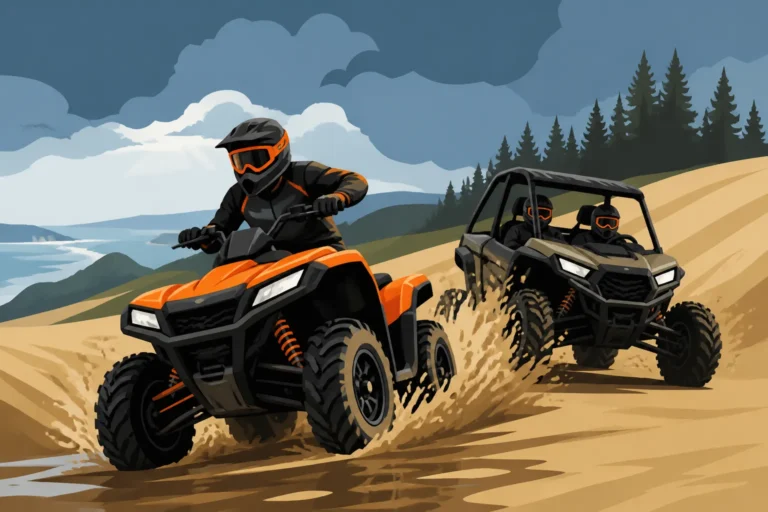
Juniper Dunes, in the southeastern part of the state near Pasco, is one of the first areas riders investigate when looking for sand riding without a traditional trailhead day-use fee. The riding area sits in a dry, open landscape that feels very different from the forest trails west of the Cascades. Expect sand, open terrain, and a ride that calls for thoughtful route choices rather than the tight, shaded paths found in places such as Walker Valley.
“Free” should not be taken to mean “ride anywhere.” Motorized riding is restricted to designated areas, and the nearby Juniper Dunes Wilderness is off-limits to motor vehicles. That boundary matters: dunes can make it tempting to follow a line that looks open, but a route that crosses into protected wilderness can turn a fun day into an avoidable violation. Check current Bureau of Land Management access information and maps before unloading, and stay within routes designated for motorized use.
Plan for a more self-sufficient outing than you might at a developed riding park. Bring water, food, a spare tire-repair kit, and enough fuel for the route you intend to ride. Sand can be demanding on both riders and machines, especially when the surface is soft or the weather is hot. Cell service may be unreliable, so agree on a meeting point and a turnaround time if your group gets separated. For preparation tips, see [Where Washington Sand Riding Happens] and [Airing Down for Washington Sand].
Use a mapping app such as onX Offroad as a planning aid, not as final permission to ride. Compare the route with current official land-management information, look for closures or access notices, and do not assume that a visible track is an authorized motorized route. Local access conditions can also affect how you reach the riding area, so check the approach roads before towing a machine out from Pasco.
Riding with permission on private land
Private property can be a genuinely no-fee option when the landowner has explicitly invited you to ride. That might mean a family member’s acreage, a farm where the owner has set aside a designated area, or a private riding property where a host has agreed to let your group use the land without charge. The key difference is permission: a gate that is open, a track on a map, or tire marks in a field do not establish that riders are welcome.
Ask exactly where you may ride, where you may park, and whether the permission covers everyone in your group. A landowner may be comfortable with a short loop near a barn but not with riders crossing a pasture, approaching a residence, or using a road that connects to neighboring property. If someone else owns a strip of land between the parking spot and the riding area, you need permission for that section too. The practical advice in [Asking a Landowner Before You Ride] can help you avoid uncomfortable misunderstandings.
It is also worth agreeing on basic expectations before you arrive. Ask about noise, speed, passenger rules, gates, livestock, and whether riding is allowed after rain. A machine that tears up a wet field can leave damage long after the riders have gone home. Keep the group small if requested, stay on agreed routes, and leave the property as you found it. If a landowner’s permission is informal, a clear text message describing the date and riding area can help everyone remember the agreement.
What “free” means at Washington riding areas
No riding fee is not the same as no cost
Riders often use “free” to mean that no one charges them at the trailhead to ride. But a no-fee riding area can still involve costs or requirements for the machine, vehicle, or parking location. You may need valid Washington ORV registration, an appropriate tab, a pass for the vehicle you used to reach the trailhead, or permission to cross land on the way in.
These are separate questions: Is the riding area open to motorized use? Is the route open to your type of machine? Does the vehicle parked at the trailhead need a recreation pass? Does the ATV or UTV need registration or a permit? A “no day-use fee” answer to the first question does not answer the others. Start with [Washington ORV Permits Explained] and [Do You Need a Discover Pass to Ride in Washington?] when sorting out the paperwork and access requirements.
| What may be required | What it applies to | What to check before leaving |
|---|---|---|
| ORV registration or permit | The ATV or UTV being operated | Whether your machine’s registration is valid for the intended riding area |
| Discover Pass or other recreation pass | Often the vehicle parked at a state-managed trailhead | Whether the specific parking site requires a pass |
| Landowner permission | Private land or a route across private property | The exact area and access route you are allowed to use |
| Motorized-use approval | The trail, road, or riding zone | Whether your machine type is allowed on that specific route |
| Closure and seasonal restrictions | The area or individual route | Current agency notices, gates, and posted signs |
A useful rule of thumb is to treat “free” as a question about one specific charge, not a guarantee that the entire outing costs nothing. Fuel, food, machine maintenance, registration, and travel still add up. If you are comparing different destinations, write down the possible pass and access requirements separately from the riding fee so you can make a fair comparison.
DNR forests and developed trailheads may require a pass
Popular forest riding areas such as Capitol State Forest, Walker Valley, and Tahuya are well-known options, but they should not automatically be described as free. Public access rules vary by managing agency and parking location, and some state-managed recreation sites require a Discover Pass for the vehicle. An area might not charge a separate per-ride fee while still requiring a pass to park at a staging area.
Before heading to a DNR site, confirm the pass rules for the exact lot or access point you plan to use. Do not assume that parking outside a gate, along a nearby road, or on a shoulder avoids the requirement; those places may have their own restrictions, and roadside parking can create safety or access problems. The practical details in [The Discover Pass and Washington Riders] and [Washington's DNR Forests Compared] are useful starting points for understanding how land management affects a ride.
The same caution applies to federal sites. Some Forest Service riding destinations have separate recreation-pass rules, and a pass may be tied to the vehicle or parking area rather than the ATV itself. Evans Creek, for example, is a popular riding destination, but riders should confirm its specific pass requirements before loading up. See [Why Evans Creek Needs a Northwest Forest Pass] if you are considering that area.
How to check a free riding location before you go
Confirm access, machine rules, and route boundaries
Start by identifying the land manager. A trail may pass through state, federal, county, or private property, and each parcel can have different rules. Use the land manager’s official recreation information to check whether motorized use is allowed, which routes are open, and whether the area has a current closure. A route that appears on an older map may have been closed, rerouted, or limited to certain vehicle types.
Next, confirm that your ATV or UTV fits the route. A wide side-by-side may not be allowed on a narrow trail, even if smaller machines can use it. Roads can have separate restrictions from designated ORV trails, and public-road access is not automatic just because an ATV is registered. If you plan to connect a trail ride with a public road, review [Washington Rules for Riding a Forest Road] and [Washington Rules for Riding a County Road] before assuming the route is legal.
A tool such as onX Offroad can help you preview an area and organize a route, but a digital line is not proof that riding is permitted. Check current official maps and notices, read signs at the entrance, and turn around if a gate or closure notice contradicts an older route description. If you are unsure whether a route crosses private property, ask the land manager or property owner rather than treating the map as authorization.
Make a simple pre-ride checklist
Before loading the machine, confirm the essentials in one sitting. This is especially helpful when you are traveling from Seattle, Tacoma, Olympia, Spokane, or another part of the state and do not want to discover a pass requirement after a long drive with a trailer.
- Confirm the riding area is open. Check for seasonal closures, fire restrictions, active work, and temporary road closures.
- Verify motorized access. Make sure the ATV or UTV is allowed on your intended trails or designated riding zone.
- Check the pass for your parking location. Identify the exact staging lot or trailhead, not just the general recreation area.
- Review registration and permit requirements. Carry the documents or decals required for your machine and the type of riding planned.
- Look at the route into the area. Confirm that the access road is open and that you are not relying on an unauthorized crossing.
- Prepare for the terrain. Sand, mud, steep forest roads, and remote areas call for different equipment and supplies.
- Tell someone your plan. Share the destination, expected return time, and a backup plan if the group is delayed.
Apps like onX Offroad can be useful for planning a route and keeping track of your intended ride, but save or review relevant information before you lose cell service. Take a paper map or another offline backup when riding in a remote area. If the map, agency notice, and posted sign do not agree, follow the current land-manager direction and do not push past a closure.
Making a no-fee ride work for your group
Choose the terrain that matches your experience
The best free ride is not necessarily the closest one or the place with the most dramatic terrain. It is the area that matches your group’s experience, equipment, and appetite for self-supported riding. Juniper Dunes may appeal to riders looking for sand and open terrain, while a private property loop may be better for a family group that wants a short, controlled outing. A forest riding area can offer a more developed trail experience, but it may come with a pass requirement.
Be honest about the least experienced rider in the group. A route that feels easy to someone who rides every weekend may be intimidating for a beginner, particularly if it includes deep sand, slick roots, steep grades, or limited turnaround space. Choose a conservative route, set a pace everyone can maintain, and agree that anyone can ask to stop. For more local planning, [Washington Trails for Beginners] can help you think through terrain and ride difficulty.
Keep the budget realistic
A trip can have no riding fee and still cost more than expected once you include fuel, towing, food, and machine upkeep. Remote locations can mean a longer drive or more time on rough access roads. A sandy ride can mean extra cleaning and inspection afterward, while a muddy outing can leave you with packed radiators, wet gear, and more work before the next ride. Budget for the full outing rather than just the fee at the gate.
If a nearby DNR or Forest Service area charges for parking but offers a clearer staging area, established routes, or facilities your group needs, paying for that access may be a better fit than chasing a no-fee destination. There is nothing wrong with preferring a simple trailhead and clear rules over a more remote trip that demands additional planning. Check the relevant agency information, choose the access point that suits your group, and treat posted restrictions as part of the ride plan—not an inconvenience to work around.
Disclaimer
This article is for general informational purposes only and does not constitute professional advice. Laws, prices and regulations vary by location and change over time. Consult a qualified professional for guidance on your specific situation.