The May to November Season in Washington’s Capitol Forest
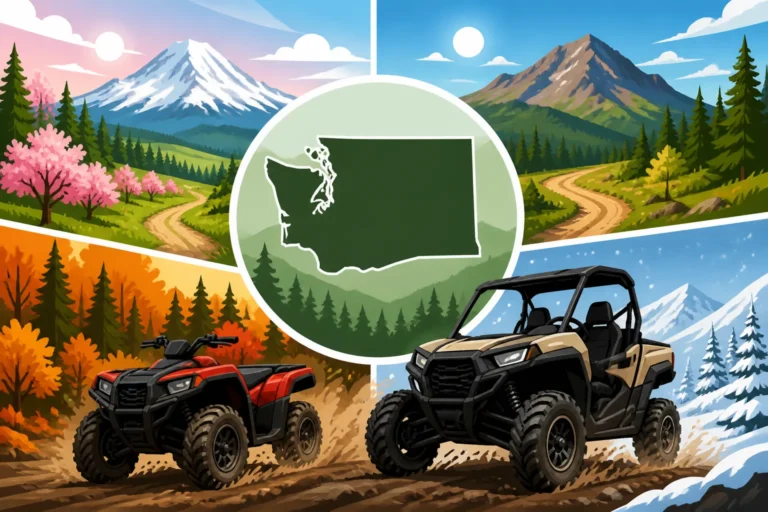
Capitol Forest can feel like two different riding areas depending on when you arrive: a damp, rutted network in spring and a drier, dustier one by late summer. The May-to-November riding season is a useful planning window, not a promise that every route is open. This guide explains how conditions change, what to check before hauling in, and how to choose a ride that fits the day.
What the May to November season means
A seasonal window, not a guarantee
Capitol Forest’s motorized riding season is commonly associated with the period from May through November. That broad window helps riders think about when to plan a trip, but it does not mean every road and trail opens on the same day or stays open continuously until the end of fall. Weather, road conditions, timber work, maintenance, and temporary restrictions can all affect access.
That distinction matters when you are making a weekend plan from Olympia, Tacoma, or farther away. A route you rode last month might now be closed for work, while a route that was muddy in spring may be much more manageable later in summer. Check current notices before loading your machine, and treat maps as planning tools rather than proof that a route is open.
For an overview of the forest’s scale and recreation setting, see Washington's 110,000-Acre Capitol Forest. Before you go, also review [Washington Trail Closures to Check First]. A quick check can save a long drive to a locked gate or a trailhead where conditions are not suitable for your machine.
Why the forest changes so much through the season
The riding experience changes with rainfall, elevation, drainage, and recent forest activity. A low-elevation route can be wet and soft after rain while another road nearby is firm enough to ride. Higher ground may hold moisture longer, and shaded sections can stay slick even when open areas have started to dry.
Capitol Forest is also a working forest, not a recreation area where every route is managed solely for riding. Logging activity, road maintenance, hazard-tree work, and other operations can affect access. A closure may apply to one road or trail without meaning that the whole forest is closed. Read the notice carefully and follow its boundaries rather than trying to find a way around a gate.
How conditions change from May through November
Spring riding from May into early summer
Early-season rides can offer cooler temperatures and less dust, but they often come with damp soil, standing water, slick roots, and soft shoulders. A route that looks dry from the staging area may turn greasy under tree cover or become rutted where water runs across the road. Mud can also hide rocks, holes, and branches, making a familiar trail feel harder than it did during a dry-season visit.
Give yourself room to turn around. If tires begin to spin or leave deep ruts, continuing can damage the trail and make recovery more difficult. A winch, tow strap, basic tools, and a plan for helping a stuck rider are sensible preparations, but equipment does not make a closed or unsuitable route safe to enter. For a closer look at wet-season challenges, see [Mud Season in the Black Hills] and [Capitol Forest After a Week of Rain].
Spring is also a good time to be conservative about distance. A group that expects to cover a long loop may find that slippery surfaces, fallen debris, or changing conditions slow progress. Choose a shorter route with easy turnarounds, especially if you are riding with newer riders or a wide side-by-side.
The drier stretch in midsummer
As the forest dries, traction may improve and travel can feel more predictable. That does not make every trail easy: loose gravel, washboard, dust, and shaded wet spots can remain. Dust also affects visibility between machines. Leave enough space to see the road ahead, slow down when visibility drops, and avoid following so closely that another rider’s dust cloud becomes your view.
Dry conditions can bring their own restrictions and responsibilities. Fire danger may lead to limits or closures, and work in the forest can continue during the riding season. Check for notices even when the weather seems ideal. If you stop, park only where it is safe and permitted, keep vehicles clear of travel routes, and take care not to block access for other users or work crews.
Summer weekends may also be busier at popular staging areas. Plan for a full parking area, bring what you need rather than relying on finding supplies nearby, and agree on a meeting point in case your group becomes separated. A shorter loop can be the better choice if trailhead parking is crowded or the group has mixed experience.
Fall riding from September into November
Fall can bring cooler temperatures, shorter daylight, renewed rain, and changing surface conditions. A route that was dusty a few weeks earlier may become slick after a storm. Wet leaves, soft shoulders, and early-season puddles can make corners and descents less predictable, particularly where a road is shaded or slopes across a hillside.
Plan to finish well before dark. Check the forecast and the condition of your route, and carry warm layers that remain useful if you stop moving. If rain is expected, think through how you will return to the staging area if a road becomes muddy or a closure changes your planned loop. Do not assume that a route will remain passable simply because it was open on your last visit.
A month-by-month snapshot can help set expectations, but local conditions still decide what a specific ride will be like.
| Part of the season | Conditions you may encounter | Practical approach |
|---|---|---|
| May and early summer | Damp soil, slick roots, standing water, soft roads | Keep the route short and turn around before leaving deep ruts |
| Midsummer | Drier surfaces, dust, loose gravel, possible fire restrictions | Increase following distance and check for fire-related notices |
| Early fall | Cooler weather, damp shade, shorter daylight | Carry warm layers and plan an earlier return |
| October and November | More rain, changing traction, localized closures | Recheck conditions before departure and avoid relying on old route notes |
Planning a Capitol Forest ride
Start with current information and a realistic route
Before a trip, check official forest and land-manager notices for closures, road work, and access changes. Then compare that information with a current map and your group’s experience. A line displayed on a map can help you understand where roads connect, but it does not establish that the route is open to your machine or suitable for riding that day.
Some riders use a navigation app such as onX Offroad to review route options and understand the layout of an area before leaving home. It can be useful to save a planned route and identify nearby alternatives, especially where cell service may be limited. Still, confirm access with the responsible land manager. A digital map is not a substitute for a posted closure notice, a gate, or a current restriction.
The [Washington Trail Maps From DNR] topic is a helpful starting point for understanding official mapping. For a ride that begins on the north side of the forest, see [Riding Capitol Forest From the North End]; for a different approach, review [Riding Capitol Forest From the South End]. Choose an entry point that suits your route rather than assuming every trailhead connects conveniently to every other one.
Match the route to the machine and the group
A route that works for a compact quad may not be a good fit for a wide side-by-side. Pay attention to trail width, turning room, surface, slope, and any posted restrictions. If a route is narrow or has limited space to pass, a wider vehicle may need a different option. Do not assume that a road visible on a map is appropriate for every off-road vehicle.
Group ability matters just as much as machine type. New riders may need frequent stops and straightforward terrain, while experienced riders may be comfortable with more challenging surfaces. Agree on a pace before setting out, identify who will lead and sweep, and make sure everyone knows what to do if the group gets separated. A route that is enjoyable for the least experienced rider is usually a better choice than one that leaves someone struggling to keep up.
Make a simple plan before you leave the staging area: destination, turnaround point, expected return time, and a backup route. Tell someone who is not riding where you plan to go and when you expect to be back. If conditions worsen, the plan should make it easy to shorten the ride rather than pressure the group to complete a loop.
Access, equipment, and responsible riding
Confirm permits, tabs, and land access
Before riding, make sure the machine’s registration and required tabs are appropriate for the intended use. Washington’s off-road registration requirements are separate from trail access rules, and having a registered machine does not automatically grant permission to ride every road or trail. Review [Washington ORV Permits Explained] for the broader permit context, and check the requirements that apply to your machine and the land you plan to visit.
Also confirm whether a parking pass is required at your chosen site. Pass requirements can depend on the location and managing agency, so do not assume the same pass applies at every staging area. Keep registration and other required documents available while riding, and secure papers so rain, mud, or a wet storage compartment does not ruin them.
A useful pre-trip check includes the machine, safety equipment, route plan, and access documents. Inspect tires, brakes, lights, fuel, and controls. Carry a first-aid kit, water, food, weather-appropriate clothing, and a way to contact help if service is available. Let someone at home know your plan, particularly if you are riding in a group that may split up.
Keep roads and trails in good condition
Ride only on routes open to your machine, and obey signs, gates, and temporary closure notices. Do not make a new route around a blocked road. A closed route may be protecting soft ground, addressing a safety hazard, or allowing work to proceed. Going around the closure can damage land and create a safety problem for riders and workers.
On wet ground, avoid spinning tires and widening ruts. If a section is too soft to cross without significant damage, turn back and choose a firmer route. Stay on established roads and trails, avoid disturbing streambanks, and pack out litter. A small detour around mud can quickly become a much wider scar if several machines follow it.
Share the forest thoughtfully with other users and forest operations. Slow down near people, parked vehicles, and work activity, and give trucks and equipment room to maneuver. Keep noise under control, secure any loads, and stop in a location where your group is visible without blocking a road. Responsible choices help protect access for the next ride as well as the one you are on today.
A practical checklist before you leave
The day before the ride
Check the forecast, land-manager alerts, road and trail closures, and any seasonal restrictions. Review your planned route and mark a reasonable turnaround point. If you use onX Offroad or another navigation tool, save the map or route before leaving home, but verify access against official notices rather than relying only on the app.
Confirm that every rider knows the meeting location, planned distance, expected pace, and return time. Ask whether anyone is new to the area or riding a different type of machine so the route can be adjusted in advance. If your group cannot agree on a route that fits everyone, split into smaller groups only if both groups have a clear plan and enough experienced riders.
Check registration, required tabs, access passes, fuel, and machine condition. Pack rain gear even when the forecast looks favorable; forest weather can change, and a delayed ride can become cold quickly. Bring a charged phone, but do not make cell coverage part of your safety plan.
At the staging area and on the trail
Before unloading, read posted signs and confirm that your intended route is open. Take a moment to look at the ground, weather, and traffic around the trailhead. If the surface is already soft or the parking area is crowded, adjust the plan rather than pushing ahead with a long loop.
On the trail, ride at a speed that lets you stop within the distance you can see. Leave room between machines, especially in dusty conditions, and pause where the whole group can gather safely. If a rider has a problem, stop in a place that does not block the route and make sure the rest of the group knows what is happening.
At the end of the ride, check that everyone has returned and that no gear or litter has been left behind. If a route was muddy or damaged, consider reporting the concern through the appropriate land-manager channel. A short, careful trip is better than forcing a route that the season’s conditions have made unsuitable.
Disclaimer
This article is for general informational purposes only and does not constitute professional advice. Laws, prices and regulations vary by location and change over time. Consult a qualified professional for guidance on your specific situation.