Why a Sixty mph Road Is the Ceiling for Crossing
There’s nothing quite like exploring the vast, diverse landscapes of Washington on your ATV or side-by-side. From the dense forests of the west to the arid plains of the east, our state offers incredible riding opportunities. But eventually, almost every journey, even the most dedicated off-road adventure, will bring you to a paved road you need to cross. It can be incredibly frustrating to hit a main road, know your destination is just on the other side, but be unsure if you're even allowed to cross it, especially when traffic whizzes by. This guide is here to unravel the specific rules and logic behind Washington's 60 mph speed limit for ATV and UTV road crossings, ensuring you understand not just what the rule is, but why it exists and how to navigate it safely and legally.
The Legal Framework: Washington's 60 MPH Crossing Rule
When it comes to sharing our roads, even briefly, with off-road vehicles like ATVs and UTVs, Washington State has some very specific guidelines in place, and a key one revolves around the maximum speed limit of the road you intend to cross. The law states that you cannot cross any roadway that has a posted speed limit exceeding 60 miles per hour. This isn't just an arbitrary number; it's a carefully considered limit designed to enhance safety for everyone on the road, including you, the WATV rider.
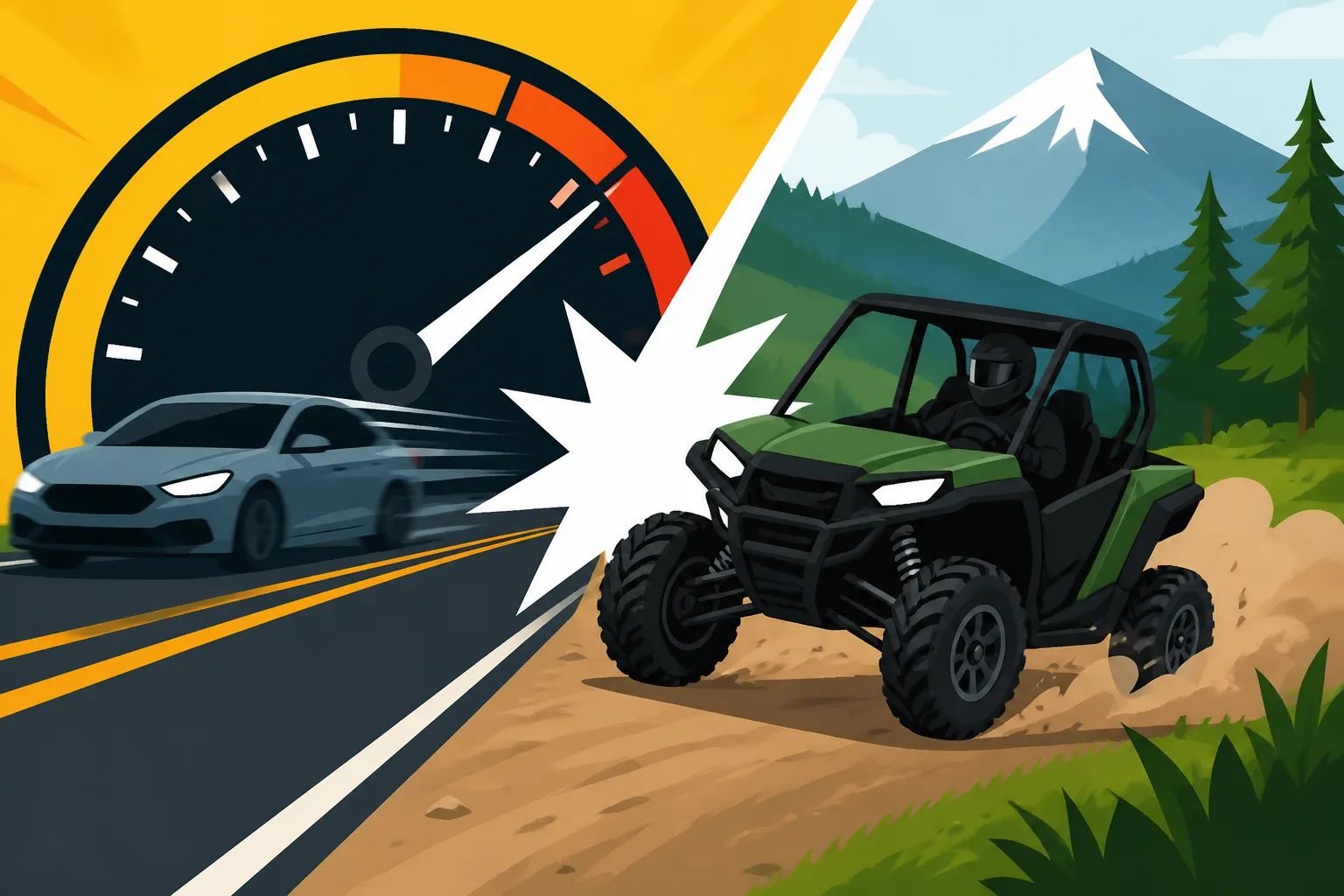
The core intent behind this regulation is directly tied to the inherent differences between a street-legal car or truck and a Washington Wheeled All-Terrain Vehicle (WATV). While modern side-by-sides are incredibly capable and robust machines, they aren't designed to operate at highway speeds, nor do they offer the same level of protection or visibility as a passenger car. Imagine trying to make a quick judgment call and safely cross multiple lanes of traffic when vehicles are traveling at 65 or 70 mph; the margin for error shrinks dramatically. This legal ceiling for crossings creates a necessary buffer, reducing the risk of high-speed collisions in situations where WATVs are most vulnerable. It acknowledges the practical realities of vehicle dynamics and human reaction times. You’ll find more information on general crossing rules in [Washington Rules for Getting Across a Road].
This rule also subtly encourages riders to seek out routes that minimize exposure to the fastest, most heavily trafficked roads. It prompts a bit of foresight and planning, nudging you towards county roads or smaller state highways where the posted speed limits are naturally lower. This isn't about restricting your fun; it's about channeling it into safer, more appropriate environments. The Department of Licensing and local law enforcement are keenly aware of the unique challenges WATVs face when interacting with conventional road traffic, and this 60 mph crossing limit is one of the foundational pieces of legislation aimed at managing those risks.
Distinguishing a Cross From a Ride: What the Law Says
It’s crucial to understand that there’s a distinct legal difference in Washington between crossing a road and riding on a designated section of road. Many riders conflate the two, leading to confusion and potential legal trouble. When we talk about the 60 mph limit, we are strictly referring to the act of moving your WATV directly across a road from one shoulder to the other, or from one trail segment to another that happens to be on the opposite side of the pavement. This is typically a brief maneuver, intended to connect two off-road segments.
Riding on a road, on the other hand, means traveling longitudinally along a paved public road, either to access a trail or because that specific road has been opened to WATV use by local ordinance. For such situations, there are entirely different sets of rules regarding speed limits (often 35 mph or less on county roads unless otherwise specified), [Equipment a Washington WATV Needs on a Road], and even specific counties and cities that have "opted in" to allow WATV use. The 60 mph crossing rule does not mean you can ride your WATV on a 60 mph road, even for a short distance, unless that specific segment has been legally opened and you meet all other requirements, which is a rare occurrence. Generally, if a road is posted at 60 mph, it’s going to be a major arterial or state highway, and those are typically not open for extended WATV travel.
Think of it this way: a crossing is like a quick dash across the street. You stop, look both ways, and move directly across. Riding on a road is like driving a car on that street, following all the same traffic laws as other vehicles. Washington law makes this distinction because the risks involved in these two actions are fundamentally different. A brief, controlled crossing at a safe point minimizes your time in the path of oncoming traffic, whereas sustained travel on a high-speed road exposes you to prolonged risk, requires you to maintain a safe speed with traffic flow (which WATVs often cannot do safely at 60 mph), and puts you in a position where other drivers might not expect you. You should always consult [Washington Rules for Crossing a State Highway] for the full picture.
Safety and Practical Considerations for High-Speed Crossings
Beyond the letter of the law, the 60 mph crossing ceiling is rooted in some very real, practical safety concerns that any WATV rider should take seriously. These machines, while incredibly fun and capable off-road, simply aren't designed for the speeds and dynamics of high-speed public roads. Visibility is a major factor. Even with upgraded lighting and bright colors, an ATV or UTV is a much smaller profile than a car or truck, making it harder for drivers to spot, especially at a distance or in adverse conditions. When a vehicle is traveling at 60 mph, it covers 88 feet per second. That means in the blink of an eye, a car can close a significant gap, leaving very little reaction time for either the WATV rider or the oncoming driver.
Consider also the performance characteristics of your machine. While some modern UTVs can reach impressive speeds, their braking distances, acceleration, and handling at highway speeds are not comparable to a road vehicle. Attempting to accelerate quickly across multiple lanes of 60 mph traffic or misjudging the speed of an approaching vehicle can lead to catastrophic consequences. The lack of an enclosed cab (for many ATVs and some UTVs) also means riders are far more exposed in a collision. Even in a side-by-side with roll cages and seatbelts, the forces involved in a collision with a passenger vehicle at high speeds are immense. This is why having proper safety gear, including a helmet—as outlined in [Washington Helmet Law for WATV Riders]—is absolutely critical whenever you're on or near roads.
Planning your crossings meticulously is key. Never assume oncoming traffic will see you or slow down. Always make eye contact if possible, and ensure you have a clear, unobstructed view in both directions for a considerable distance. If you're riding with a group, cross one at a time, allowing each rider to clear the roadway before the next one begins their crossing. It's a moment that demands your full attention and a conservative approach. Upgrades like better mirrors, louder horns, and more prominent [Washington Lighting Requirements for WATVs] can help, and companies like SuperATV offer a range of accessories that can improve your machine's visibility and road-worthiness for these brief, necessary encounters with pavement.
Navigating Your Route: Planning for the 60 MPH Crossing Limit
So, you know the rule: no crossing a road with a posted speed limit over 60 mph. Now, how do you actually apply this on the ground? It all comes down to careful route planning and sometimes, a little bit of flexibility. Before you even load up your machine, take some time to study maps of your riding area. Look for alternative routes that might involve crossing lower-speed county roads or local streets instead of major highways. Often, a slightly longer route on a less-trafficked road is a far safer and more legal option than attempting to cross a fast-moving thoroughfare.
When you're out on the trail and come to a road crossing, always look for the posted speed limit signs. They are your definitive guide. If you see a sign indicating 65 mph or 70 mph, you simply cannot cross there. It's a dead end for your WATV on that particular route. This might mean turning around, finding a different trail, or if you're lucky, identifying a permitted road segment that runs parallel to the high-speed road, allowing you to legally travel a short distance to a lower-speed intersection. Remember, even if a trooper isn't actively monitoring that exact spot, if you get into an incident or are observed, the fines for [Washington Fines for Illegal WATV Road Use] can be substantial, not to mention the safety risk.
Sometimes, the maps might be outdated, or a speed limit might have changed. When in doubt, err on the side of caution. If you can't clearly determine the speed limit, or if it feels too fast to safely cross, don't risk it. This is where local knowledge from other riders can be invaluable. Join local riding clubs or online forums for Washington ATV riders; they often share tips on safe crossing points and specific trails to avoid. Equipping your machine with robust accessories, perhaps even an upgrade from SuperATV, can also give you more confidence when you do encounter an allowed crossing. Consider adding a small GPS unit or using a mapping app on your phone that shows speed limits to help you identify suitable crossing points in advance. Always be prepared to adapt your plans if a crossing point proves unsuitable.
Here's a quick reference for common speed limits you might encounter:
| Posted Speed Limit (MPH) | WATV Crossing Permitted? | General Road Type | Example Scenario |
|---|---|---|---|
| 25-35 | Yes | Residential, County Roads | Crossing a rural road between two forest trail segments. |
| 45-55 | Yes | Rural Highways, Main Arterials | Crossing a state route to access a different part of a trail system. |
| 60 | Yes | Some State Highways, Major Rural Roads | Crossing a limited access highway where 60 mph is the maximum posted speed. |
| 65+ | No | Interstate Highways, Major State Routes | Absolutely prohibited from crossing. Must find an alternative. |
Always remember that this table refers only to crossings. Riding on roads still requires specific permission and adherence to additional rules, which are generally much stricter. Understanding [What a Washington Trooper Checks Roadside] can help you prepare for any encounter with law enforcement.
Disclaimer
This article is for general informational purposes only and does not constitute professional advice. Laws, prices and regulations vary by location and change over time. Consult a qualified professional for guidance on your specific situation.