Washington Rules for Riding a County Road
It's incredibly frustrating, isn't it? You've got your Washington Wheeled All-Terrain Vehicle (WATV) all gassed up, itching to hit the trails, but you also want to be able to legally get from your campsite to the trailhead, or even just cruise down a quiet county road for a quick errand. The rules for riding county roads in Washington state can feel like a tangled mess of "can I or can't I?" that leaves many riders scratching their helmets. This guide is here to untangle that knot, clarifying Washington's specific regulations so you can ride your ATV or UTV on county roads with confidence and stay on the right side of the law.
The Basics of Washington's WATV Road Rules
Navigating the various road rules in Washington can feel like a maze, especially when you consider that different levels of government have a say in where you can and can't ride your WATV. It's not a simple "yes" or "no" across the board, and understanding the foundational principles is your first step to riding legally and safely on county roads.
Why County Roads Are Different from State Highways
One of the biggest sources of confusion for WATV riders is the distinction between county roads, state highways, and even city streets. When the state legislature passed the law allowing WATVs on certain roads, they created a framework that then hands off a lot of the decision-making to local jurisdictions. This means a state highway, like a major US route or an interstate, is almost entirely off-limits for WATV use, except for specific crossings. On the other hand, county roads, which are maintained by the local county government, fall into a more nuanced category. The state law sets the general parameters, such as speed limits and equipment requirements, but it's the individual county governments that decide which of their roads, if any, will actually be open to WATVs.
This localized control can be incredibly frustrating for riders. You might live in one county where certain roads are open, but cross into the next county over, and suddenly those same types of roads are closed. It feels inconsistent, and it often means you can't just assume what's legal in one place is legal everywhere. This patchwork approach is a direct result of the state empowering local communities to tailor the rules to their specific needs and concerns, which, while logical in theory, can make life difficult for WATV enthusiasts just trying to enjoy their machines.
The bottom line is that while the Washington Department of Licensing issues your tabs and the state patrol enforces state law, it's your county commissioners or council members who hold the power to open or close their local road network to WATVs. It means doing your homework is absolutely essential, as blindly following what you think is allowed could lead to a citation or, worse, an unsafe situation.
The Core Rule: 35 MPH and Under
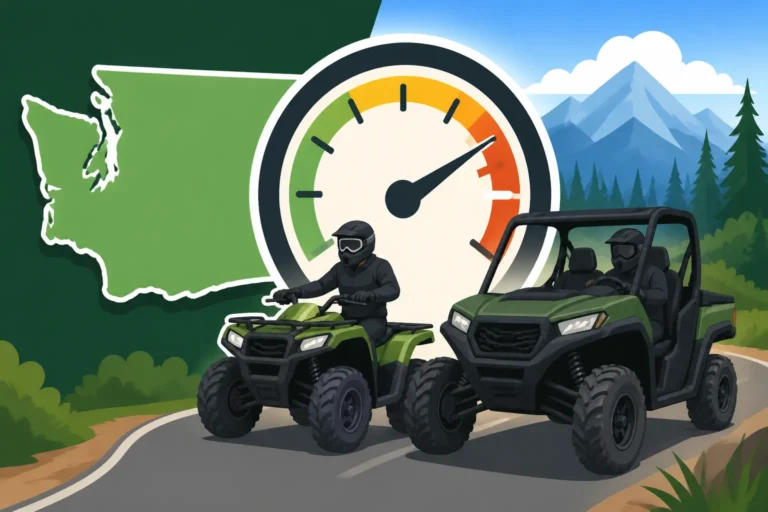
At the heart of Washington's WATV road laws is a critical speed limit: your WATV can generally only operate on roads with a posted speed limit of 35 miles per hour or less. This is a non-negotiable threshold set by state law and is designed to mitigate safety concerns by keeping WATVs off faster, higher-traffic roads where they might be outmatched by other vehicles. This rule applies uniformly across all counties that choose to open their roads. It's a key piece of information for any rider looking to legally take their machine from the dirt to the asphalt. [Washington's 35 mph Road Rule]
What does this mean in practice? It means that even if a county has an ordinance allowing WATVs on its roads, you still need to pay close attention to the speed limit signs. A county might open a long stretch of scenic backroad, but if that road suddenly transitions from a 35 mph zone to a 45 mph zone, your legal ride ends right there. You cannot continue on the section posted at 45 mph, even if you keep your speed below 35 mph. The posted limit dictates access, not your actual speed. This often catches riders off guard, as they might think simply driving slower is enough, but it isn't. The sign is the rule.
Furthermore, this 35 mph rule applies to all WATVs, whether you're on a four-wheeler, a side-by-side, or even a dirt bike with a street-legal kit. It's a blanket restriction that prioritizes safety on public roadways where WATVs share space with cars and trucks. For many rural riders, this rule is a lifeline, allowing them to connect trails or access amenities without having to trailer their machine for short distances. However, it also means that much of the primary road network, especially those connecting larger towns or crossing significant distances, remains firmly off-limits.
Opting In vs. Opting Out: County Ordinances
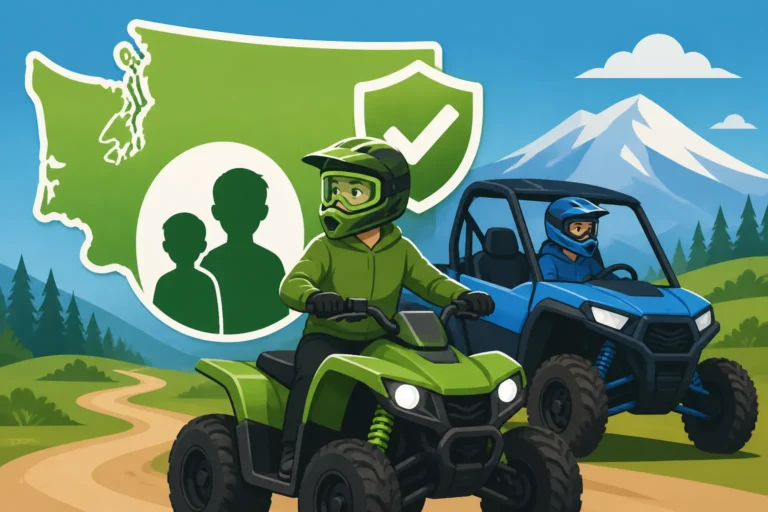
Now, let's get into the nitty-gritty of how counties actually decide which of their roads are open. Washington state law provides two distinct pathways based on population, creating a critical difference in how WATV access is determined. For counties with a population greater than 15,000 residents, the default position is that their roads are closed to WATVs. To open any road, these counties must actively "opt-in" by passing a specific ordinance that identifies and lists the roads or road segments where WATVs are permitted. This often involves public hearings, community input, and a formal legislative process by the county commissioners or council. [Washington Counties Over Fifteen Thousand Must Opt In]
Conversely, for counties with a population of 15,000 residents or fewer, the situation is reversed. These smaller, typically more rural counties are "open by default." This means that unless the county specifically "opts-out" certain roads by passing an ordinance to close them, all county roads with a posted speed limit of 35 mph or less are considered open to WATVs. This simplifies things considerably for riders in less populated areas, as they can generally assume access unless they see a specific notice or ordinance stating otherwise. However, it's still crucial to confirm this with the county, as even small counties can choose to close particular roads for safety or other reasons. [Washington Counties Under 15,000 Open by Default]
This distinction highlights the importance of knowing your specific county's population and local ordinances. For example, a rider in a densely populated county like Snohomish or Pierce will need to consult a detailed list of approved roads, often found on the county's public works or sheriff's website. They can't just assume a road is open. In contrast, a rider in a sparsely populated county like Garfield or Ferry might find far more of their local road network available for WATV use, provided they adhere to the 35 mph speed limit rule. This dual system is designed to give local governments the flexibility to manage WATV access in a way that best suits their unique demographics and traffic patterns.
Understanding County-Specific Regulations
Beyond the general state rules, the true challenge of riding county roads lies in the specific regulations each county adopts. Because of the "opt-in" and "opt-out" framework, what's perfectly legal in one county might earn you a ticket just across the border. It demands a proactive approach to research and preparation from every rider.
Finding Your County's Approved Road List
This is arguably the most critical step for any WATV rider planning to use county roads: you absolutely must know which roads are open in your specific county. For counties that have opted in, or for smaller counties that have opted out specific roads, this information is usually compiled into a formal list. The best place to start your search is typically the county's official website. Look for sections related to Public Works, the County Clerk, the Sheriff's Office, or Parks and Recreation. Many counties will publish their WATV ordinances and the accompanying list of approved (or restricted) roads online.
If you can't find it online, don't hesitate to call the County Clerk's office or the Public Works department. They are the keepers of these official records and should be able to direct you to the right document or webpage. Sometimes, local sheriff's departments might also have this information readily available, especially if they are the primary enforcers of the local ordinance. It’s also worth checking with local WATV clubs or rider associations, as they often stay very current on these kinds of regulations and might even have maps or summaries of open roads. Remember, a quick phone call or a few minutes of online searching can save you a significant headache and potential fine later on. [Finding a County's Approved Road List]
It's tempting to rely on word-of-mouth or old maps, but county ordinances can change, and what was open last year might be closed this year. Always seek out the most current, official information directly from the county. Printing out the relevant sections of the ordinance or the road list and keeping it with your registration paperwork can be a smart move, especially if you ever need to clarify things with a law enforcement officer. This diligence is part of being a responsible WATV rider and helps ensure you're contributing positively to the perception of our sport, rather than giving anyone a reason to restrict access further.
What Makes a Road Unsuitable for WATV Use
Even if a county broadly allows WATVs on roads with a 35 mph speed limit, they still retain the authority to declare certain segments "unsuitable" for WATV use. This isn't just arbitrary; there are often very specific and understandable reasons why a county might close a particular road, even if it fits the general speed criteria. Common reasons include high traffic volume, especially during peak hours, which can create significant safety concerns when slower-moving WATVs are introduced. Roads near schools, parks, or residential areas might also be deemed unsuitable to protect children or maintain neighborhood peace.
Furthermore, factors like road design can play a role. Roads with blind curves, narrow shoulders, or poor sight lines might be considered too dangerous for WATV use, even if they technically fall within the speed limit. Urban or densely populated areas, even if they have some lower-speed roads, are frequently excluded due to the sheer volume of other vehicle, pedestrian, and bicycle traffic. For example, a quiet rural road connecting to a busy commercial district might be open in its rural section but suddenly become unsuitable as it enters a more developed area, even if the speed limit technically remains 35 mph.
Understanding these criteria helps riders anticipate where roads might be closed, even without looking at a specific list. It's about common sense and community safety. Counties are balancing the desire for recreational access with their responsibility to ensure public safety for all road users. While it can be frustrating to find a promising looking road suddenly closed, knowing the rationale behind such decisions can help you navigate the system more effectively and appreciate the complexity involved in managing shared public spaces.
Equipment Requirements for Road Use
Just getting onto a county road isn't enough; your WATV needs to be properly equipped to be considered street legal in Washington state. These aren't just suggestions; they are mandatory requirements designed to ensure your safety and the safety of others on the road. First and foremost, you and any passengers must wear a helmet. This is a crucial safety measure that applies to all riders on public roads, regardless of age or machine type. Beyond personal protective gear, your WATV itself needs specific modifications to meet road-legal standards. [Washington Helmet Law for WATV Riders]
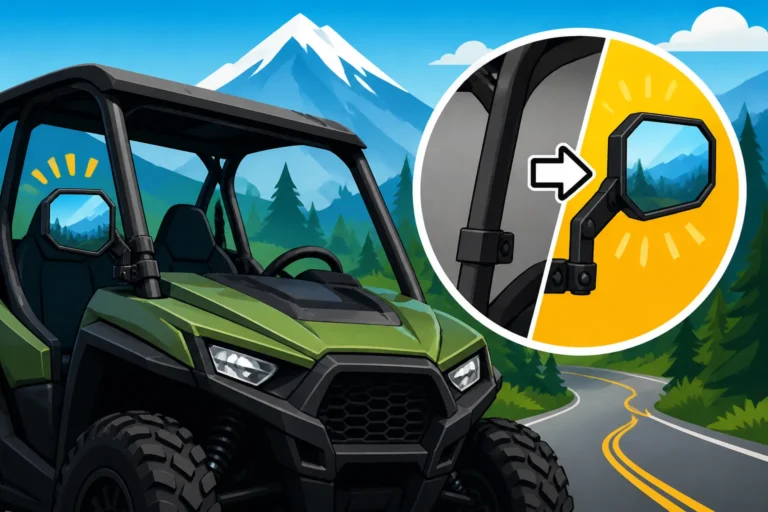
You'll need at least one rearview mirror, properly mounted to give you a clear view of traffic behind you. A functional horn is also required, allowing you to signal your presence when needed. Turn signals, both front and rear, are essential for indicating your intentions to other drivers, and they must be clearly visible. Your WATV also needs headlamps, taillamps, and brake lights that are fully operational, especially if you plan to ride during dawn, dusk, or at night. Many riders opt for aftermarket lighting kits from companies like SuperATV to ensure their machines are highly visible and meet all legal requirements. These kits often include robust LED lights and turn signal setups that can withstand the rigors of both trail and road use.
Finally, depending on your WATV type, there are additional considerations. If your machine has a windshield, it must be safety glass or a similar shatter-resistant material. If it doesn't, you'll need to wear eye protection, such as goggles. Utility vehicles (UTVs or side-by-sides) are also required to have seatbelts for all occupants, and they must be worn when riding on the road. Ensuring your machine meets all these requirements is part of the inspection process for obtaining your [Washington's On-Road Tab Explained], and failing to have them could result in a citation even if you're on an otherwise open road. Taking the time to properly equip your WATV isn't just about avoiding a ticket; it's about making sure you're as safe as possible when sharing the road with other vehicles.
Practical Advice for Riding County Roads
Once you understand the rules and have your machine equipped, it's time to think about the practicalities of riding county roads. This means covering everything from your personal documents to safe riding habits, ensuring your experience is both enjoyable and legal.
Licensing, Registration, and Insurance
Before you even think about putting a tire on a county road, you need to make sure your paperwork is in order. This starts with you, the rider. You must possess a valid driver's license. This isn't just a suggestion; it's a legal requirement to operate a WATV on any public roadway in Washington. A learner's permit or an instruction permit for a car typically isn't sufficient; you need a full, unrestricted driver's license. [Washington Driver License Rules for WATVs]
Next up is your machine's registration. For county road use, it's not enough to have just the off-road tab. Your WATV must have the specific "on-road" endorsement, which in Washington means displaying both the green off-road tab and the red on-road tab. This red tab signifies that your machine has met the inspection requirements and is approved for limited road use. Without it, even if the road is open, you're riding illegally. Finally, you need to carry proof of liability insurance. Washington state law requires all road-legal vehicles, including WATVs operating on public roads, to have minimum liability coverage. This protects you and others in the event of an accident. [Washington WATV Insurance Requirements]
It's absolutely critical to carry physical proof of all these documents with you whenever you ride on a county road. That means your driver's license, your WATV registration card (showing both tabs are active), and your insurance card should be readily accessible. Keep them in a waterproof pouch in your machine's storage compartment or a secure pocket. If a law enforcement officer pulls you over, they will ask for these documents, and having them immediately available can make the encounter much smoother. [Carrying the Registration in the Machine] Forgetting any of these could lead to a citation, even if your machine is properly equipped and you're on an approved road.
Staying Safe and Legal on Pavement
Riding a WATV on a paved county road is a very different experience than navigating a muddy trail, and it demands a different set of skills and a heightened awareness. Your machine, designed for off-road conditions, will handle differently on hard surfaces, especially at higher speeds. It's crucial to ride defensively, always assuming that other drivers might not see you. Make yourself as visible as possible; wear bright clothing, use your headlamps and taillights, and consider adding reflective tape if your machine doesn't have much.
Maintain a safe following distance, as WATVs can have longer braking distances on pavement than cars, especially if equipped with knobby off-road tires. Be mindful of turns; ATVs in particular require a different technique for cornering on pavement compared to dirt. Slow down significantly before entering a turn, and avoid leaning too sharply. Remember the state law that prohibits riding two abreast on any roadway; you must ride in a single file line. [Washington Rules for Riding Two Abreast] Always stay as far to the right of the lane as is safely possible, allowing other vehicles to pass with ample room.
The most important rule, however, is to never ride impaired. Operating any vehicle, including a WATV, under the influence of alcohol or drugs is illegal and incredibly dangerous, with severe legal consequences. Also, pay close attention to all traffic laws: stop at stop signs, yield when required, and use your turn signals consistently. Even on a quiet county road, you are operating a motor vehicle on a public thoroughfare, and all applicable traffic laws apply. Treating county roads with the same respect and caution you would any other roadway ensures your safety and helps maintain a positive image for the WATV community.
Advocating for More Road Access
If you find that the county roads you want to ride are currently closed, or if your county hasn't yet adopted an ordinance to open any roads, don't despair! The system in Washington is designed to allow for local input and change. Riders and local communities have successfully advocated for increased WATV access, and you can too. The first step is to educate yourself on your county's specific process for amending ordinances or proposing new ones. This information is typically available through the County Clerk's office or the county's legislative body (e.g., County Commissioners or Council).
Getting involved often means attending public meetings or hearings where WATV access is discussed. This is your opportunity to speak directly to your elected officials and present a reasoned, well-thought-out argument for opening more roads. Focus on safety, economic benefits (tourism, local business support), and how WATV access can enhance recreational opportunities responsibly. It's often helpful to gather data on accident rates (or lack thereof) from areas where roads are open, and to emphasize responsible rider behavior. Providing specific road segments that would connect trails or offer safe travel, along with reasons why those segments are suitable, can be very persuasive. [Asking a County to Open a Road]
Joining or forming a local WATV club can significantly amplify your voice. Organized groups carry more weight and can coordinate efforts, such as letter-writing campaigns, petition drives, and community outreach. Many successful efforts to open roads have come from passionate, organized rider groups who demonstrate a commitment to safety and collaboration. While changing local ordinances can be a long process, showing up, being polite, and presenting a compelling case can absolutely make a difference and help expand safe and legal riding opportunities for everyone.
Washington WATV County Road Access Overview
| Feature | Counties > 15,000 Population (e.g., King, Snohomish) | Counties <= 15,000 Population (e.g., Garfield, Ferry) |
|---|---|---|
| Default Status | Roads are generally CLOSED | Roads are generally OPEN |
| Access Process | County must OPT-IN via ordinance to open roads | County must OPT-OUT via ordinance to close roads |
| Speed Limit Restriction | Max 35 mph posted limit (for open roads) | Max 35 mph posted limit (for open roads) |
| Approved Road List | Crucial to find and follow specific listed roads | Generally open unless specifically listed as closed |
| Rider Responsibility | High burden to confirm specific open roads | Still wise to verify specific road status |
| Advocacy Role | More proactive advocacy often needed to open roads | May focus on preventing roads from being closed |
Disclaimer
This article is for general informational purposes only and does not constitute professional advice. Laws, prices and regulations vary by location and change over time. Consult a qualified professional for guidance on your specific situation.