Why Two Washington WATVs May Not Ride Abreast
One of the most common mistakes riders make when they finally get their Washington Wheeled All-Terrain Vehicle (WATV) street legal is thinking they can cruise down a county road with their buddy right alongside them, chitchatting as they go. It's a natural assumption, especially when you’re out with friends, but Washington state law has some very clear and often surprising rules about how you can operate your WATV on public roads. This guide is here to unravel why you absolutely cannot ride two WATVs abreast on Washington roads and what you need to do to stay legal and safe.
Understanding Washington's WATV Laws for Road Use
Getting your WATV ready for public roads in Washington involves more than just adding the right lights and mirrors. It also means understanding the specific rules of the road, which can sometimes feel counterintuitive to what you might do off-road or in other states.
The Core Restriction: Single File Riding
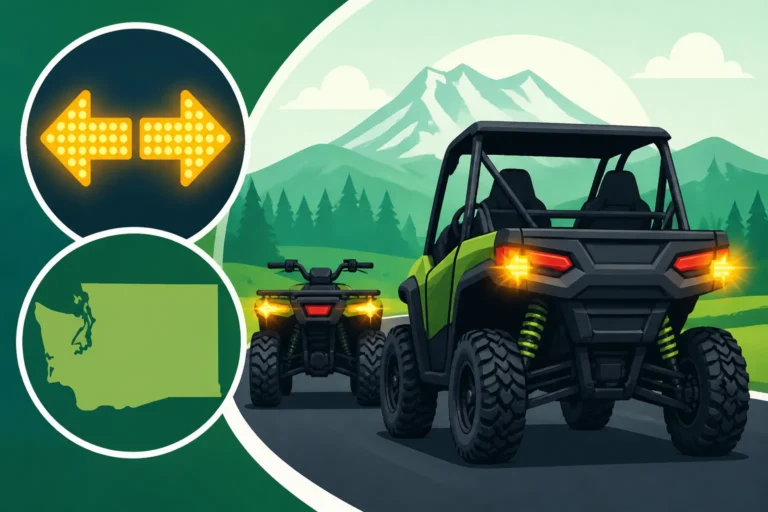
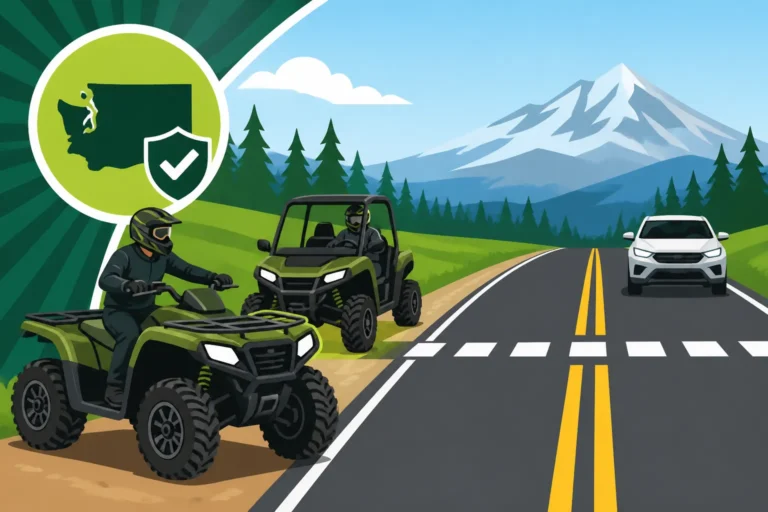
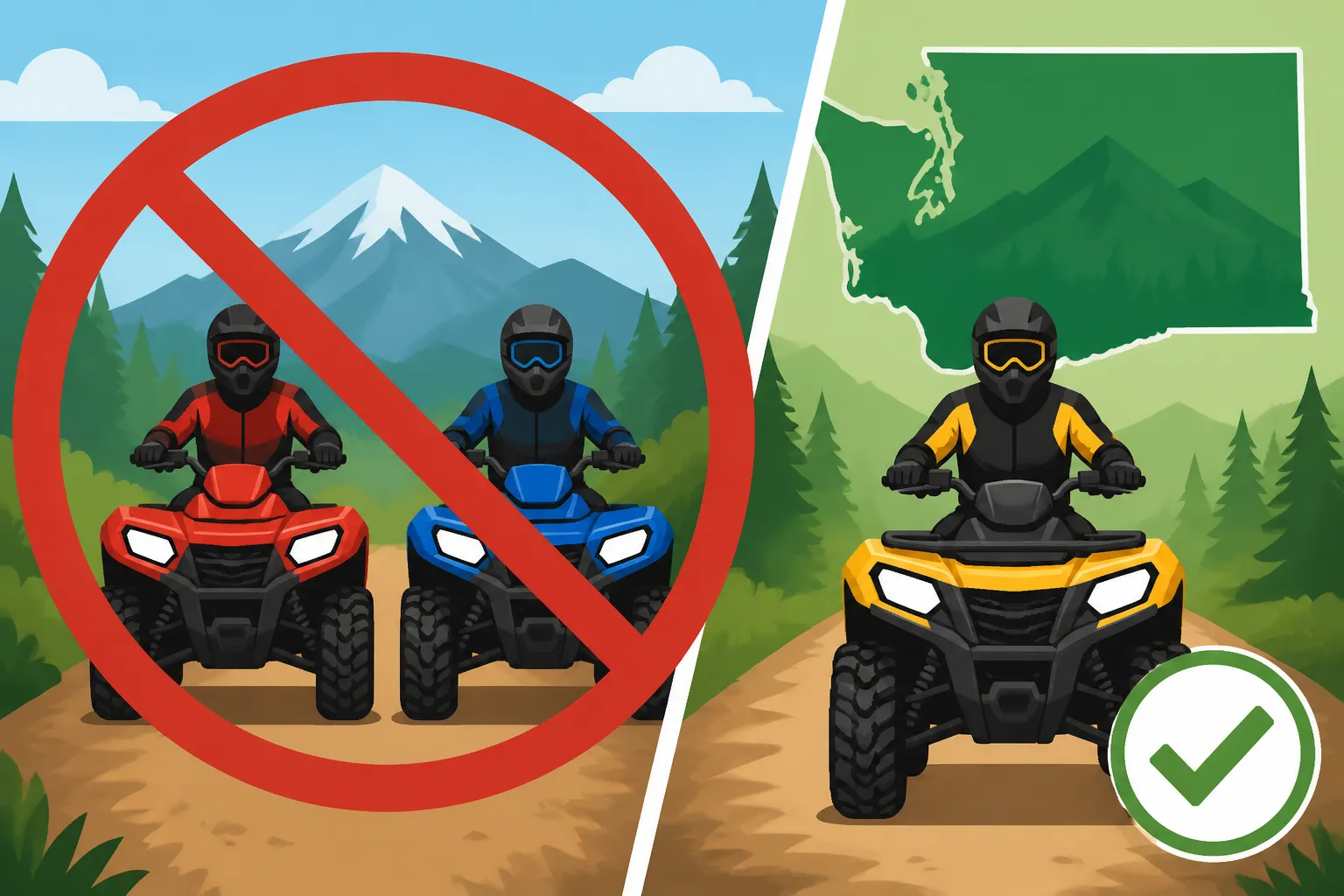
Washington law is pretty unambiguous when it comes to riding multiple WATVs on a public roadway: you must ride in single file. This isn't just a suggestion; it's a hard and fast rule designed to ensure the safety of everyone on the road, including you and your fellow riders, as well as other motorists. Imagine trying to ride two full-sized side-by-sides side-by-side down a typical two-lane rural road. It simply wouldn't work safely. The combined width of two machines would likely exceed a single lane, pushing one or both riders dangerously close to the shoulder, oncoming traffic, or even over the center line.
This rule often surprises riders who are used to off-road trails where riding abreast might be common, or in states with more lenient road-use laws. However, Washington's approach prioritizes the smooth and safe flow of traffic, treating WATVs on pavement much like bicycles or motorcycles in a group – they must occupy a single lane. Trying to maintain parallel positioning with another machine, especially around curves or over uneven pavement, is inherently unstable and dangerous. It significantly increases the risk of collision, not just between the two WATVs, but with other vehicles that might be trying to pass or are coming from the opposite direction.
How Washington Defines a WATV on Public Roads
To fully grasp the "single file" mandate, it helps to understand how Washington views a WATV once it ventures onto public pavement. A Wheeled All-Terrain Vehicle (WATV) is a specific category of vehicle under Washington law, distinct from a traditional passenger car, truck, or even a motorcycle. While these machines offer incredible versatility for off-road adventures, their characteristics – often wider than motorcycles, lower top speeds than cars, and different handling dynamics – necessitate specific regulations when sharing the road. To learn more about the equipment you'll need, check out [Washington WATV Road Requirements].
When a WATV is legally equipped and registered for road use, it's granted specific privileges, but these come with responsibilities that differ from other vehicle types. The legal framework isn't designed to turn a WATV into a car; it's designed to allow limited, safe integration into the existing road network. Because of their width and the potential impact on traffic flow, especially when two are attempting to occupy the space designed for one standard vehicle lane, the single-file rule becomes critical. It's a legislative recognition that while WATVs can be on the road, they need to do so in a manner that minimizes disruption and maximizes safety for everyone sharing the space. This distinction means that common driving behaviors you might take for granted in a car or even on a motorcycle, like riding parallel with a friend, simply don't apply to WATVs on Washington's roads.
The Rationale Behind Single File: Safety and Traffic Flow
The state's decision to mandate single-file riding for WATVs on public roads isn't arbitrary. It's deeply rooted in practical considerations concerning safety, traffic management, and the fundamental design of our roadways.
Navigating Narrow Roadways and Shoulders
Many of Washington’s scenic roads, especially the rural county routes and forest access roads where WATVs are often permitted, were simply not built with side-by-side off-road vehicles in mind. These roads can be winding, narrow, and often lack wide shoulders. Picture a typical two-lane road in areas like [Lewis County Ordinance 1286] or [Riding the Streets of Republic]. The lane width is typically designed for a single passenger vehicle. When two WATVs attempt to ride abreast, they instantly create a much wider footprint, often encroaching into the opposing lane or forcing riders onto a dangerously narrow or nonexistent shoulder.
This scenario becomes even more precarious on blind curves, over hill crests, or when encountering logging trucks or other large vehicles that frequently use these roads. A driver approaching a curve expects a single vehicle occupying its lane. Coming around that corner to find two WATVs spanning across more than one lane is a recipe for a head-on collision or a sudden swerve, which can have devastating consequences. The single-file rule directly addresses this spatial constraint, ensuring that each WATV remains within its allocated lane, reducing the risk of a spatial conflict with other traffic. If you're wondering which roads are open, it's worth familiarizing yourself with [Washington Rules for Riding a County Road].
Visibility, Maneuverability, and Driver Expectation
Beyond the physical space, riding abreast introduces significant challenges regarding visibility, maneuverability, and the expectations of other drivers. For the riders themselves, maintaining precise parallel positioning, especially at varying speeds or over uneven road surfaces, demands constant attention that could be better spent scanning for hazards. The lead rider's view of the road ahead might be partially obscured by the adjacent machine, and the trailing rider might have their view of oncoming traffic compromised. For other motorists, two WATVs riding abreast present a confusing and unpredictable obstacle. They might struggle to determine the true width of the "unit," making safe passing maneuvers difficult or impossible.
This issue is compounded by the fact that most drivers expect vehicles to travel in single file within a lane. When they see two vehicles side-by-side, their immediate assumption might be that one is attempting to pass or that there's an emergency. This can lead to hesitation, sudden braking, or dangerous maneuvers by other drivers trying to interpret the situation. While aftermarket accessories from companies like SuperATV can significantly improve your machine's visibility with brighter lights or enhanced mirrors, these additions, while excellent for safety, do not override the fundamental rule of single-file riding. No matter how visible your machine is, violating the spatial rules of the road creates an inherent safety hazard that no accessory can fully mitigate. The goal is to be predictable and clear to all other road users, and single-file riding achieves this.
Legal Ramifications and Enforcement of the Abreast Rule
Ignoring the single-file rule isn't just a matter of safety; it also carries tangible legal consequences that can impact your wallet and your ability to enjoy your WATV on public roads.
Potential Fines and Citations
The most immediate consequence of riding two WATVs abreast on a Washington road is the potential for a traffic citation. Law enforcement officers, whether from the Washington State Patrol, a county sheriff's office, or a local police department, are tasked with enforcing all traffic laws, and that includes those specific to WATVs. Officers patrolling rural areas, where WATVs are most commonly seen on roads, are generally well-versed in these regulations. If an officer observes you and a riding partner operating abreast, they will likely initiate a stop.
The exact fine amount can vary depending on the specific statute cited, the jurisdiction, and whether it's your first offense. However, you can expect a significant monetary penalty, which can quickly add up if multiple riders in your group are cited. Beyond the financial hit, a moving violation can also appear on your driving record, potentially impacting your insurance rates down the line. It's far better to adhere to the rule and avoid the hassle, expense, and potential long-term repercussions of a traffic citation. For a broader understanding of what to expect if you're riding illegally, check out [Washington Fines for Illegal WATV Road Use].
Insurance and Liability Concerns
Beyond fines, riding abreast can have severe implications for your insurance coverage and personal liability in the event of an accident. Insurance policies are often written with the expectation that the insured vehicle will be operated legally. If you are involved in a collision while violating a clear traffic law, such as the single-file rule, your insurance company could potentially deny or limit coverage for damages or injuries. This means you could be personally responsible for thousands of dollars in medical bills, vehicle repairs, or property damage, even if another party was also at fault.
Consider a scenario where two WATVs are riding abreast, and an oncoming vehicle swerves to avoid them, resulting in an accident. Even if the oncoming vehicle is partially at fault, your violation of the single-file rule could be used to assign a significant portion of the blame to you. This could lead to a personal injury lawsuit where you are held liable for damages far exceeding what you might expect. Understanding [Washington WATV Insurance Requirements] is crucial, but remember that insurance is there to protect you when you're following the rules, not breaking them. Operating your WATV within the bounds of the law is the best way to ensure your insurance coverage remains valid and your personal liability is minimized.
Practical Tips for Group Riding on Washington Roads
Even though you can't ride side-by-side, that doesn't mean you can't enjoy group rides on Washington's scenic roads. It just means adapting your riding style to ensure everyone stays safe and legal.
Communication and Spacing
When riding in a group on the road, effective communication and maintaining proper spacing become paramount. Since you can't chat casually alongside your buddy, you'll need other methods to stay connected. Hand signals are a classic and highly effective way to communicate turns, hazards, stops, or changes in speed. It's a great idea for your group to agree on a set of standardized signals before you even hit the pavement. For instance, a raised left arm could mean "slowing down" or "stopping," while pointing to a pothole could signal a hazard.
Beyond visual cues, investing in helmet-to-helmet communication systems can be a game-changer for group riding. These systems allow riders to talk to each other clearly, share observations, and coordinate movements without having to yell or dangerously take their eyes off the road. Regardless of your communication method, consistent spacing is critical. Each rider should maintain a safe following distance from the machine in front of them – enough to react to sudden stops or changes in speed, but not so far back that other vehicles cut into your formation. Think of it as creating a predictable, flowing "train" of WATVs rather than a loose cluster. This helps other drivers understand your group's intentions and makes passing safer for everyone.
Designated Lead and Tail Riders
For any group ride, especially on public roads, designating a lead rider and a tail rider can vastly improve safety and organization. The lead rider is typically the most experienced, familiar with the route, and responsible for setting a safe pace, navigating, and signaling changes to the group. They are the eyes of the group, constantly scanning for road conditions, traffic, and potential hazards, and relaying that information back.
The tail rider, often another experienced member, serves a crucial role in ensuring no one gets lost or left behind. They are the last point of contact, watching the group from the rear, ensuring all riders are maintaining formation, and acting as a buffer against trailing traffic. They can also provide a second set of eyes on hazards coming from behind. This structured approach helps to manage the group's presence on the road, making it more predictable for other drivers and significantly enhancing overall safety. The lead and tail riders can communicate directly via helmet comms, or the lead can use hand signals that propagate through the group, ensuring everyone is on the same page. This team approach makes a group ride much smoother and safer than simply having everyone follow whoever feels like it.
Here’s a quick summary of safe group riding practices versus unsafe ones:
| Aspect | Safe Group Riding Practice (Washington Compliant) | Unsafe Group Riding Practice (Washington Non-Compliant) |
|---|---|---|
| Formation | Single File Only | Riding Abreast (side-by-side) |
| Spacing | Maintain safe following distance between machines | Riding too close or too far apart, inconsistent spacing |
| Communication | Use pre-arranged hand signals, helmet comms, or both | Yelling, distracting gestures, no clear communication |
| Leadership | Designated lead and tail riders to manage group | No clear leader, everyone fending for themselves |
| Lane Usage | Each WATV occupies its own space within a single lane | Two WATVs attempting to occupy the space of one lane or more |
| Driver Expectation | Predictable, clear movements that mimic motorcycles | Unpredictable, confusing wide "unit" for other motorists |
| Visibility | Focused on individual machine visibility, group awareness | Reduced visibility for riders and other drivers due to width |
Comparing Washington's Rule to Other States
It's natural to wonder if Washington's rules are unique, especially if you've ridden ORVs on roads in other states where things might be different. Indeed, ORV road use laws vary significantly from one jurisdiction to another.
Variation in ORV Road Use Laws
The landscape of Off-Road Vehicle (ORV) and Wheeled All-Terrain Vehicle (WATV) laws across the United States is anything but uniform. What might be perfectly legal in one state could land you a hefty fine or even impoundment in another. For instance, some states have very progressive "street legal" laws, allowing a wider range of ORVs on more roads with fewer restrictions, sometimes even permitting riding abreast on certain low-traffic roads. Other states might be far more restrictive, limiting ORV access strictly to designated trails or requiring extensive modifications that essentially convert the ORV into a low-speed vehicle (LSV). This patchwork of regulations can be incredibly confusing for riders, especially those who travel frequently or move between states. It underscores the critical importance of researching and understanding the specific laws of the state or even county you plan to ride in, before you ever put a tire on public pavement.
This variability extends to all aspects of ORV road use, including equipment requirements, helmet laws, speed limits, and, of course, riding formation. A visitor from Oregon, for example, might be accustomed to different rules regarding their [Washington ORV Reciprocity With Other States], but when they cross into Washington, they are bound by Washington's specific regulations. There's no blanket reciprocity for all aspects of road use; each state maintains its own authority to dictate how vehicles, including WATVs, operate within its borders to ensure local safety and traffic flow.
The Focus on Washington's Unique Approach
Given the diverse legal landscape, Washington's strict single-file rule for WATVs on public roads stands as a clear example of the state's deliberate approach to integrating these machines into its traffic system. This isn't an oversight or an accidental restriction; it's a calculated decision rooted in safety, the nature of Washington's roadways, and the state's legislative framework. The law is designed to minimize potential conflicts between WATVs and other vehicles, ensuring that while these machines gain limited access to roads, they do so in the most controlled and predictable manner possible.
For riders, whether long-time Washington residents or visitors, respecting this unique approach is not just a matter of avoiding a ticket; it's about contributing to the safety of the entire road-using community. Trying to argue that "it's allowed in my home state" or that "it seems safer to ride side-by-side" simply won't hold up in Washington. The law is written, and it is enforced. Embracing the single-file mandate ensures that you, your riding companions, and everyone else on Washington's roads can share the space safely and without unnecessary risk or confusion. It's a small adjustment that makes a big difference in maintaining harmony on the pavement.
Disclaimer
This article is for general informational purposes only and does not constitute professional advice. Laws, prices and regulations vary by location and change over time. Consult a qualified professional for guidance on your specific situation.