Washington Rules for Crossing a State Highway
It's incredibly frustrating when you're out enjoying Washington's vast network of trails, only to find yourself blocked by a state highway that you need to cross to get to the next section. Many riders assume a quick hop across the blacktop is no big deal, but the rules for legally getting your Wheels All-Terrain Vehicle (WATV) over a state highway in Washington are quite specific and, if not followed, can lead to hefty fines or even accidents. This guide is here to untangle those rules, helping you understand exactly what you can and cannot do when a state highway intersects your off-road adventure.
Understanding Washington's WATV Designation for On-Road Use
Before we even talk about crossing a highway, it’s crucial to understand how Washington views your machine when it touches pavement. It’s not just an ATV or UTV here; it’s a WATV, and that designation carries specific implications for any form of road interaction, including those quick dashes across a state highway.
Why Your Machine Is a "WATV" and Not Just an ATV
In Washington, your quad, side-by-side, or dirt bike is legally categorized as a "Wheeled All-Terrain Vehicle," or WATV. This isn't just a quirky local term; it's a legal classification that delineates specific requirements and permissions for operating these machines, especially when it comes to any kind of on-road activity. The state legislature carved out this category to differentiate these vehicles from traditional automobiles, golf carts, or even low-speed vehicles, recognizing their unique capabilities and limitations. This classification is the foundation for all the rules we'll discuss, particularly those concerning how and where your machine can legally touch public roads and highways. Without understanding this fundamental distinction, it's easy to misinterpret the regulations and inadvertently find yourself in violation. It means that while your machine might be an ATV in common parlance, in the eyes of Washington law, it's a WATV, and that slight linguistic difference has profound operational consequences.
The Importance of the On-Road Tab
If you're planning to ride your WATV on any public road, even for a quick crossing, you absolutely need the Washington on-road tab. This isn't just an accessory; it's a critical legal credential that signifies your machine is registered for limited on-road use. Without it, even a brief foray onto pavement, including a highway crossing, is considered illegal. Think of it like a driver's license for your WATV to interact with the road system. The off-road tab, while essential for trail access, does not grant you permission to touch any paved public road. The on-road tab specifically signals to law enforcement that your machine has met the necessary criteria for conditional road access. This tab is typically affixed near your off-road decal, often a smaller, distinctive sticker that indicates your compliance. For a deep dive into what this means, check out [Washington's On-Road Tab Explained]. Failing to have this tab means your machine is considered unregistered for any paved road use, which can lead to citations and penalties even for momentary crossings.
When a Road Use Declaration Is Needed
Acquiring your on-road tab isn't always a simple point-and-click process. For many WATV owners looking to get on-road privileges, a "Road Use Declaration" form is a crucial piece of paperwork. This document is where you formally declare that your WATV meets specific equipment requirements to be considered road-legal for limited use. It's not just a formality; it's a sworn statement that your machine has features like proper lighting, mirrors, a horn, and other safety elements. When you present this declaration at the Department of Licensing (DOL) or a subagent, you're essentially vouching for your WATV's readiness for interaction with public roads. Without this completed and submitted declaration, you often won't be able to secure that all-important on-road tab, which in turn prevents any legal highway crossing. Understanding and properly [Filling Out the Road Use Declaration] is a foundational step for any rider contemplating moving their WATV from dirt to asphalt, even if only for a few seconds.
The Core Regulations for Any Pavement Interaction
Even if you only intend to cross a state highway, your WATV is still subject to the basic rules governing any interaction with paved public roads. Understanding these foundational regulations is key to executing a legal and safe crossing. It's not just about the act of crossing itself, but the broader framework of road legality that enables it.
Distinguishing Between Road Use and Road Crossing
It's vital to grasp the difference between general "road use" and a specific "road crossing." While both involve your WATV touching pavement, the intent and permitted duration are vastly different. "Road use" implies traveling along a designated public road for a certain distance, often on county roads or city streets that have been explicitly opened to WATVs by local ordinance. This allows for sustained travel, albeit typically within specific speed limits and areas. A "road crossing," however, is a much more limited maneuver. It's meant to bridge two sections of an off-road trail or area that are bisected by a public roadway. You're not meant to travel along the highway; you're simply transitioning across it. This distinction is crucial because the permissions and rules for crossing are often more restrictive than for general road use, and misunderstanding this can lead to illegal operation.
What Washington Requires for On-Road ORV Use
Whether you're making a quick dash across a state highway or traveling a mile down a county road, certain fundamental requirements for on-road use apply. First and foremost, your WATV must be properly registered with both the off-road and the on-road tabs affixed. Beyond registration, specific equipment is mandated to ensure your machine is visible and controllable in traffic. This typically includes at least one headlight (which must be on), at least one taillight and brakelight, turn signals (front and rear), a horn, and at least one rearview mirror. Many riders choose to upgrade their machines with enhanced lighting or rugged mirrors from aftermarket suppliers like SuperATV to meet these requirements. Additionally, you, the operator, must possess a valid driver's license. For a comprehensive overview of these prerequisites, it's beneficial to review [What Washington Requires for On-Road ORV Use]. Without these basic elements, even a momentary highway crossing is illegal, regardless of whether the specific highway segment allows for it.
Speed Limits and Posted Conditions
One of the most critical aspects of any WATV interaction with paved roads in Washington is the speed limit. The law states that WATVs are generally restricted to roads with a posted speed limit of 35 miles per hour or less for continuous travel. While a highway crossing is not continuous travel, this 35 mph rule heavily influences where you can even attempt a crossing. For highways posted at 35 mph or below, crossings are more likely to be permissible if other conditions are met. However, if a state highway is posted at 40 mph or higher, a general crossing is typically prohibited. Even if you're only traversing a few yards, the posted speed limit of the road you're crossing dictates whether that crossing is legal. It's not about how fast you are going, but the maximum speed permitted for other vehicles on that highway. Always pay close attention to the speed limit signs on the highway itself, as they are your primary guide for whether a crossing is even an option.
Specific Rules for Crossing State Highways
Crossing a state highway is not the same as crossing a small county road. State highways often carry higher volumes of traffic and have different jurisdictional oversight. Washington law specifically addresses these crossings, carving out limited permissions under strict conditions.
Crossing a Washington Highway Posted Between 35 and 60
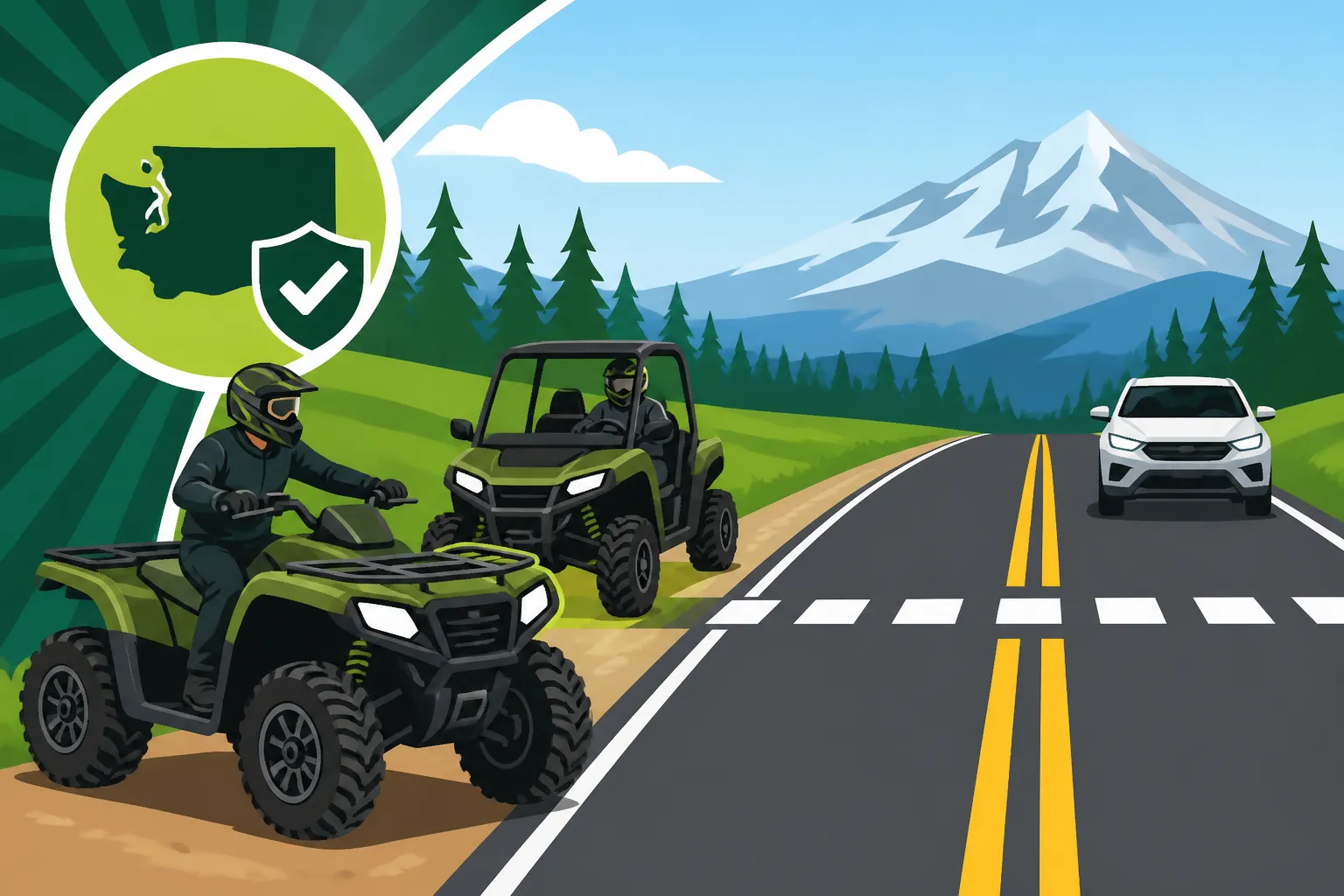
This is where things get very specific and often misunderstood. Washington state law does allow for WATVs to cross a state highway segment that has a posted speed limit between 35 and 60 miles per hour, under certain conditions. This is a critical exception to the general 35 mph rule for on-road travel. The intent here is to allow riders to connect trails that might be separated by these higher-speed state routes. However, this is strictly a crossing allowance, not a permit to ride along the highway. The crossing must be made at approximately a ninety-degree angle to the highway, and you must yield to all traffic on the highway. You are expected to cross in the safest and most direct manner possible, minimizing your time on the paved surface. This specific provision is detailed in [Crossing a Washington Highway Posted Between 35 and 60], and understanding its nuances is paramount for legal operation. You cannot, for example, ride down the shoulder for a quarter-mile to find a better crossing point on a 45 mph highway; you must cross directly from one off-road access point to the other.
Why WSDOT Must Authorize a Washington Segment
While the law provides for crossing state highways, it's not a blanket permission for every segment of road posted between 35 and 60 mph. The Washington State Department of Transportation (WSDOT) plays a crucial role here. For such a crossing to be legal, WSDOT must have reviewed and explicitly authorized that specific segment of state highway for WATV crossings. This authorization is typically granted based on safety assessments, traffic volume, visibility, and the availability of clear off-road access points on either side. It's not something you can assume; you need to verify that WSDOT has given the green light for that particular stretch of highway. Without WSDOT authorization, attempting to cross a state highway, even if it falls within the 35-60 mph speed limit window, is illegal. This critical point is highlighted in [Why WSDOT Must Authorize a Washington Segment]. Before you plan any route that involves crossing a state highway, it is incumbent upon you to check WSDOT's official resources or local county information to confirm authorized crossing locations.
Prohibited Crossings: When You Cannot Cross
It’s just as important to understand when you cannot cross a state highway as it is to know when you can. Any state highway with a posted speed limit of 60 miles per hour or higher is absolutely off-limits for WATV crossings. This includes most major interstates and many arterial state routes. The risks associated with crossing such high-speed, high-volume roadways are simply too great, and the law reflects that. Furthermore, even if a highway segment is posted between 35 and 60 mph, if WSDOT has not authorized that specific crossing point, it remains prohibited. This means you can't just pick a spot that looks easy; it must be a designated crossing point. For instance, [Why a Road Posted 40 mph Is Off Limits] explains that while a 40 mph road falls within the crossing speed window, without explicit WSDOT authorization for that specific segment, it is still illegal to cross. Always err on the side of caution. If there’s any doubt about a highway segment's authorization or its speed limit is too high, you must find an alternative route, such as trailering your machine to the next legal access point.
Essential Equipment for a Legal Highway Crossing
Even for a momentary dash across a state highway, your WATV needs to be equipped not just for off-road safety, but for visibility and communication in a traffic environment. Washington law mandates specific equipment for any WATV operating on public roads, and these requirements absolutely apply to highway crossings.
Lighting, Mirrors, and Horn Requirements
When you're attempting a highway crossing, visibility and the ability to signal are paramount. Your WATV must be equipped with at least one headlight, which needs to be activated even during daylight hours to enhance your presence on the road. A taillight and a working brakelight are also non-negotiable, ensuring that following traffic is aware of your position and intentions. Crucially, at least one rearview mirror is required. This allows you to monitor traffic approaching from behind without having to turn your head completely, which is vital when preparing to cross a busy road. Many riders opt for robust, vibration-resistant mirrors from companies like SuperATV that can withstand the rigors of off-road riding while providing clear visibility for road use. A functional horn is also a must-have, providing an audible warning when necessary. All these elements contribute to your machine's ability to safely interact with other vehicles. More detail on these can be found in [Washington Lighting Requirements for WATVs] and [Washington Mirror Requirements for Road Use].
Turn Signals and Brakelights
While a headlight and taillight are fundamental, properly functioning turn signals and a clear brakelight are critical for communicating your intentions to other drivers on the highway. When you're preparing to cross, your turn signals indicate your intended direction of travel, signaling to oncoming or following traffic that you plan to enter or cross the roadway. This is a non-negotiable safety feature. The brakelight is equally important, alerting drivers behind you if you need to slow down or stop suddenly before or during your crossing maneuver. It’s not enough for these lights to simply exist; they must be clearly visible and in good working order. If your WATV didn't come with factory turn signals, there are many aftermarket kits available to ensure compliance. Ensuring your machine has proper [Washington Turn Signal Requirements] met is an essential step before considering any highway crossing, as clear communication can prevent serious accidents.
Helmet and Eye Protection Rules
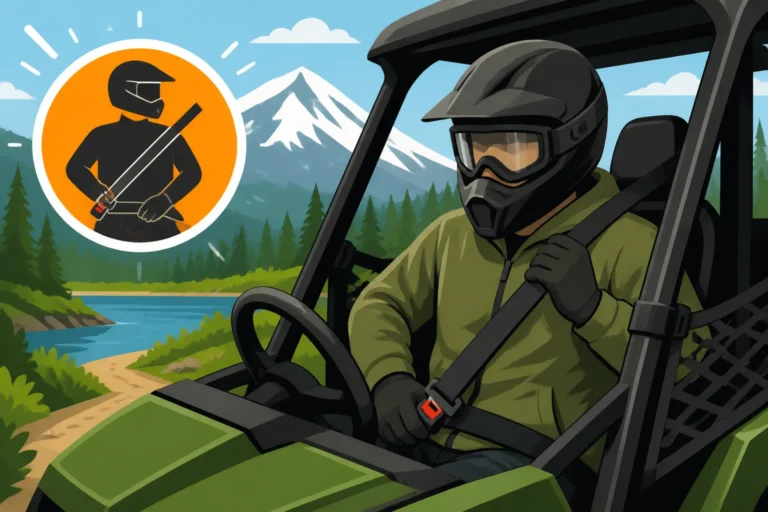
Personal safety gear isn't just a good idea; it's the law for WATV riders and passengers in Washington, especially when interacting with public roads. All WATV operators and passengers, regardless of age, must wear an approved safety helmet when riding on a public road or attempting to cross one. This helmet must be DOT-compliant and properly secured. This rule applies even if you're only on the asphalt for a few seconds during a highway crossing. Alongside a helmet, appropriate eye protection is also mandatory. This can be goggles, a face shield integrated into your helmet, or impact-resistant glasses. The goal is to protect your eyes from debris, wind, and glare, ensuring clear vision for safe operation. For a detailed look at the specifics, refer to [Washington Helmet Law for WATV Riders]. Neglecting these basic safety requirements can not only result in a citation but, more importantly, significantly increases your risk of severe injury in the event of an accident with road traffic.
Navigating Crossing Scenarios and Practical Considerations
Knowing the rules is one thing, but safely executing a highway crossing in the real world requires practical know-how, situational awareness, and a strategic approach. It's not just about what you can do, but how you should do it.
Approaching and Executing a Safe Crossing
A highway crossing should never be approached casually. It requires a deliberate, focused strategy. As you approach the highway, slow down and be prepared to stop. Look far down the road in both directions for approaching traffic, paying particular attention to potential blind spots or crests in the road. Even if WSDOT has authorized the crossing, the responsibility for a safe passage lies with you. Once you've identified a clear window in traffic, make your intentions clear by using your turn signal in the direction you intend to cross. Accelerate smoothly and directly across the highway at approximately a ninety-degree angle, minimizing your time on the paved surface. Do not dawdle, weave, or attempt to communicate with drivers through hand signals unless absolutely necessary. Your objective is to move from one side to the other as efficiently and safely as possible, getting back onto the off-road segment without incident.
Crossing at Intersections and Stop Signs
Many authorized WATV crossing points might occur at traditional intersections, complete with stop signs or traffic lights. When this is the case, your WATV is treated like any other vehicle under the rules of the road. This means you must obey all traffic signals, stop signs, and right-of-way rules. If there's a stop sign, come to a complete stop before the white line. If there's a traffic light, wait for your green light before proceeding. Do not assume that because you are on a WATV, you have special privileges or that traffic will automatically yield to you. In fact, due to the smaller size and different appearance of WATVs, other drivers might not anticipate your presence or intentions as readily as they would a car or truck. Maintain extreme vigilance and follow all traffic laws meticulously. Assuming standard vehicle protocols will help keep you safe and legal.
Group Crossings and Convoy Etiquette
If you're riding with a group, coordinating a highway crossing becomes even more critical. The general rule is to cross one machine at a time, or in very small, tightly knit groups if traffic allows and it can be done safely. Appoint a leader who will assess traffic and signal when it's safe for the next rider or mini-group to cross. Do not all attempt to cross simultaneously, as this can overwhelm traffic and create a dangerous situation. Maintain adequate spacing between machines so that drivers on the highway have time to react and are not faced with a continuous stream of WATVs. Riding abreast is generally prohibited on public roads, and this rule extends to crossing, so ensure machines cross in single file. Good communication within your group, often through helmet comms or pre-arranged hand signals, is vital. Remember, the goal is to make the crossing as predictable and low-impact as possible for other road users.
Understanding Jurisdictional Nuances and Local Ordinances
Washington's landscape of WATV access is a patchwork of state laws, county ordinances, and specific land manager rules. This complexity can affect how and where you encounter state highways, making it crucial to understand whose rules apply where.
How a County Opts In to Allow Road Use (and thereby crossing more frequently)
While state law governs general WATV classification and highway crossing, counties in Washington have the authority to "opt in" to allow WATVs on certain county roads. This means a county council or commission can pass an ordinance that opens specific, often lower-speed, county roads to WATV traffic. When a county does this, it might indirectly create more opportunities for legal highway crossings. For example, if a county opens several of its roads, and these roads are bisected by a WSDOT-authorized state highway crossing point, your opportunities to travel to and from that crossing point expand. It's a localized decision, often based on population density and road characteristics. Learning [How a Washington County Opts In] is important because it shows you how local decision-making can enhance your ability to legally access state-authorized crossing areas by connecting previously isolated trail systems via open county roads.
Highway Segments and Local Ordinances
It's a common misconception that if a city or county opens its streets to WATVs, this automatically means you can freely cross any state highway within its boundaries. This is not the case. While a local ordinance might open city streets or county roads, state highways remain under WSDOT jurisdiction. A local ordinance can only designate local roads for WATV use. However, a city or county might request WSDOT to authorize specific state highway segments for crossing or even limited travel if the highway acts as a critical link within their open-road network. The state's decision is separate from the local one. So, while [When a City Ordinance Opens a Highway Corridor] is fantastic for local access, it does not override WSDOT's authority over state highways. Always check WSDOT's specific authorization for state highway crossings, even if you are in an ORV-friendly city or county.
Crossing Within National Forests or DNR Lands
When your off-road adventures take you through vast tracts of federal lands like National Forests or state lands managed by the Department of Natural Resources (DNR), you might still encounter state highways. The rules for WATV use on federal and DNR roads and trails are distinct, but when those roads intersect a state highway, state law takes precedence for the highway crossing itself. For instance, if you're riding on a designated WATV trail within the Olympic National Forest and it comes to a state highway, you must adhere to Washington state law and WSDOT authorizations for the highway crossing. Your federal or DNR permit/pass allows you to ride the trail, but not necessarily to cross the highway. This means having your Washington on-road tab and ensuring the highway segment is authorized for crossing is just as critical here as anywhere else. Always be aware of which jurisdiction you are in when transitioning from one type of land to another, especially when it involves state highways.
Common Mistakes and How to Avoid Them
Even experienced riders can sometimes make assumptions or oversights that lead to problems when dealing with highway crossings. Being aware of these common pitfalls can help you avoid a citation or, worse, an accident.
Assuming All Roads are Open or Crossable
One of the most frequent mistakes riders make is assuming that because a trail continues on the other side of a road, that road is automatically open for crossing or even riding. This is a dangerous assumption. Washington's system of WATV access is highly regulated and often piecemeal. Just because a county adjacent to yours has open roads doesn't mean your current county does. And even if a county road is open, that doesn't extend to the state highways it intersects. Similarly, finding a segment of state highway that looks like a good crossing point doesn't make it legal. As discussed, WSDOT must explicitly authorize those segments. Always consult current maps and official resources from WSDOT, DNR, and local county offices. Don't rely on word-of-mouth or outdated information. Verifying the legal status of every road or crossing point in your route is crucial to prevent illegal operation and potential fines.
Insufficient Equipment and Lack of Preparation
Another common error is heading out without ensuring your WATV is fully equipped to meet Washington's on-road requirements, even for a brief crossing. Many off-road machines, especially older models, may lack factory-installed turn signals, proper mirrors, or a functional horn. Thinking "it's just a quick crossing, I'll be fine" can lead to a roadside stop and a citation for non-compliance. Beyond the machine itself, lack of personal preparation is also an issue. Forgetting your valid driver's license, not having your WATV registration and on-road tab, or failing to wear an approved helmet and eye protection are all recipe for trouble. Before every ride that might involve even a single highway crossing, conduct a quick checklist: Is my machine properly equipped? Do I have my license, registration, and proof of required tabs? Am I wearing all necessary safety gear? This diligent preparation is as important as the act of riding itself.
Ignoring Posted Signs and Speed Limits
Perhaps the most dangerous mistake is simply ignoring posted signs and speed limits. On state highways, these signs are there for a reason – to regulate the flow of traffic and ensure safety. Even if you're only planning to cross, you must be acutely aware of the posted speed limit of the highway. As we've covered, if it's 60 mph or higher, crossing is prohibited. If it's between 35 and 60 mph, you still need WSDOT authorization. Beyond speed limits, pay attention to any specific signage related to WATVs, or lack thereof. The absence of "WATV Crossing" or "Shared Road" signs on a state highway should be a red flag, prompting you to verify its legal status. Furthermore, ignoring basic traffic signs like "Stop" or "Yield" during a crossing is incredibly reckless and can lead to immediate and severe consequences. Treat these signs with the same respect you would in a car, especially since you are on a smaller, more vulnerable vehicle.
Enforcement, Penalties, and Staying Compliant
Law enforcement in Washington takes WATV regulations seriously, especially concerning interactions with public roads. Understanding what officers look for and the potential consequences of non-compliance is essential for every rider.
What a Washington Trooper Checks Roadside
If you're stopped by a Washington State Patrol Trooper or a local law enforcement officer during or immediately after a highway crossing, they'll be checking for a few key things. First, they'll verify your WATV's registration, looking specifically for the presence of both the off-road and the on-road tabs. Next, they'll check for proof of a valid driver's license for the operator. They'll also quickly assess your machine for the mandatory equipment: working headlights (on), taillights, brakelights, turn signals, at least one rearview mirror, and a horn. Finally, they'll confirm that both you and any passenger are wearing approved helmets and eye protection. They might also inquire about where you came from and where you're going to determine if your presence on the highway was a legal crossing or an unauthorized period of travel. This is why having all your paperwork in order and your machine properly equipped, as detailed in [What a Washington Trooper Checks Roadside], is paramount.
Fines for Illegal Highway Use or Crossing
The penalties for operating a WATV illegally on a public highway in Washington can be significant. If you're caught crossing a highway without the proper on-road tab, or on a segment that isn't authorized for crossing, you could face a citation similar to operating an unregistered vehicle. Fines can vary, but they are often substantial enough to make compliance a far more appealing option. Beyond the registration, being caught without mandatory equipment (like turn signals or a helmet) will also result in separate infractions, each carrying its own fine. These fines can quickly add up, turning a quick shortcut into a costly mistake. For a deeper understanding of the financial implications, review [Washington Fines for Illegal WATV Road Use]. In more severe cases, such as reckless operation or causing an accident while illegally on a highway, the consequences could escalate to include impoundment of your machine or even criminal charges.
Importance of Carrying Your Registration and License
It cannot be stressed enough: always carry your physical WATV registration card (which shows both your off-road and on-road tab status) and your valid driver's license with you while riding. While digital copies might be accepted in some situations for other vehicles, for WATVs, especially when interacting with roadways, having the physical documents is the safest bet. Law enforcement will ask for these immediately if you are stopped. Fumbling through pockets or claiming you left them back at camp is not an excuse and can lead to further delays or even a citation for not having them readily available. Many riders use waterproof pouches or small storage compartments on their machines to keep these essential documents safe and dry, ensuring they are always accessible. As discussed in [Carrying the Registration in the Machine], this small act of preparation can save you a lot of hassle and stress during a roadside stop.
Table: Washington WATV Highway Crossing Checklist
To help summarize the key requirements for a legal highway crossing, here's a handy checklist you can use before you head out:
| Requirement | Description | Status (Yes/No/N/A) | Notes |
|---|---|---|---|
| WATV Designation | Is your machine titled and registered as a WATV in Washington? | This is foundational for any road interaction. | |
| On-Road Tab | Do you have a current Washington on-road tab affixed to your WATV? | Essential for any pavement use, including crossing. | |
| Valid Driver's License | Do you possess a valid driver's license for the operator? | Mandatory for operating a WATV on public roads. | |
| Helmet & Eye Protection | Are all riders and passengers wearing DOT-approved helmets and eye protection? | Required for personal safety and legal compliance on roads. | |
| Headlight (ON) | Is your WATV equipped with at least one working headlight, and is it on? | Enhances visibility to other drivers, even in daylight. | |
| Taillight & Brakelight | Does your WATV have working taillights and a functional brakelight? | Crucial for signaling your presence and intentions to following traffic. | |
| Turn Signals | Does your WATV have working front and rear turn signals? | Required to clearly indicate your crossing direction. (Many choose SuperATV for upgrades) | |
| Rearview Mirror | Is your WATV equipped with at least one working rearview mirror? | Allows monitoring of traffic approaching from behind. | |
| Horn | Does your WATV have a functional horn? | For audible warnings when necessary. | |
| Highway Speed Limit | Is the highway segment's posted speed limit between 35 and 60 mph? | If >60 mph, crossing is prohibited. If <35 mph, general on-road rules apply. | |
| WSDOT Authorization | Has WSDOT explicitly authorized this specific highway segment for WATV crossing? | Do not assume. Verify using official WSDOT maps or resources. | |
| Crossing Angle | Will you cross at approximately a 90-degree angle? | Minimize time on the paved surface; avoid riding along the highway. | |
| Traffic Yield | Are you prepared to yield to all traffic on the highway before crossing? | Your responsibility to ensure a clear path. | |
| Physical Documents | Do you have your physical WATV registration and driver's license on your person? | Keep them safe, dry, and accessible. |
This article is for general informational purposes only and does not constitute professional advice. Laws, prices and regulations vary by location and change over time. Consult a qualified professional for guidance on your specific situation.