Why It Is a Tag and Not a Plate
It's easy to get tangled up in the official lingo when you're trying to figure out the rules for riding your ATV or UTV in Washington State. One common point of confusion is why our off-road vehicles get a "tag" rather than a "plate," a distinction that might seem minor but carries important implications for how and where you can ride. This guide will dive deep into why Washington uses this specific term and what it means for you as a rider.
The Distinctive Language of Washington's ORV Laws
When you're out there, kicking up dust or splashing through mud on your Washington all-terrain vehicle (WATV), you're part of a community that understands the unique demands of off-road life. The terminology used in state law often reflects that reality, and the choice between "tag" and "plate" for your machine's identifier is a perfect example. It's not just semantics; it's about defining the very nature of your vehicle's purpose and privileges.
Why "Tag" Just Makes More Sense for Off-Roaders
Think about it: when you picture a "license plate," you probably envision something rectangular, often metal, prominently displayed on the bumper of a car or truck, designed for pavement and highway speeds. Now, picture your rugged side-by-side or agile quad, tackling forest trails, rocky climbs, or sandy dunes. Does "plate" really fit that image? For many of us, it doesn't.
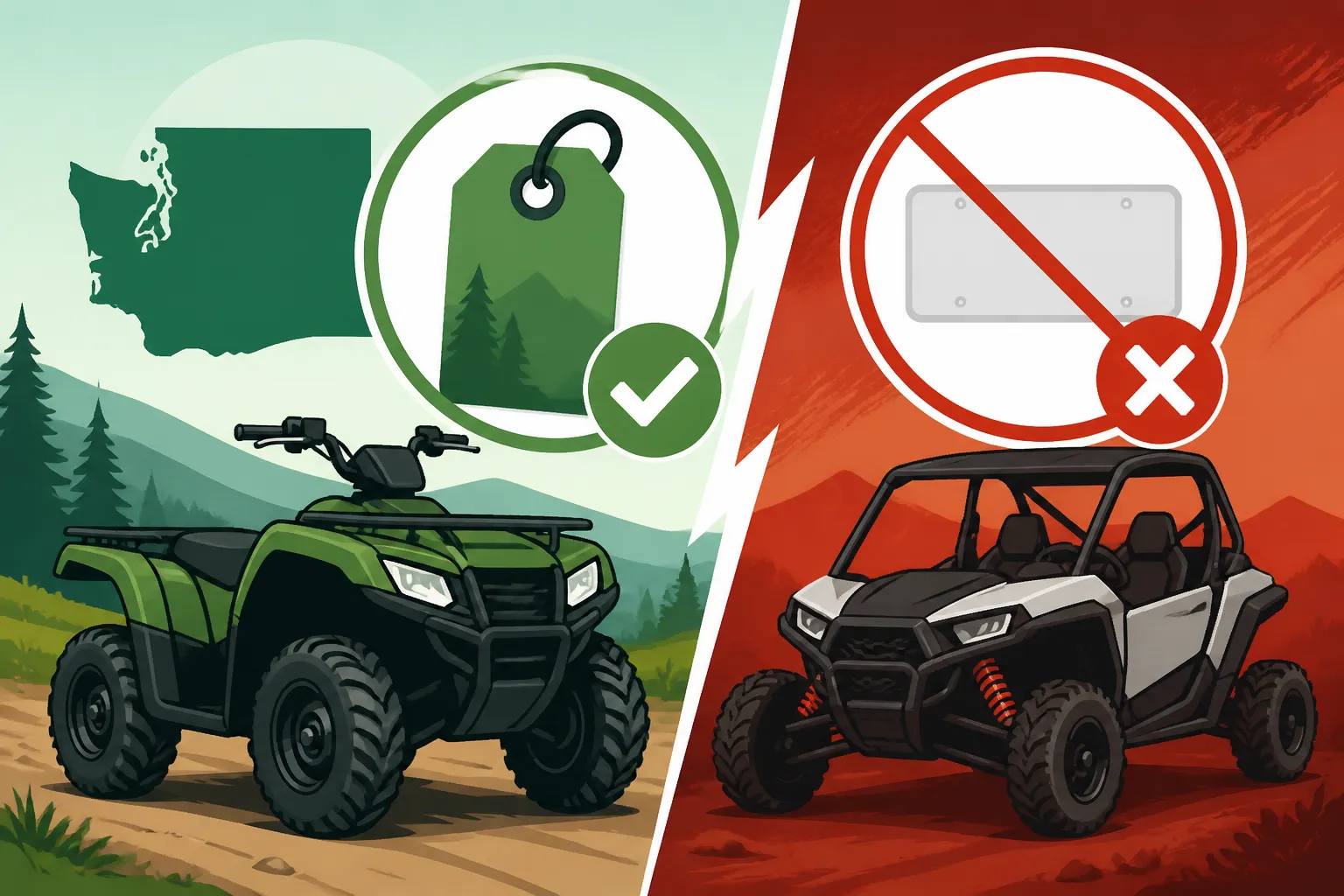
The term "tag" feels inherently more fitting for an off-road vehicle. It suggests something less formal, more robust, and more adaptable to the harsh conditions our machines endure. A "tag" can be tucked away, less prone to being ripped off by low-hanging branches, caked with mud, or damaged by flying debris. It's practical. It speaks to the utility and often raw, adventurous spirit of off-roading. The Washington Department of Licensing (DOL) likely chose "tag" to immediately differentiate these vehicles from those intended primarily for highway use. It sets an expectation that this isn't a typical road vehicle, right from the first piece of identification. It helps solidify the understanding that while you might take your WATV on certain designated roads, its primary domain is the trail.
The Legal Nuances: What a "Plate" Signifies on the Road
To understand why "tag" is used, it helps to consider what "plate" means in the world of on-road vehicles. A traditional license plate is a universal symbol of a street-legal vehicle, granted full access to public roads, highways, and interstates (within traffic laws, of course). It's typically associated with a vehicle that has passed more rigorous safety and emissions inspections, and is designed for sustained operation at higher speeds on paved surfaces.
A vehicle with a "plate" implies a level of integration into the regular traffic system that a WATV simply doesn't have, even if you opt for the on-road registration. While Washington allows WATVs to operate on certain designated roads, there are significant restrictions. They often have speed limits, are confined to specific road types, and come with their own set of equipment requirements that differ from a standard passenger car. Attaching a "license plate" to a WATV could mistakenly suggest it has the same road privileges as a car, leading to confusion for both riders and law enforcement. The use of "tag" helps to visually and legally distinguish these vehicles, reinforcing their unique status and the specific rules that govern their operation on public land and limited road segments. This prevents misunderstandings about where you can and cannot ride, helping to keep everyone safe and compliant with [Washington Rules for Riding a County Road] and [Washington Rules for Riding a City Street].
Understanding the Washington WATV Metal Tag
So, what exactly is this "metal tag" we're talking about? It's not just a fancy name; it refers to a specific, physical identifier that every registered WATV in Washington receives. This little piece of metal is more than just a number; it's your machine's official identity in the eyes of the state.
Physical Characteristics and Placement of the WATV Tag
The Washington WATV metal tag is typically a small, rectangular piece of metal, embossed with a unique identifier. It's designed to be compact and relatively unobtrusive, considering the varied designs and rough usage of off-road vehicles. Unlike a standard car license plate, which has a fairly universal mounting location, the placement of a WATV tag can be a bit more flexible, albeit with specific guidelines.
For most ATVs (quads), you'll often find the tag mounted on the rear fender or a dedicated bracket. For side-by-sides (UTVs), it might be on the rear bumper, roll cage, or a flat area on the back of the machine. Dirt bikes, with their minimalist design, usually have it affixed to a rear fender extension or a specially designed plate holder. The key is that it must be clearly visible from the rear, ensuring it's not obscured by mud, equipment, or your riding gear. This requirement for visibility is crucial for law enforcement to quickly identify registered machines. You can learn more about finding the right spot in our guide on [Where the Metal Tag Mounts]. The practical reality is that finding a secure spot on some machines can be a bit of a puzzle, but it’s a necessary step to ensure your machine is properly identified and compliant.
Durability and Replacement: Why a Tag Lasts Seven Years
Given the demanding environments WATVs operate in, durability is paramount for the metal tag. It's made to withstand the elements – rain, mud, dust, and occasional bumps against brush or rocks. This isn't a flimsy piece of aluminum; it's built to last. The state recognizes that constantly replacing a tag due to wear and tear from off-road use would be a burden on riders.
That's why Washington's WATV metal tags are issued with a seven-year lifespan. This extended period ensures that once you get your tag, you won't have to worry about replacing it for quite a long time, assuming it remains legible and intact. This contrasts sharply with the annual validation stickers (tabs) you might purchase, which indicate your current registration and road use status. The tag is the long-term identifier, while the tabs are the yearly proof of payment and current legal operation. This longevity is a practical benefit for riders, saving time and hassle at the licensing office. You can delve deeper into this specific aspect by checking out our post on [Why a WATV Metal Tag Lasts Seven Years]. Even with this durability, sometimes tags can get damaged or become unreadable, but thankfully, [The $2 Tag Replacement in Washington] cost is minimal.
Beyond Semantics: The Practical Implications for Riders
The distinction between a "tag" and a "plate" isn't just about what sounds better or what looks tougher. It has tangible effects on how you interact with the rules, how you prepare your machine, and what you need to carry with you when you hit the trails or venture onto approved roadways. Understanding these implications is key to being a responsible and hassle-free rider in Washington.
Avoiding Confusion on the Trails and Roads
One of the most important practical implications of the "tag" designation is the clarity it provides for everyone involved: riders, law enforcement, and other road users. When a WATV displays a "tag" rather than a "plate," it immediately signals that it's an off-road vehicle with specific, limited road privileges. This visual cue helps to prevent confusion on Washington's diverse network of forest roads, county roads, and city streets where WATVs might be allowed.
For instance, if a sheriff's deputy sees a machine with an off-road "tag" on a county road, they know to check for the proper annual tabs and to verify that the vehicle is on an approved route, operating within specific speed and equipment parameters. If that same vehicle had a "plate," the officer might initially assume full road legality, only to discover later that it doesn't meet the criteria, leading to unnecessary stops and potential citations for the rider. The clear distinction means everyone is on the same page from the outset, reducing misunderstandings and helping to enforce the unique framework of Washington's WATV laws, including rules for things like [Washington Rules for Riding a Forest Road]. This separation helps manage expectations and ensures that the limited road access for WATVs is respected and understood by the wider public.
The Paperwork Journey: Title, Registration, and the Tag
Before your WATV can proudly display its metal tag, it must go through a proper titling and registration process with the Washington State Department of Licensing (DOL). This journey starts with establishing legal ownership, which almost always means having a title in your name. You can't just slap a tag on a machine you bought with a handshake; the state needs proof of ownership to issue any form of registration.
This is where your initial paperwork becomes critical. Whether you bought your machine from a dealer or a private seller, you'll need the appropriate documentation to transfer the title. For private sales, having a solid bill of sale is absolutely essential to protect both buyer and seller. Resources like LawDepot can be incredibly helpful here, providing easy-to-use templates for a [A Washington Bill of Sale for a WATV] that ensures all the necessary legal information is included. Once you have a valid title in your name, you can then proceed to register the machine and obtain your metal tag along with your annual off-road (and optional on-road) tabs. The DOL processes all of this, ensuring your machine is legally recognized. You'll want to review all the specific requirements detailed in [Washington WATV Registration Paperwork] to ensure a smooth process. It's often asked, [Do You Need a Title for a WATV in Washington?], and the answer is almost always yes, and it’s the first step towards getting that tag.
The Wider Context: Tabs, Use, and the Future
The metal tag is just one piece of the puzzle when it comes to legally riding your WATV in Washington. It serves as the long-term identifier, but it works in conjunction with other elements, particularly the annual tabs, to signify your machine's current legal status and permitted areas of operation. Understanding how these pieces fit together ensures you're always riding within the bounds of the law.
The Role of the "Off-Road Tab" and "On-Road Tab" Alongside the Tag
While your metal tag provides the permanent identification, it's the annual tabs that signify your current registration is active and what kind of use your WATV is permitted for. Every registered WATV in Washington needs at least an annual [Washington's Off-Road Tab Explained]. This sticker, which you renew yearly, indicates that you've paid the necessary fees to ride on designated off-road trails and public lands. This is the baseline requirement for all WATV use.
For those who want to take advantage of the limited road access offered in certain parts of Washington, there's also the option of adding the [Washington's On-Road Tab Explained]. This additional sticker, also renewed annually, sits alongside your off-road tab and indicates that your machine meets the additional equipment requirements (like mirrors, turn signals, and a horn) and that you, the rider, possess a valid driver's license. It’s crucial to remember that even with both tabs, your WATV is still limited to specific road types and speed limits, and doesn't gain the full privileges of a "street-legal" vehicle. Together, the permanent metal tag and the annual tabs provide a comprehensive and clear system for identifying and regulating WATV use in Washington. You can find more details on [Paying for Both Tabs in Washington] if you plan to utilize both options.
Preparing Your Paperwork: Where LawDepot Can Help
Navigating the various forms and documents required for buying, selling, or registering a WATV can feel overwhelming. Beyond the standard DOL forms, you might encounter situations where personal legal documents are necessary, especially in private transactions. This is where services that simplify legal document creation can be a lifesaver.
Whether you're selling your beloved quad to upgrade, or you’ve found the perfect used side-by-side, getting your paperwork in order is paramount. A clear and legally sound bill of sale protects both parties. For example, when [Selling a WATV in Washington] to a private buyer, a comprehensive bill of sale ensures all terms, conditions, and the final price are documented, preventing future disputes. LawDepot offers customizable templates for documents like a bill of sale, which can be invaluable for ensuring all the crucial details are covered before you head to the licensing office. They can help you prepare official-looking documents that meet general legal standards, giving you peace of mind. For those [Buying a Used ATV in Washington] privately, having the seller provide a well-drafted bill of sale is a must, and knowing you can generate one yourself through platforms like LawDepot can be a real advantage. Even for more complex situations, such as needing a power of attorney for someone else to handle your registration if you're out of town, LawDepot provides reliable templates to ensure accuracy and compliance.
Tag vs. Plate: A Quick Overview
To summarize the core differences between a Washington WATV "tag" and a traditional vehicle "plate," here's a handy comparison:
| Feature | Washington WATV "Tag" | Standard Vehicle "Plate" |
|---|---|---|
| Purpose | Identifies an Off-Road Vehicle (WATV) | Identifies a Street-Legal Vehicle |
| Primary Use | Designed for off-road trails and limited road use | Designed for public roads and highways |
| Lifespan | Issued for seven years | Typically renewed annually with stickers |
| Placement | Rear of WATV, often fender or bumper; adaptable | Rear bumper (and front in some states); standardized |
| Legal Scope | Restricted road access (with on-road tab) | Full road access (within traffic laws) |
| Associated ID | Paired with annual off-road & optional on-road tabs | Paired with annual registration stickers |
| Physical Form | Smaller, more rugged; less formal in appearance | Larger, more formal; designed for visibility |
Disclaimer
This article is for general informational purposes only and does not constitute professional advice. Laws, prices and regulations vary by location and change over time. Consult a qualified professional for guidance on your specific situation.