Washington WATV Registration Paperwork
Navigating the paperwork for registering your Washington Wheeled All-Terrain Vehicle (WATV) can feel like a maze, honestly. You're probably just excited to hit the trails or get out on those approved county roads, but before that fun can begin, there's a stack of forms, titles, and declarations that need your attention. It’s easy to get overwhelmed trying to figure out exactly what the Department of Licensing (DOL) needs from you. This guide is here to untangle that knot, walking you through every piece of paper you might need to get your WATV legally registered in Washington, so you can stop stressing and start riding.
The Core Documents for Any Washington WATV Registration
No matter if your WATV is brand new or new-to-you, there are a few fundamental pieces of paperwork that are absolutely non-negotiable for registration in Washington. These are the bedrock of proving ownership and getting your machine into the state's system. Think of these as your primary identification for your machine.
Your Washington Certificate of Title
This is arguably the most crucial document you'll need. In Washington, before you can even think about registering your WATV, it absolutely must have a clear title in your name. If you bought your machine from a dealer, they typically handle the titling process for you, which is a huge convenience. However, if you purchased it privately, especially from someone who never quite got around to titling it themselves, you'll need to secure that title first. The title proves legal ownership and ensures the state knows who is responsible for the machine. Without it, you’re basically trying to register something that isn’t officially yours in the state’s eyes. This foundational step is critical, and many new owners underestimate its importance. You can read more about [Titling a WATV in Washington] to understand the process.
It’s not just about having a title, but having your title. If the previous owner hands you an open title (meaning they signed it but never transferred it into their name), you're going to hit a wall at the DOL office. The state wants a clear chain of ownership, and skipping links in that chain creates headaches. Always ensure the title you receive is properly assigned to you from the immediate previous owner. This might mean the seller needs to title it in their name first, then sign it over to you.
Vehicle Title Application Form
Once you have that glorious title in hand, or if the dealer is handling it, the next piece of the puzzle is the Washington Vehicle Title Application form. This isn't just for titling; it's often combined with your registration application. On this form, you'll provide all the essential details about your WATV: its make, model, year, and of course, its Vehicle Identification Number (VIN). You'll also fill in your personal information as the owner. Accuracy is key here. Double-check every number and letter, especially the VIN. A single typo can lead to delays and additional trips to the licensing office, which nobody wants. This form is the official request to the state to recognize you as the owner and to issue those all-important tabs.
You might find different versions of this form depending on where you get it (online, from a subagent, or a dealer), but the core information required remains consistent. Be prepared to list the odometer reading if your machine has one, and verify the declared weight. If you're unsure about any section, it's always better to ask the DOL representative or a licensing subagent before submitting a form with errors. They are usually pretty helpful, even if the process itself can sometimes feel a bit rigid.
Proof of Purchase or Transfer
Even with a signed-over title, the state often wants to see solid proof of how that machine came into your possession. For purchases from a dealer, this will typically be the sales agreement or bill of sale provided by the dealership. This document will clearly state the purchase price, taxes paid, and details of the transaction. Keep this safe! For private sales, a properly executed bill of sale is your golden ticket. This isn't just a scribble on a napkin; it needs to be comprehensive. It should include the names and addresses of both buyer and seller, the date of sale, a detailed description of the WATV (including the VIN), and the agreed-upon purchase price.
A good bill of sale protects both parties and provides the necessary documentation for calculating use tax if you bought it from a private party in Washington, or sales tax if purchased from a dealer. If you're crafting your own bill of sale for a private transaction, resources like LawDepot can be incredibly helpful for creating a legally sound document that covers all the bases. This ensures you have clear evidence of the transaction, which is crucial for proving ownership and for satisfying the state's requirements. Remember, even if you paid cash, having a written, signed, and dated bill of sale is non-negotiable. It's your paper trail! You can find more specific requirements in [Washington WATV Bill of Sale Requirements].
Additional Paperwork for Specific Scenarios
While the title and application are universal, other documents might come into play depending on how you acquired your WATV, whether it’s new or used, and if you plan to ride it on public roads. These additional forms ensure compliance with specific regulations.
Bill of Sale for Private Party Purchases
As mentioned, if you're buying a used WATV from a private seller, a detailed bill of sale is essential. This document serves multiple purposes: it acts as proof of purchase, establishes the purchase price for use tax calculations, and confirms the transfer of ownership from the seller to you. Without it, the DOL might question the legitimacy of the transfer, especially if there's any discrepancy or if the title assignment looks incomplete. Don't rely on just the back of a title for this, as it might not capture all the necessary details for the state.
When drafting or reviewing a bill of sale, ensure it includes the full legal names and current addresses of both the buyer and seller, the exact date of the transaction, a complete description of the WATV (make, model, year, VIN), and the agreed-upon sale price. Both parties should sign and date the document, and it's a good practice for each to keep a copy. If you're unsure how to create one, using a reputable template from a service like LawDepot can save you a lot of grief and ensure you haven't missed any critical information. This form directly impacts the calculation of use tax, so make sure the stated price is accurate and reflects the fair market value. For example, if you claim you "bought" a pristine side-by-side for $50 from your buddy, the DOL might use their own assessment of fair market value to calculate your use tax, as outlined in [Washington ATV Use Tax on a Private Sale].
The Washington Road Use Declaration
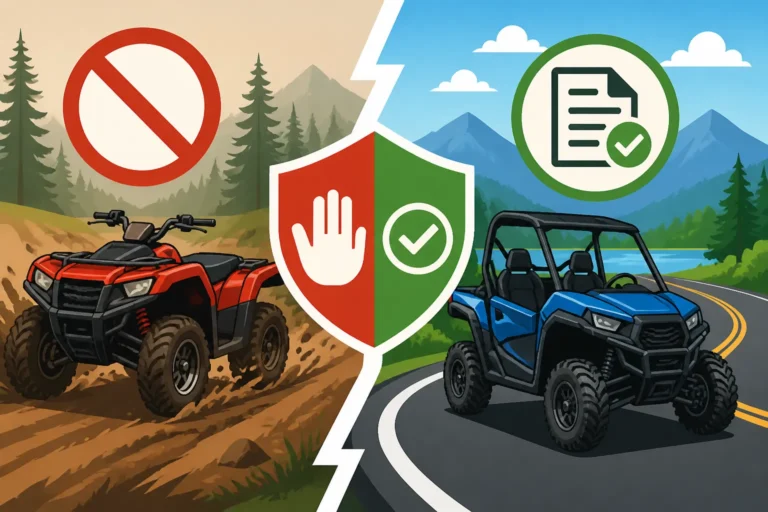
Planning to take your WATV on those sweet county roads where allowed? Then you’ll need to complete the Washington Road Use Declaration. This form is specifically for machines that you intend to make "street legal" with the appropriate on-road tab. By signing this, you're essentially declaring that your WATV meets the specific safety equipment requirements mandated by Washington state law for on-road use. This includes items like a horn, mirrors, turn signals, and a headlight/taillight system. It's your affirmation that you've equipped your machine properly.
You can’t just sign this form and assume you're good to go. The declaration implies that you have actually installed and verified the functionality of these components. If you're ever stopped on a public road, a law enforcement officer will be checking for these items. This declaration is a key piece of paperwork for adding the "on-road" privilege to your WATV registration, and it's separate from your basic off-road registration. More details can be found in [Washington Road Use Declaration Form]. Without this declaration, you'll only receive the off-road tab, limiting your riding to designated trails and private property.
WATV Safety Inspection Form
For many WATVs that are new to the state or haven't been previously titled/registered for on-road use, you may need a safety inspection. This is particularly true if you are adding the on-road tab. A certified WATV inspector (often found at dealerships or specialized service shops) will examine your machine to ensure it meets Washington’s safety standards for road use. They'll check things like brakes, lights, tires, mirrors, and exhaust systems. Once it passes, the inspector will sign off on the inspection form, which you then submit to the DOL.
This inspection is not just a formality; it's a critical safety measure. The state wants to ensure that any WATV sharing public roads is safe for both the rider and other motorists. There's usually a cap on how much these inspections can cost, typically around [Washington WATV Safety Inspection Cost], so be sure to check with your chosen shop. If you're bringing an older machine up to snuff for road use, this inspection might highlight some necessary upgrades. Ensure you choose a facility that's authorized to perform these inspections; not just any mechanic can sign off on it.
Pro Tips for a Smooth Registration Experience
Gathering all the right paperwork can be daunting, but a little preparation goes a long way. These tips will help you avoid common pitfalls and make your trip to the licensing office as smooth as possible.
Organize Everything Before You Go
Before you even step foot into a licensing office or subagent, gather all your documents. Create a checklist and go through it. Do you have your title? Is it signed correctly? Do you have the bill of sale? Is it detailed and signed by both parties? If you're getting on-road tabs, is your Road Use Declaration filled out? If an inspection was needed, is that form complete and signed? Having everything neatly organized in a folder will not only save you time but will also make a great impression on the licensing agent. They appreciate it when customers are prepared!
It’s also wise to make copies of everything for your own records. Sometimes documents get misplaced, or you might need a reference later. A digital copy on your phone or in the cloud is also a great backup. Remember, some of these forms, like the original title, are irreplaceable without a significant amount of hassle and fees, so treat them with care. Being organized can prevent multiple trips, saving you valuable time and frustration. For guidance on where to go, check out [Where to Register a WATV in Washington].
Understand the "Fifteen-Day Rule"
Washington has a pretty strict fifteen-day deadline for registering your newly acquired WATV. This means from the date you purchase the machine, you have a mere fifteen days to get all your paperwork in order and submit it for registration. If you miss this window, you could face penalties and additional fees. This applies whether you bought it from a dealer or a private party. Life happens, of course, but the state doesn't really offer much leeway. So, as soon as that purchase is final, make registration a top priority.
This rule is often a source of frustration for new owners who might be busy or underestimate the time it takes to get everything aligned. Weekends count in those fifteen days, and holidays can eat into your window, too. So, if you buy a machine on a Friday, don't wait until the next week to start the process. Start gathering those documents immediately. It’s always better to be early than to incur late penalties. You can find more about this rule in [Washington's Fifteen-Day Registration Deadline].
Don't Forget Your Identification and Payment
While not strictly "WATV paperwork," your personal identification and method of payment are absolutely crucial. You'll need a valid driver's license or state ID to confirm your identity as the new owner. Also, be prepared to pay the registration fees, any applicable use tax (if you bought from a private party), and the cost for your tabs. Licensing offices typically accept various forms of payment, but it’s always a good idea to confirm ahead of time or bring multiple options, just in case. Don't let your perfectly prepared stack of paperwork be held up by a forgotten wallet!
The total [Washington WATV Registration Cost] will vary based on whether you're getting only the off-road tab, or adding the on-road tab as well, plus any titling fees and taxes. Make sure you have enough funds available. Sometimes, people forget about the use tax calculation on private sales, which can be a significant chunk of change if you bought a high-value machine. The more prepared you are with your payment, the quicker you’ll be out the door with your temporary permit and on your way to receiving those shiny new tabs.
Disclaimer
This article is for general informational purposes only and does not constitute professional advice. Laws, prices and regulations vary by location and change over time. Consult a qualified professional for guidance on your specific situation.