Why Washington Says WATV and Not ATV
It's a question many off-road enthusiasts ponder, especially those new to the Evergreen State or bringing a machine in from elsewhere: why does Washington State insist on calling it a "WATV" when everyone else just says "ATV"? This seemingly small linguistic difference actually points to a broader, more inclusive legal framework that affects how you title, register, and ultimately ride your off-road machine in Washington. This guide will unravel the mystery behind the term, explaining its origins, what it covers, and why understanding this distinction is crucial for every rider in Washington.
The Washington WATV: A Unique Identity for Off-Roaders
For years, the term "ATV" (All-Terrain Vehicle) generally referred to those saddle-seated, handlebar-steered machines most people picture. But as the world of off-road vehicles evolved, with the explosion of side-by-sides (UTVs), dirt bikes, and other specialized machines, the simple "ATV" umbrella started feeling a bit too small. Washington State's legislature recognized this expansion and, in an effort to create a comprehensive and consistent legal definition for all these varied vehicles, introduced the term "WATV."
From ATV to WATV: The Legislative Shift
The shift to "WATV" wasn't just about sounding different; it was a deliberate legislative move to standardize how a wide array of off-road motorized vehicles are regulated within the state. Before this, there could be confusion or gaps in how different types of machines were classified for registration, titling, and even road access. The growing popularity of side-by-sides, which often feature steering wheels and bucket seats rather than handlebars and saddle seats, really highlighted the need for a more encompassing term. Lawmakers wanted a clear definition that would cover everything from a traditional quad to a utility vehicle with a dump bed, and even dirt bikes, ensuring that all these machines operated under a consistent set of rules for safety, environmental impact, and public access.
This legislative shift aimed to bring clarity, especially as more riders sought to use their machines on designated county roads or even connect trails via short stretches of pavement. By defining a "WATV," the state could then create specific regulations for all these vehicle types without having to list them individually in every single piece of legislation. It streamlined the process and brought a level of uniformity that was previously lacking, ultimately making it easier for riders to understand their obligations and for authorities to enforce the rules.
More Than Just a Name: What "WATV" Encompasses
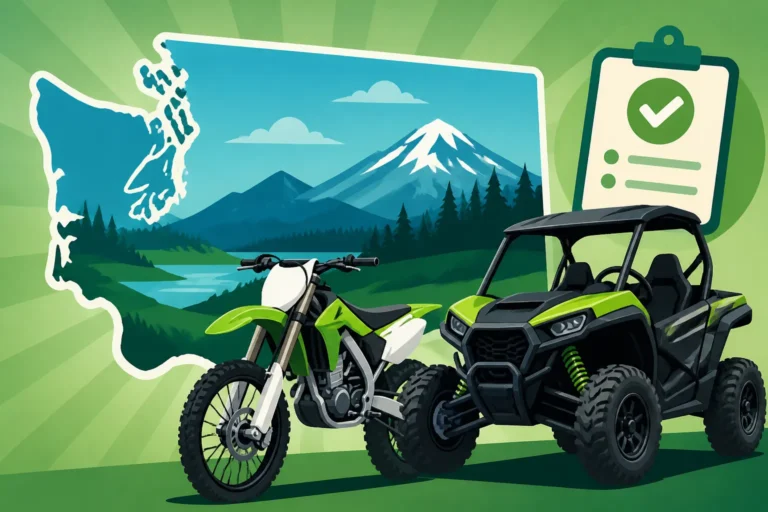
When Washington uses "WATV," it’s not just a fancy way of saying "ATV." It stands for "Wheeled All-Terrain Vehicle," and it casts a much wider net. While a traditional ATV is certainly a WATV, the definition extends to many other machines you might own or ride. This includes the increasingly popular side-by-sides (sometimes called UTVs or Utility Task Vehicles), which are often larger, have multiple seats, and steering wheels. It also covers off-road motorcycles, commonly known as dirt bikes, and even some specialized vehicles like mules or Gators, as long as they meet the specific criteria outlined in state law.
The key takeaway here is that if your machine is motorized, designed for off-road use, and has wheels, there's a very high chance it falls under the WATV designation in Washington. This broad definition means that regardless of whether you ride a quad, a two-seater side-by-side, or a dirt bike, you'll be dealing with the same basic registration, titling, and operational requirements. This consistency helps prevent confusion, ensuring that anyone operating these types of vehicles on public lands or approved roads adheres to the same set of foundational rules.
Understanding the Definition: What Qualifies as a WATV?
So, if "WATV" is such a broad term, what exactly are its legal parameters? It’s not just about what it looks like, but what specific features and characteristics the law considers. Getting this right is vital because it determines if your machine needs to be titled, registered, and if it qualifies for potential on-road use.
Key Characteristics and Legal Parameters
Washington State law defines a "Wheeled All-Terrain Vehicle" (WATV) with specific criteria that go beyond a simple visual identification. Generally, a WATV is a motorized vehicle that's designed for off-road use and includes vehicles like ATVs, UTVs, and dirt bikes. The legal definition often focuses on factors such as:
- Width: Typically, a WATV must not exceed a certain width, usually around 80 inches, though this can vary for specific classifications or road access rules. This width limit is crucial for determining which trails or roads a machine can legally access.
- Weight: There are often weight limits, usually under 2,500 pounds, for vehicles to be classified as WATVs. This distinguishes them from heavier utility equipment or full-sized vehicles.
- Number of Wheels: While "ATV" traditionally implies three or four wheels, the WATV definition covers vehicles with two or more wheels designed for off-road travel, thus including dirt bikes, which are technically two-wheeled vehicles.
- Steering and Seating: The law accommodates both handlebar-steered, saddle-seated machines (like traditional ATVs and dirt bikes) and steering-wheel-controlled, bucket-seated machines (like side-by-sides). This flexibility is central to the WATV's inclusive nature.
- Designed for Off-Road Use: This is a fundamental aspect. The primary design intent of the vehicle must be for traversing unpaved terrain, rather than public streets, even if it can be made "street legal" with modifications and proper registration.
These parameters are important for understanding what you own and how you're allowed to use it. Knowing these specifics can prevent issues when trying to get your machine registered or when a ranger checks your vehicle on the trail.
Here's a quick comparison of the common perception of "ATV" versus Washington's "WATV" definition:
| Feature/Vehicle Type | General "ATV" Term (Common Usage) | Washington "WATV" Definition (Legal Usage) |
|---|---|---|
| Typical Definition | All-Terrain Vehicle, usually saddle-seat, handlebars, 3 or 4 wheels | Wheeled All-Terrain Vehicle; includes ATVs, UTVs/side-by-sides, dirt bikes, and other motorized ORVs |
| Steering | Handlebars | Handlebars or Steering Wheel |
| Seating | Saddle-seat | Saddle-seat or bucket seats |
| Vehicle Types | Quads, 3-wheelers (historically) | Quads, Side-by-Sides (UTVs), Dirt Bikes, Mules, Gators, etc. |
| Primary Purpose | Recreation, utility | Recreation, utility, specific road access (with additional steps) |
| Registration | Varies by state; often separate categories for different ORVs | Unified registration system under WATV, with specific tabs ([Washington's Two-Tab System]) for off-road and on-road use |
Beyond Quads: Side-by-Sides, Dirt Bikes, and More
The beauty of the WATV designation is its inclusivity. It moves beyond the traditional image of a quad, officially embracing a much broader family of machines that thrive off the pavement. This is particularly relevant given the booming popularity of side-by-sides. These robust utility vehicles, often with features mirroring small cars like steering wheels, seatbelts, and passenger seating, are fully considered WATVs under Washington law. So, whether you're taking your Polaris RZR out for a spin or using your Honda Pioneer for farm work, it's a WATV in the eyes of the state.
And it doesn't stop there. Even your dirt bike, that nimble, two-wheeled marvel designed for tearing up trails, falls under the WATV umbrella for registration purposes. This might seem counterintuitive to riders who typically associate "ATV" with four wheels, but in Washington, the focus is on the wheeled, all-terrain aspect for legal classification. This means that the rules for [Registering a Washington Dirt Bike] are largely consistent with those for a quad or a side-by-side. This comprehensive approach ensures that all motorized off-road vehicles are subject to the same foundational requirements, simplifying enforcement and promoting safety across the entire spectrum of off-road recreation.
Why This Distinction Matters to You, the Rider
Understanding the "WATV" terminology isn't just about passing a trivia test; it has very real, practical implications for how you enjoy your machine in Washington. From the moment you purchase your vehicle to every time you hit the trails or an approved road, the WATV definition dictates the rules you must follow.
Registration, Titling, and Legal Requirements
The most immediate impact of the WATV designation is on your legal obligations as an owner. In Washington, if your machine qualifies as a WATV, it must be titled and registered. This isn't optional, even if you plan to ride exclusively on private land or within designated off-road parks. [Titling a WATV in Washington] is the first crucial step, establishing legal ownership. Without a proper title, you can't register your machine, which means you can't legally operate it on any public lands or approved roads.
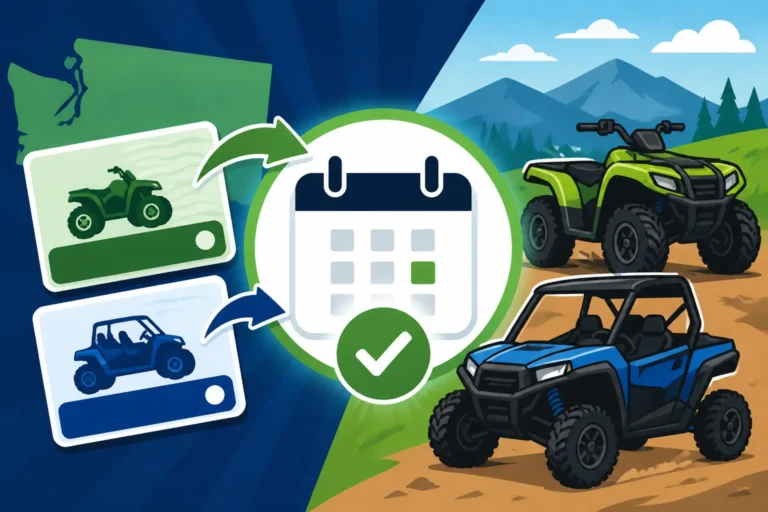
Once titled, you'll need to register your WATV, which involves obtaining the necessary tabs. Washington uses a [Washington's Two-Tab System]: an off-road tab, which is mandatory for all WATVs used off-road, and an optional on-road tab if you plan to ride on approved public roads. The off-road tab ensures that funds are collected for trail maintenance and management, while the on-road tab contributes to infrastructure that supports street-legal use. Failing to have the correct tabs can lead to fines and citations, making it essential to understand these requirements for any WATV you own.
Road Access and Riding Regulations
Perhaps one of the most significant implications of the WATV definition is its direct link to road access. In many states, ATVs are strictly off-limits to public roads. Washington, however, has a progressive approach that allows WATVs to operate on certain public roads if they meet specific criteria and are properly registered with the on-road tab. This is a game-changer for riders who want to connect trails, access fuel, or simply explore more varied terrain.
However, just because you have an on-road tab doesn't mean every road is open. The WATV designation ties directly into [Washington Rules for Riding a County Road] and [Washington Rules for Riding a City Street], which dictate which roads are open, what speed limits apply, and what equipment your WATV must have (like turn signals, mirrors, and a horn). These rules are strictly enforced, and ignorance of the law is not an excuse. Furthermore, fundamental safety requirements, such as [Washington Helmet Law for WATV Riders], apply to all WATV riders and passengers, regardless of whether you're on a trail or an approved road. These regulations are designed to keep everyone safe and ensure harmonious use of shared spaces.
Navigating the Paperwork Maze with Your WATV
The initial excitement of getting a new WATV can quickly turn to frustration if you're not prepared for the necessary paperwork. From establishing ownership to getting those crucial tabs, there are specific steps you'll need to follow to ensure your machine is legal to ride in Washington. The "WATV" designation guides this entire process.
The Importance of a WATV Title
Before you can even think about hitting the trails or cruising an approved county road, your WATV needs a title in your name. This is a non-negotiable step in Washington State. A title serves as the official proof of ownership, a fundamental document for any motor vehicle, and your WATV is no exception. Without a title, you simply cannot register the machine with the Department of Licensing (DOL). This is why Washington explicitly states [Why Washington Wants a Title First]. Even if you bought your machine new from a dealer, they'll handle the initial titling. But if you're buying a used WATV from a private seller, the responsibility falls squarely on you to ensure the title is properly transferred.
This can sometimes be a sticking point, especially when buying from someone who might not have titled the machine themselves, or if the original title is lost. It’s absolutely critical to clarify title status before completing a purchase. For private sales, you'll typically need a [Washington Bill of Sale for a WATV] to accompany the title transfer. Resources like LawDepot can provide templates for these legal documents, ensuring you have a properly drafted bill of sale that protects both buyer and seller and helps streamline the titling process. Taking the time to ensure the title is clear and transferred correctly prevents a multitude of headaches down the line, from legal ownership disputes to the inability to ever register your machine.
Registering Your WATV: Tabs and Decals
Once your WATV is properly titled in your name, the next step is registration, which is where those distinctive Washington tabs and decals come into play. Every WATV, regardless of whether it's an ATV, UTV, or dirt bike, must be registered if it's going to be operated on public lands or roads. The core of this system is the annual off-road tab, which funds crucial trail maintenance and access projects across the state. This is the baseline registration for any WATV.
However, if you intend to take your WATV onto approved county roads or specific highway segments, you'll need to add the optional on-road tab. This second tab, often referred to as the "road use declaration" tab, signifies that your WATV meets the additional equipment and safety requirements for limited street use. You'll also receive a metal tag, often called the [Washington's Metal Tag Explained], which must be affixed to the rear of your machine. This metal tag, along with the visible decals, allows law enforcement and land managers to quickly verify your WATV's registration status. You can typically get your WATV registered at any local vehicle licensing office or subagent, ensuring convenience and accessibility for riders across the state. [Where to Register a WATV in Washington] will guide you to your nearest location.
Common Questions and Misunderstandings About "WATV"
Even with clear definitions, the nuances of off-road vehicle laws can lead to plenty of confusion, especially for riders accustomed to different regulations in other states. The "WATV" terminology, while designed for clarity, often sparks specific questions.
"Is My ATV Street Legal in Washington?"
This is perhaps the most common question among WATV owners, and it's where the nuances of the Washington system truly come into play. The simple answer is: not automatically. While Washington's WATV laws are progressive in allowing some road access, being classified as a WATV and having an off-road tab does not inherently make your machine street legal. It's a stepping stone, but there are additional hurdles.
To ride on approved public roads, your WATV must first have the optional on-road tab (the one you get after completing the [The Washington Road Use Declaration] and potentially a safety inspection). Beyond that, your machine needs specific equipment like turn signals, mirrors, a horn, and proper lighting to meet the standards for road use. Crucially, even with all these modifications and the on-road tab, you're still limited to roads with speed limits of 35 mph or less, unless specifically designated otherwise, and counties must "opt-in" to allow WATV use on their roads. Many cities also have their own ordinances. So, while [Are ATVs Street Legal in Washington?] is technically "yes" under certain conditions, it's a conditional "yes" that requires significant effort and adherence to local rules, not a blanket permission to ride anywhere a car can go. It's a common frustration for riders coming from states with more lenient or entirely restrictive street-legal laws.
The Role of the Department of Licensing
At the heart of all WATV registration, titling, and regulation in Washington State is the Department of Licensing (DOL). They are the primary authority responsible for interpreting and implementing the laws passed by the state legislature regarding wheeled all-terrain vehicles. This means that any questions about what constitutes a WATV, how to title a used machine, the fees for tabs, or the requirements for road use will ultimately refer back to the DOL's official guidance. Think of them as the gatekeepers and the ultimate source of truth for all things related to your WATV's legal status.
The DOL issues the titles, processes registrations, provides the tabs and metal tags, and maintains records of all WATVs in the state. They also oversee the network of vehicle licensing offices and subagents where you physically complete these transactions. While trail rules and usage might be managed by land agencies like the Department of Natural Resources (DNR) or the U.S. Forest Service, the foundational legal requirements for your machine itself fall under the DOL. Understanding [The Department of Licensing and Washington ORVs] is essential, as their website and offices are the go-to resources for ensuring your WATV is compliant with all state regulations. When in doubt about any aspect of your WATV's legality, the DOL is the place to start your inquiry.
The Broader Impact: Uniformity and Future Considerations
The decision to adopt "WATV" wasn't just about defining vehicles; it was about creating a more cohesive and manageable system for off-road recreation across the state. This unified approach has far-reaching benefits, from how trails are funded to how future policies might be shaped.
Consistency in Law Enforcement and Trail Management
Imagine a scenario where a ranger encounters a side-by-side on a trail and a traditional ATV on another. If different legal definitions applied, enforcement could become a tangled mess of varying rules, equipment requirements, and penalties. By grouping all these diverse machines under the single "WATV" designation, Washington creates a consistent legal framework that simplifies enforcement for law enforcement officers, state troopers, and park rangers alike. They know that a WATV, regardless of its specific type, must adhere to the same foundational registration, titling, and safety rules.
This uniformity also extends to trail management. Land managers, whether from the Department of Natural Resources (DNR), the U.S. Forest Service, or state parks, can apply consistent guidelines for trail access, maintenance, and signage. This makes it easier to design and manage trail systems that accommodate a range of wheeled off-road vehicles, ensuring that [Where Washington ORV Fees Go] (specifically, the funds from your off-road tabs) are directed efficiently to benefit all WATV riders. It streamlines planning, reduces ambiguity, and ultimately leads to a better, safer riding experience for everyone.
Potential Changes and Rider Advocacy
While the "WATV" designation has brought a lot of clarity and consistency, laws and regulations are never static. The world of off-road vehicles continues to evolve with new technologies, designs, and rider preferences. Because of this, the legal framework, including the WATV definition, may see future adjustments. Rider advocacy groups play a crucial role in this ongoing process. Organizations dedicated to off-road recreation in Washington actively engage with lawmakers, land managers, and the DOL to represent rider interests, suggest improvements, and ensure that new regulations are practical and fair.
These groups often provide input on everything from trail access and funding to safety initiatives and even the precise definitions within the law. Staying informed and, if possible, participating in these discussions can help shape the future of WATV riding in Washington. Whether it's advocating for more road access, ensuring adequate funding for trail maintenance, or influencing equipment requirements, the collective voice of WATV riders helps ensure that the legislative and regulatory environment remains supportive of the sport. The WATV term is a foundation, but its application and scope can continue to be refined as the community and the vehicles themselves evolve.
Disclaimer
This article is for general informational purposes only and does not constitute professional advice. Laws, prices and regulations vary by location and change over time. Consult a qualified professional for guidance on your specific situation.