Two Tabs on One Machine
It's a common dilemma for riders in Washington: you want the freedom of hitting your favorite trails and forest roads with your ATV or UTV, but you also need the practicality of legally crossing a paved county road to get to the next section of trail, or even riding a short stretch of street to reach a store or gas station. Trying to figure out how to get your machine legal for both off-road adventures and limited on-road travel can feel like navigating a complex maze of rules. This comprehensive guide is here to untangle the Washington Department of Licensing's "two-tab" system, showing you exactly how you can register your off-road vehicle for both trail and road use on a single machine, giving you maximum flexibility and peace of mind.
Understanding Washington's Two-Tab System for WATVs
Washington State has a unique way of categorizing and registering off-road vehicles, which they refer to as Wheeled All-Terrain Vehicles (WATVs). Unlike some states that might have a single registration for off-road use, Washington offers a distinct system that allows riders to equip their machine for both dedicated off-road trails and approved public roads. This dual approach offers incredible flexibility but often causes a bit of confusion for new and even experienced riders. Essentially, you're looking at two separate tabs—decals, really—that you apply to your WATV, each signifying a different type of legal use, all tied together by a single [Washington's Metal Tag Explained].
The Off-Road Tab: Your Trail Permit
The foundation of WATV registration in Washington is the off-road tab. This is the decal that almost every WATV owner will need if they plan to ride on designated non-highway vehicle (NHV) trails, forest roads, or any public land managed by the Department of Natural Resources (DNR) or the U.S. Forest Service that permits ORV use. Think of this tab as your core permit for exploring the vast network of trails across Washington, from the deep mud of the Coast Range to the dusty climbs of Eastern Washington.
Without this tab, you simply cannot legally ride on most public off-road areas. It signifies that your machine is registered for off-highway use, and the fees collected from it go directly back into maintaining and developing the very trails we all love. It's the standard for anyone who enjoys getting out into the wilderness on their machine. For many, this is the only tab they will ever need or consider. The [Washington Off-Road Tab Cost] is a yearly investment in the future of our riding areas.
The On-Road Tab: Opening Up Public Roads
Now, this is where things get interesting and where many riders see the true benefit of Washington's system. The on-road tab is an additional decal that, when paired with your off-road tab and the necessary safety equipment, legally converts your WATV into a "street legal" machine for limited public road use. This isn't about cruising down I-5, but rather giving you the ability to ride on approved county roads, city streets, and even cross state highways in specific circumstances.
Imagine being able to ride from your campground directly to a trailhead without having to load your machine back onto a trailer, or popping into a small town for gas or a burger without fear of a ticket. That's the freedom the on-road tab provides. However, this flexibility comes with specific requirements, including a safety inspection and additional equipment on your machine. It's an optional add-on that significantly expands your riding possibilities, transforming your WATV from a pure trail machine into a truly multi-purpose vehicle. Don't forget to check the current [Washington On-Road Tab Cost] when planning your budget.
The Metal Tag: A Shared Identifier
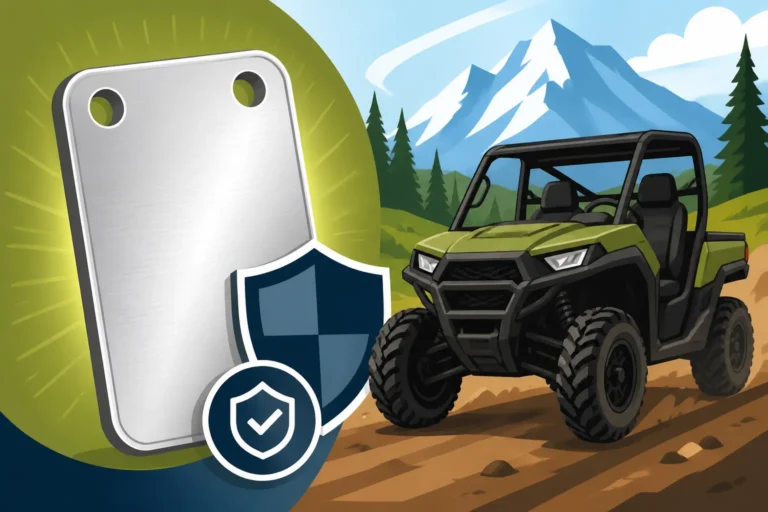
Regardless of whether you choose to get one tab or both, every WATV registered in Washington will also be issued a physical metal tag. This small, durable tag serves as a unique identifier for your machine, much like a license plate on a car, but specifically designed for off-road vehicles. It usually bolts onto the rear of your machine, in a visible location.
This metal tag is crucial for enforcement and identification. It’s tied to your registration and helps authorities quickly verify your machine's legitimacy, whether you're on a trail or crossing a county road. Unlike the annual decals, this tag typically lasts for seven years before needing replacement, though there's a small fee for a [Washington WATV Metal Tag Replacement] if it gets damaged or lost. It's a fundamental part of Washington's WATV identification system, bridging the gap between your paperwork and the machine itself.
The Practicalities of Getting Both Tabs
Deciding you want the flexibility of both off-road and on-road riding is one thing; actually going through the process of getting those tabs is another. It involves a specific set of steps, paperwork, and financial considerations that are important to understand upfront. Washington's Department of Licensing (DOL) manages this process, and knowing what to expect can save you a lot of time and frustration. It's not as simple as just asking for both, as the on-road component adds a layer of scrutiny.
Paperwork and Inspection: What You Need
To register your WATV with both tabs, you'll need to present several key pieces of documentation. First and foremost, you'll need proof of ownership, typically a title in your name. If you've just purchased a machine, especially a used one, make sure you understand [Why Washington Wants a Title First]. You'll also need a bill of sale, and services like LawDepot can provide reliable templates for a [Washington WATV Bill of Sale Requirements] if you're buying privately, ensuring all necessary details are covered.
The most significant additional requirement for the on-road tab is a safety inspection. Your WATV must be inspected by a qualified professional to ensure it meets all the specific safety equipment standards for road use. This includes things like headlights, taillights, brake lights, turn signals, mirrors, a horn, and proper tires. The inspector will sign off on a form confirming your machine is compliant. Be aware that [Washington WATV Safety Inspection Cost] can vary, but there's a cap on how much they can charge. This inspection is a critical hurdle, as a machine that doesn't meet the standards simply cannot get the on-road tab.
Costs Involved for Dual Registration
When you opt for both tabs, you're essentially paying for two distinct registration components, plus the cost of the metal tag and any titling fees. The [Washington Off-Road Tab Cost] is an annual fee that supports trail maintenance. On top of that, you'll pay the [Washington On-Road Tab Cost], which is specifically for the privilege of road use and contributes to multi-use roadway safety accounts.
Then there are the potential additional costs:
- Titling Fee: If you're titling the machine for the first time in your name.
- Sales/Use Tax: Depending on where and how you acquired the WATV. If you bought it from a private party, you'll pay use tax at the time of registration.
- Safety Inspection Fee: As mentioned, this is a one-time cost until future changes are needed.
- Metal Tag Fee: A small initial fee, and then a replacement fee every seven years or if lost.
It's wise to budget for all these components. While the tab fees are recurring annually, the titling and inspection fees are typically one-time or infrequent expenses. Remember that LawDepot can also assist with other legal documentation that might be needed during the purchase or registration process.
Where to Go and What to Expect
You can handle most of your WATV registration in Washington at any authorized vehicle licensing office. These are often sub-agents of the Department of Licensing (DOL) and are typically found in your local communities. It's usually the same place you would register a car or motorcycle.
When you go, bring all your documentation:
- Proof of Ownership: Title, or bill of sale if you're titling it for the first time.
- WATV Safety Inspection Certificate: This is crucial for the on-road tab.
- Your Photo ID.
- Payment for all applicable fees.
The process usually involves verifying your VIN, reviewing your paperwork, and collecting the fees. They will issue you the annual decals for both your off-road and on-road use, which you'll need to affix to your machine in a visible spot. If it's your first time registering that machine, they will also issue you a metal tag. The staff can help clarify any questions you have about specific forms, such as the [Washington Road Use Declaration Form] if you're adding the on-road tab.
Riding with Both Tabs: Rules and Realities
Having both tabs on your WATV is fantastic for expanding your riding opportunities, but it doesn't mean you can ride anywhere you please. There are still very specific rules and regulations governing where and how you can operate your dual-registered machine on public roads. Understanding these limitations is key to enjoying your WATV responsibly and avoiding costly fines.
Where You Can Legally Ride with Both Tabs
The on-road tab gives you permission, but counties and cities still have the ultimate say on which of their roads are open to WATVs. Generally, you're looking at:
- Designated County Roads: Many counties in Washington have ordinances that open certain roads to WATVs, usually those posted 35 mph or less. Counties with populations under 15,000 are often "open by default," meaning all their roads under 35 mph are open unless specifically posted closed. Larger counties, however, must "opt-in" and explicitly list which roads are open. Knowing your county's rules is paramount; checking a [Finding a County's Approved Road List] is a great first step.
- Designated City Streets: Similar to counties, some cities have also passed ordinances to allow WATV use on certain streets. Often, these are smaller communities or towns looking to facilitate access for riders.
- Crossing State Highways: You can generally cross state highways at an intersection, but extended riding on state highways is extremely limited and requires specific authorization from WSDOT. You typically cannot ride on roads posted over 35 mph, with a few exceptions for crossing. [Washington Rules for Getting Across a Road] explains this further.
- Forest Roads: Both tabs ensure you're covered for riding on non-highway vehicle roads within state and federal forests, which are a major destination for WATV riders.
It's vital to remember that these rules are local. What's allowed in Lewis County might be different from what's permitted in Snohomish County. Always check local ordinances before you ride, especially if you're venturing into a new area.
Equipment Requirements for Road Use
The safety inspection for your on-road tab isn't just a formality; it ensures your machine is equipped to interact safely with other vehicles on public roads. To legally ride with your on-road tab, your WATV must be outfitted with:
- Headlights and Taillights/Brake Lights: Fully functional for visibility, especially during dusk, dawn, or adverse weather.
- Turn Signals: Required for indicating turns, just like a car. [Turn Signals on a Washington Road Machine] are a must-have.
- Mirrors: At least one rearview mirror, typically mounted to provide a clear view to the rear. Two mirrors, one on each side, are often preferred for better visibility.
- Horn: A working horn to alert others.
- Muffler and Spark Arrester: Required for all off-road use, but equally important for road use to keep noise levels manageable and prevent fires.
- Tires: Must be suitable for highway use, though specific tread patterns can vary.
- Seat Belts: If your WATV has them (like most side-by-sides), they must be worn.
- Helmets: All riders and passengers, regardless of age, must wear a DOT-compliant helmet when riding on public roads. This is a non-negotiable [Washington Helmet Law for WATV Riders].
- Valid Driver's License: The operator must possess a valid driver's license.
- Insurance: Proof of financial responsibility (insurance) is required for road use, similar to a car. [Washington WATV Insurance Requirements] are specific to on-road use.
This list can feel extensive, but each item contributes to your safety and the safety of others sharing the road. When LawDepot helps you prepare documents, it’s a good reminder that legal compliance extends to your vehicle's physical state as well.
The Importance of Knowing Local Ordinances
Even with both tabs and all the right equipment, the golden rule of riding on public roads in Washington is to know the local ordinances. Just because a road could be opened doesn't mean it is. A county under 15,000 population will have a list of roads that are closed to WATVs, while a larger county will have a list of roads that are open. You need to check which list applies and what specific roads are on it.
Riding on a road that hasn't been officially opened to WATVs, even if you have both tabs, is considered illegal. This can result in fines and citations for [Washington Fines for Illegal WATV Road Use]. Websites for county public works departments or sheriff's offices are often good places to find this information. Sometimes, signs are posted at the entrance to open road segments, but relying solely on signs can be risky. Being proactive and checking online before your trip is always the best approach. It ensures you maximize the freedom both tabs provide without inadvertently breaking the law.
Annual Renewals and Keeping Your Registration Current
Once you've navigated the initial registration and inspection process, keeping your WATV legally ready for both off-road and on-road adventures is relatively straightforward. The key is understanding the renewal cycle for your tabs and metal tag, and what to do if any of your critical identifiers go missing or get damaged. Staying on top of these details ensures uninterrupted access to Washington's diverse riding opportunities.
Renewing Your Tabs Yearly
Both your off-road and on-road tabs are annual decals that expire and must be renewed each year. The expiration date is typically based on the month you originally registered your machine. You'll receive a renewal notice in the mail or electronically from the Department of Licensing before your tabs expire.
Renewing is usually a quick process:
- Online: Many people prefer the convenience of renewing their [Washington ORV Registration Online].
- By Mail: You can send in your renewal notice and payment.
- In Person: Visit a local vehicle licensing office.
It’s crucial not to let your tabs expire. Riding with [Riding on Expired Tabs] can lead to fines and citations. Since you have two tabs, they will both share the same annual renewal date, simplifying the process. This yearly renewal ensures that the funds continue to support the trails and multi-use roadways that make our riding experiences possible.
Replacing Lost Decals or the Metal Tag
Accidents happen, and sometimes a decal can peel off your fender or your metal tag might get bent or even lost on a particularly aggressive ride. Thankfully, replacing these items is a relatively simple process, though it does come with a small fee.
- Lost or Damaged Decals: If one or both of your annual decals are lost or become unreadable, you can order [Ordering Replacement Washington ORV Decals] through the Department of Licensing. This typically involves submitting a request and paying a nominal fee. You'll then be mailed new decals to affix to your machine.
- Lost or Damaged Metal Tag: The metal tag is a bit more robust, but it can still get lost or become illegible over time. As mentioned earlier, the [Washington WATV Metal Tag Replacement] fee is usually quite small. You'll need to visit a vehicle licensing office to request a replacement tag, which will be physically issued to you to install on your machine. Remember that the metal tag generally lasts for seven years, so you won't replace it as frequently as your annual decals unless it gets damaged.
Keeping your machine fully compliant means ensuring all your visible identifiers are present and legible. It's a small detail, but one that can prevent unnecessary hassle during a roadside check or a stop at a trailhead.
Disclaimer
This article is for general informational purposes only and does not constitute professional advice. Laws, prices and regulations vary by location and change over time. Consult a qualified professional for guidance on your specific situation.