What a Visitor With No Home-State Registration Buys
It's incredibly frustrating to plan an exciting off-road adventure, haul your rig all the way to Washington State, only to realize that your current registration situation, or lack thereof, might keep you off the trails. Many out-of-state riders arrive eager to explore, only to discover their home-state's rules don't quite align with Washington's, or they simply haven't registered their machine anywhere. This guide will clear up that confusion, detailing precisely what a visitor without home-state ORV registration needs to purchase to legally enjoy Washington's extensive off-road recreation areas.
The Challenge for Out-of-State Riders Without Registration
You've probably spent countless hours researching trails, packing your gear, and coordinating with friends for that ultimate Washington adventure. The last thing you want is for a technicality like registration to put a wrench in your plans. Many riders assume that if their machine is registered in their home state, they're automatically good to go anywhere. While Washington does offer some reciprocity, that goodwill often has specific conditions, and it certainly doesn't extend to machines that aren't registered at all. This creates a unique hurdle for those who might ride exclusively on private land back home or whose state simply doesn't require formal ORV registration.
Why Your Home State's Rules Might Not Cut It
Every state has its own distinct set of regulations when it comes to off-road vehicles. What's perfectly acceptable in Oregon or Idaho, for example, might not fully satisfy the requirements in Washington. Some states, particularly those with vast stretches of private land or specific types of riding culture, might not even have a formal, statewide ORV registration system. For riders coming from such areas, or those who simply haven't bothered with formal registration because their riding is always on private property, this becomes an immediate issue upon entering Washington's public lands. Washington is quite particular about having a valid form of identification for any off-road vehicle operating on public trails, and that usually means a state-issued tab or permit.
Furthermore, even if your state does have a registration system, it might not meet Washington's standards for reciprocity. Washington's reciprocity rules typically require that your home state's registration program be "substantially similar" to its own. This means it needs to collect similar fees, have similar administrative processes, and generally contribute to the same goals of trail maintenance and safety. If your home state's system is vastly different, or doesn't exist, you're essentially starting from scratch when it comes to riding legally in Washington. It's a bit of a bureaucratic puzzle, but one that needs solving before you unload your machine at the trailhead.
The Immediate Need for a Solution to Ride Legally
Rolling up to a Washington State DNR (Department of Natural Resources) or Forest Service trailhead with an unregistered off-road vehicle is a surefire way to get a citation, or at the very least, be turned away. Law enforcement, whether it's a DNR ranger, a forest patrol officer, or a local sheriff's deputy, will check for valid registration. They're not just looking for a piece of paper; they're ensuring that all machines operating on public land are contributing to the funding and maintenance of those very trails. This is why having some form of valid authorization is non-negotiable.
The pain point here is clear: you've invested time and money in your trip, and you want to ride. Being denied access or facing a fine because of missing paperwork is a massive letdown. This is precisely why Washington has a specific solution tailored for visitors who find themselves in this predicament. It's designed to be a straightforward way to get legal for a temporary period, ensuring you can still enjoy the stunning scenery and challenging trails without unnecessary stress.
Washington's Answer: The Temporary ORV Use Permit
For out-of-state visitors whose machines are not registered in their home state, or whose home-state registration isn't recognized by Washington's reciprocity agreements, the state offers a distinct pathway to legal riding: the [Washington Temporary ORV Permit for a Visitor]. This permit is specifically designed to allow non-residents to legally operate their off-road vehicles on designated public lands within Washington State for a limited time. Think of it as your express pass to the trails when your usual credentials aren't quite enough. It's a simple, effective solution to a common problem, letting you focus on the ride rather than the worry.
What the Temporary Permit Covers (and What It Doesn't)
The Washington Temporary ORV Use Permit grants you permission to ride your machine on designated non-highway (off-road) trails, routes, and areas managed by agencies like the Department of Natural Resources (DNR) or the U.S. Forest Service. This means you can access the vast majority of Washington's incredible ORV park systems, state forests, and national forest trails. Whether you're aiming for the challenging terrain of Reiter Foothills, the extensive network of [Washington's 110,000-Acre Capitol Forest], or the unique experience of [Juniper Dunes in Eastern Washington], this permit gets you on the dirt legally.
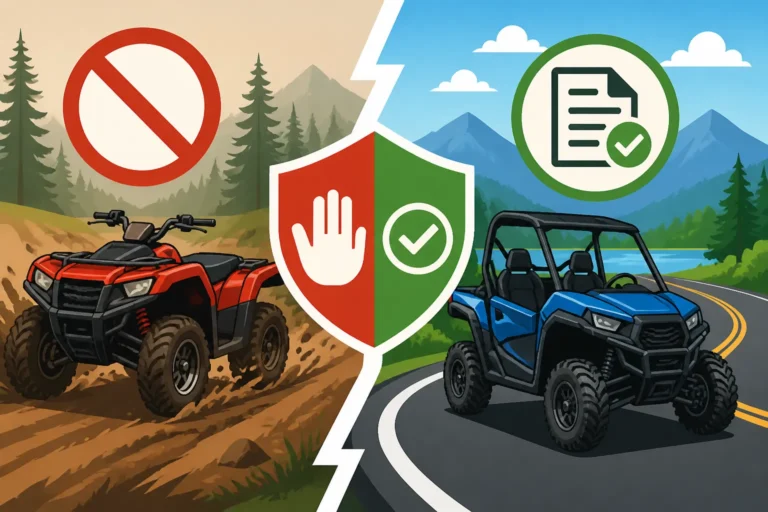
However, and this is a crucial distinction, the temporary permit is strictly for off-road use only. It does not grant you permission to ride on public roads, streets, or highways. Washington has very specific rules for street-legal WATVs, which involve an entirely separate "on-road tab" and a rigorous safety inspection process. The temporary permit provides no such allowance. If your ride plan involves connecting trails via paved county roads or crossing state highways, you'll need to understand that the temporary permit alone won't cover those segments. [Why a Temporary Permit Is Trail Only] is a key concept to grasp to avoid unexpected encounters with law enforcement.
How to Get Your Hands on a Temporary Permit
Acquiring a [Washington's $15.75 Temporary ORV Permit] is thankfully a relatively simple process. You don't need a Washington title for your machine, and you don't have to go through the lengthy registration process that a Washington resident would. The permit can be purchased directly from the Washington State Department of Licensing (DOL) or one of their authorized vehicle licensing subagents, often found at local car tabs and license plate offices. Many of these subagents are conveniently located throughout the state, making it easy to pick one up when you arrive.
When you go to purchase the permit, you'll generally need to provide some basic information about yourself and your off-road vehicle. This includes your name, address (your out-of-state address is fine), and details about your machine, such as its Vehicle Identification Number (VIN), make, model, and year. While it's a straightforward transaction, having all your machine's information readily available will speed up the process considerably. It's a quick way to get legal and hit the trails without too much bureaucratic hassle.
Important Limitations of the Temporary Permit for Visitors
Beyond the "trails only" restriction, there are other important limitations for the temporary permit. Primarily, it's designed for short-term recreational use. The permit is valid for a period of [Sixty Days on a Washington Temporary Permit] from the date of purchase. This generous window allows for extended vacations or multiple shorter trips within a two-month period, which is usually more than enough time for most visitors. However, once those sixty days are up, the permit expires, and you'd need to purchase a new one if you plan to continue riding.
Another key point is that the temporary permit is machine-specific. It's issued for your particular ATV, UTV, or dirt bike, identified by its VIN. You cannot transfer this permit to another machine, nor can a friend use your permit for their vehicle. Each individual off-road vehicle that will be operating on Washington's public lands under this temporary arrangement needs its own permit. This prevents any confusion and ensures every machine is properly accounted for, aligning with the state's efforts to manage and fund its extensive ORV trail systems.
Understanding the Costs and Logistics
Getting your temporary permit is a small but essential step in your Washington ORV adventure. Knowing exactly what it will cost and how to manage the paperwork efficiently can save you time and hassle. It’s a minimal investment compared to the fines you could face if caught riding unregistered, not to mention the joy of uninterrupted trail access.
What You'll Pay for a Temporary Washington Permit
The cost for a [Washington Temporary ORV Permit Cost] is quite affordable, usually a flat fee that covers the administrative costs and contributes to the state's ORV programs. It's typically around $15.75. This modest sum ensures that your machine is recognized as legally operating on public lands and contributes to the very infrastructure you'll be enjoying, such as trail maintenance, signage, and enforcement efforts. Compared to the yearly registration fees residents pay, it's a very cost-effective way for visitors to gain access without a long-term commitment.
It’s important to note that this permit fee is separate from other potential costs, such as the [Washington Discover Pass Cost]. Many of Washington's state-managed recreation lands, including DNR forests where ORV trails are common, require a Discover Pass for parking your tow vehicle at trailheads. So, while your ORV permit gets your machine on the trail, the Discover Pass gets your truck or trailer parked legally at the staging area. Factor both of these into your budget to avoid any surprises.
Keeping Your Permit Handy While on the Trail
Just like with any other registration document, you must carry proof of your temporary ORV permit with you whenever you are operating your machine on public lands. This isn't just a suggestion; it's a legal requirement. When a ranger or law enforcement officer stops you, they will ask to see your valid permit, along with any other required documentation. Having it easily accessible will make any roadside interaction smooth and quick, allowing you to get back to your ride.
Consider how you will keep this paper document dry and secure on your machine. Off-road riding often involves dust, mud, and water crossings, none of which are friendly to paper. Many riders use waterproof bags, plastic sleeves, or dedicated compartments on their machines to [Keeping the Registration Inside the Machine] safely. A tattered or illegible permit might still lead to questions or a delay, so protecting it is in your best interest. Make sure it's kept in a location where it won't be easily lost or damaged during your ride.
Planning Your Washington ORV Adventure
With your temporary ORV permit in hand, you're almost ready to hit the trails! However, a little extra planning can ensure your trip is not only legal but also enjoyable and safe. Understanding how your permit integrates with other access requirements and knowing what to do for longer stays will make all the difference.
Combining the Permit with Trail Access Requirements
As mentioned earlier, your temporary ORV permit handles the machine-specific registration. But don't forget about the [The Discover Pass and Washington Riders]. Many of Washington's prime ORV riding areas are on state-managed lands (DNR, State Parks, Fish and Wildlife), which require a Discover Pass for vehicle access to staging areas and trailheads. If you're parking your truck and trailer, you'll likely need one. You can purchase a [Washington Discover Pass Day Rate] or an annual pass, depending on the length of your stay. Federal lands, such as National Forests, might require a Northwest Forest Pass instead, so always check the specific land manager for your chosen riding area.
It's a good practice to research your chosen riding area beforehand to understand all the access requirements. [Washington Trail Maps From DNR] and U.S. Forest Service maps often indicate specific pass requirements. Some areas, like the [Beverly Sand Dunes in Central Washington], might have no additional fees. Always check for current conditions and closures before you go; nothing is worse than driving hours to a trailhead only to find it closed due to fire risk or timber operations. [Checking Alerts Before You Load Up] is crucial for any successful trip.
What to Do If You Plan to Stay Longer
If you initially purchased a 60-day temporary permit and find yourself so enamored with Washington's riding opportunities that you want to extend your stay beyond that period, you will need to purchase a new temporary permit. The current permit cannot be renewed or extended past its 60-day validity. This ensures that the state's system remains fair and that everyone operating on public land is doing so under valid authorization.
For those who might decide to make Washington their permanent home, or who plan to visit very frequently and purchase a machine in Washington, the temporary permit is just that – temporary. If you become a resident or frequently ride within the state, you would then go through the full Washington titling and registration process, which involves obtaining a metal tab and annual decals. This more permanent registration contributes to the state's ORV program on a sustained basis, much like a resident's vehicle registration. However, for the typical out-of-state visitor with no home-state registration, the temporary permit is the ideal, hassle-free solution.
Disclaimer
This article is for general informational purposes only and does not constitute professional advice. Laws, prices and regulations vary by location and change over time. Consult a qualified professional for guidance on your specific situation.