Why a Temporary Permit Keeps You Off Pavement
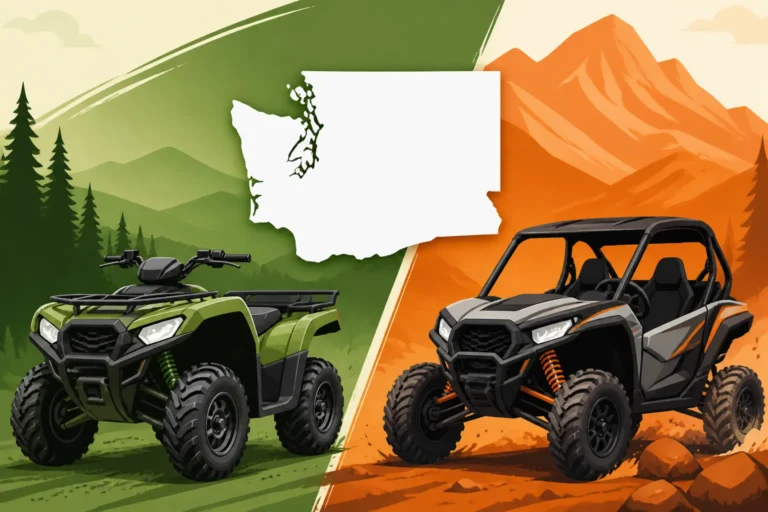
It’s a common scenario: you’ve just bought a new-to-you quad, or maybe you’re visiting Washington from out of state for a weekend of epic trail riding. You’ve heard about the temporary ORV permits and think, "Great, an easy way to get on the trails!" But then you wonder, can you ride it down the road to grab some ice cream or just scoot to the nearest staging area? Many riders get a rude awakening when they discover that Washington’s temporary ORV permits come with a big, bold restriction: they keep you strictly off the pavement. This guide is going to dive deep into why that is, what it means for you, and how to navigate the rules so you can enjoy Washington’s incredible off-road opportunities without an unexpected citation.
Understanding Washington's ORV Permitting System
Washington State has a robust system for regulating off-road vehicles (ORVs), which they officially call Wheeled All-Terrain Vehicles (WATVs). This system is designed to ensure safety, fund trail maintenance, and define where and how these machines can be operated. It can feel a bit like navigating a maze, especially if you're new to the state or to ORV ownership. You’ve got annual registrations, metal tags, and then these temporary permits that seem almost too good to be true. But understanding the core differences between these options is crucial for staying on the right side of the law.
The Purpose of Washington's Temporary ORV Permit
At its heart, the [Washington's Temporary ORV Use Permit] is designed for convenience and specific use cases. Think of it as a short-term pass to access designated off-road trails and areas. It's particularly popular with out-of-state visitors who might only be in Washington for a week or two, or for new residents who haven't yet completed their full titling and registration process. It provides immediate, albeit limited, legal access to the vast network of state and federal off-road opportunities. The permit helps fund the non-highway vehicle account, which directly supports the trails you love to ride, ensuring they are maintained and accessible for all. It’s a way for occasional users to contribute to the system without committing to a full year of registration if their usage doesn't warrant it.
How a Temporary Permit Differs from Annual Tabs
The biggest distinction between a temporary permit and the annual tabs is permanence and scope of use. When you register a WATV in Washington for the full year, you typically get two tabs: an [Washington's Off-Road Tab Explained] and, if your machine is street legal and inspected, an [Washington's On-Road Tab Explained]. The off-road tab, combined with a metal tag, allows you to ride on designated non-highway trails and areas. Adding the on-road tab, after meeting specific equipment and inspection requirements, opens up approved county roads and city streets.
A temporary permit, on the other hand, is a single-purpose, time-limited document. It grants you access only to non-highway ORV areas and trails for a period of up to sixty days. It bypasses the need for a title, a full safety inspection, and the more rigorous requirements of annual registration. This simplicity is its strength, but also its limitation. It's truly an "off-road only" pass, and that distinction is paramount. You might consider using a resource like LawDepot if you're drafting personal agreements for borrowing a friend's machine for that weekend trip, but for the actual state permit, you'll go through the Department of Licensing or an authorized vendor.
The Legal Limitations of a Temporary Permit
So, why can't you just zip across town on a temporary permit? The answer lies deep within Washington's Revised Code of Washington (RCW), which meticulously defines what constitutes an "ORV" and where it can legally operate. The laws are specific about which types of registrations grant permission for road use, and the temporary permit simply isn't one of them. This isn't an arbitrary rule; it's a fundamental difference in how the state views and regulates the various ways an ORV can be used.
Washington's Road Use Declaration and Temporary Permits
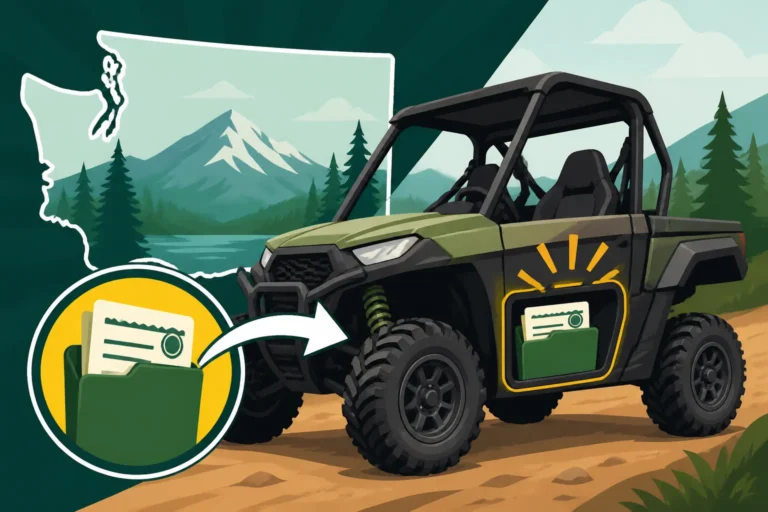
For an ORV to be legally ridden on approved public roads, it must meet specific criteria and be fully registered. A crucial part of this process is the [The Washington Road Use Declaration]. This document is where you, as the owner, formally declare that your WATV meets all the necessary safety and equipment standards for on-road operation, such as having proper lights, turn signals, mirrors, and a horn. This declaration, along with a successful safety inspection, is a prerequisite for obtaining the on-road tab.
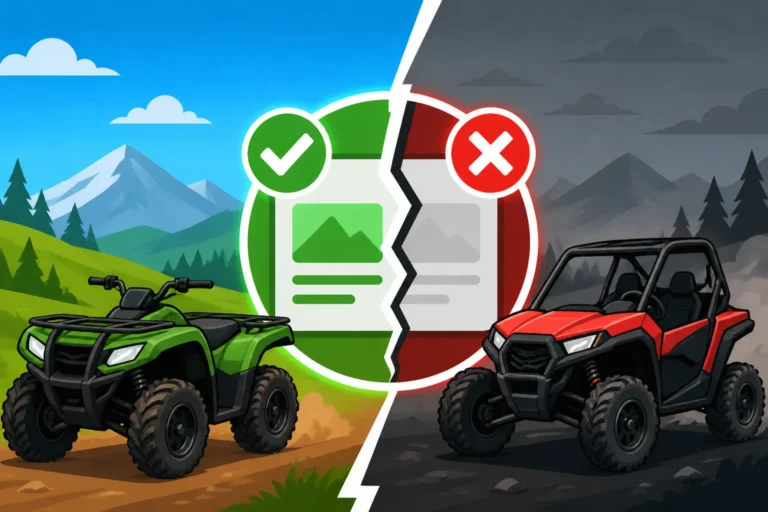
The temporary permit simply bypasses this entire process. It doesn't require a Road Use Declaration, nor does it imply that your machine has undergone the necessary inspection to be road-ready. Because it skips these steps, it cannot grant you the privilege of road access. It's fundamentally a permit for non-highway use, period. This is the core reason [Why a Temporary Permit Is Trail Only] – it's not designed to be a shortcut to street legality.
The Lack of a Safety Inspection Requirement for Temporary Permits
One of the most significant reasons a temporary permit keeps you off pavement is the absence of a required safety inspection. To get the annual on-road tab, your WATV must pass a thorough [Washington WATV Safety Inspection Cost] by a qualified inspector. This inspection verifies that your machine has all the mandated equipment for safe road operation. This includes things like headlights, taillights, brake lights, turn signals, at least one mirror, a horn, and appropriate tires. These are not just suggestions; they are legal requirements for sharing public roads with other vehicles.
The temporary permit, however, requires no such inspection. You can purchase it without ever having your machine checked for road-worthiness. This makes it incredibly convenient for quick trail access but also means the state hasn't certified your vehicle as safe for mixed traffic. It would be a significant liability and safety risk to allow uninspected vehicles onto public roads, which is why the restriction is so firm. So, while it's easy to obtain, remember that ease comes with specific limitations.
Practical Implications for Riders
Understanding the why behind the pavement restriction is one thing, but knowing how it affects your actual riding plans is another. Many riders, especially those new to Washington, might inadvertently try to use a temporary permit for short road connections, only to find themselves facing legal trouble. It's critical to plan your trips with this limitation in mind to avoid fines and ensure a smooth, enjoyable experience.
Getting Your Machine to the Trail Legally
Given that your temporary permit doesn't allow pavement use, you'll need a legal way to transport your ORV to the trailhead. The most common and recommended method is to trailer your machine. Load it up on a utility trailer, into the back of a truck, or on a toy hauler, and drive it directly to a designated ORV staging area or trailhead. Many state parks, DNR lands, and national forests offer excellent staging areas with ample parking, some even equipped with vault toilets and picnic tables.
If you're visiting Washington from out of state and just need a quick solution, remember that the [Washington Temporary Permit for Nonresidents] is exactly for this type of situation – it gets you on the trails, but not the roads. Planning your route beforehand to ensure direct access to off-road areas, or using a robust map application to identify legal staging points, can save a lot of headaches. Always assume that any paved road, even a short section, is off-limits with only a temporary permit.
Consequences of Pavement Riding on a Temporary Permit
Ignoring the pavement restriction on a temporary permit can lead to serious consequences. If a law enforcement officer spots you riding your ORV on a public road with only a temporary permit, you could be cited for operating an unregistered vehicle on a public roadway. The [Washington Fines for an Unregistered WATV] can be substantial, and nobody wants their weekend adventure to end with a hefty ticket. Beyond the financial penalty, you could also face towing costs, impoundment fees, and even points on your driving record, depending on the specifics of the citation.
Furthermore, consider the insurance implications. While Washington does not mandate insurance for off-road use, it is required for machines with an on-road tab. If you're involved in an accident on pavement while operating with only a temporary permit, your personal insurance might deny coverage, leaving you personally liable for damages or injuries. It's a risk simply not worth taking. For important ownership documents and waivers, like a bill of sale or liability forms you might need for private land access, resources like LawDepot can provide customizable templates.
When a Temporary Permit Makes Sense
Despite its limitations, the temporary permit plays a valuable role in Washington's ORV system. It's a fantastic option for specific situations, offering flexibility and ease of access when a full annual registration isn't necessary or practical. Understanding these scenarios can help you decide if a temporary permit is the right choice for your upcoming adventure.
Ideal Scenarios for Using a Temporary ORV Permit
The temporary permit is perfect for short-term use. If you're a non-resident planning a week-long trip to ride the trails in Capitol State Forest or explore the Ahtanum State Forest, purchasing a [How Long a Washington Temporary Permit Lasts] (up to 60 days) makes perfect sense. It saves you the hassle of trying to navigate out-of-state registration transfer issues or meeting Washington's stricter on-road requirements if you only plan to ride off-road.
It's also a good option for Washington residents who are new to ORV ownership and haven't yet completed the full titling and registration process. Maybe you just bought a used quad, and the paperwork is still being processed. A temporary permit can get you out on the trails immediately while you wait for your official title and annual tabs to arrive. Additionally, for machines that never touch pavement and are solely used for designated off-road areas, the simplicity of a temporary permit might appeal more than the full annual registration if your riding is very infrequent, though usually, the annual [Washington Off-Road Tab Cost] is more economical in the long run. To streamline personal legal documents like a bill of sale for a used machine, remember services like LawDepot can be helpful, distinct from state permits.
Considering an Annual Registration for Regular Road Access
If you plan on regularly using your WATV, especially if you anticipate needing to ride on approved public roads to connect trails, access amenities, or simply get around your local area, then investing in a full annual registration with both off-road and on-road tabs is absolutely the way to go. While the process is a bit more involved, including the requirement for a [What Washington Requires for On-Road ORV Use] and a safety inspection, the freedom it provides is invaluable.
The annual registration lasts for a full year and can be renewed online through [Washington ORV Registration Online], making it convenient for ongoing use. It opens up many more possibilities for your riding adventures, allowing you to legally traverse approved county roads and city streets where ORV use is permitted. Weigh your usage patterns carefully. If you’re a serious rider who hits the trails frequently or needs any kind of pavement access, the one-time effort of getting the annual tabs will pay dividends in convenience and legality.
| Permit Type | Pavement Use Allowed | Requires Title? | Requires Safety Inspection? | Max Duration | Primary Use Case |
|---|---|---|---|---|---|
| Temporary ORV Permit | No | No (usually) | No | 60 Days | Short-term, Off-Road Only, Visitors |
| Annual Off-Road Tab | No | Yes | No (for off-road use only) | 1 Year | Regular Off-Road Only |
| Annual On-Road Tab | Yes (approved roads) | Yes | Yes | 1 Year | Regular On-Road & Off-Road Use |
Ultimately, Washington's temporary ORV permit is a fantastic tool for specific, limited off-road use. It's easy to obtain and gets you on the trails quickly. However, its primary restriction – keeping you off the pavement – is a non-negotiable aspect of its design. By understanding this limitation and planning accordingly, you can ensure your Washington ORV adventures are not only thrilling but also fully compliant with state law. Ride safe, and enjoy those trails!
Disclaimer
This article is for general informational purposes only and does not constitute professional advice. Laws, prices and regulations vary by location and change over time. Consult a qualified professional for guidance on your specific situation.