Washington ORV Registration for a Farm Machine
Using an ATV or UTV for farm work in Washington State is incredibly common, and honestly, a lifesaver for so many agricultural operations. These machines are not just for recreation; they're vital tools for hauling feed, checking fences, moving irrigation lines, and getting across fields quickly. However, the specific rules for registering an Off-Road Vehicle (ORV) that's primarily used for farming can feel like another layer of bureaucracy on an already busy schedule. This guide is here to untangle the nuances of Washington's ORV registration for farm machines, helping you understand when your workhorse needs tabs and when it might be exempt, ensuring you stay compliant without unnecessary hassle.
The Basics: Does Your Farm Machine Need Washington ORV Registration?
It’s a fair question, and one that often causes a headache for farmers. You’ve got a machine that’s clearly built for off-road work, and it rarely, if ever, leaves your property or the immediate agricultural areas. Do you really need to go through the same hoops as someone heading out to the trails for a weekend ride? The answer isn't always a simple yes or no, but Washington State does have specific considerations for agricultural use.
Defining a "Farm Machine" for ORV Purposes in Washington
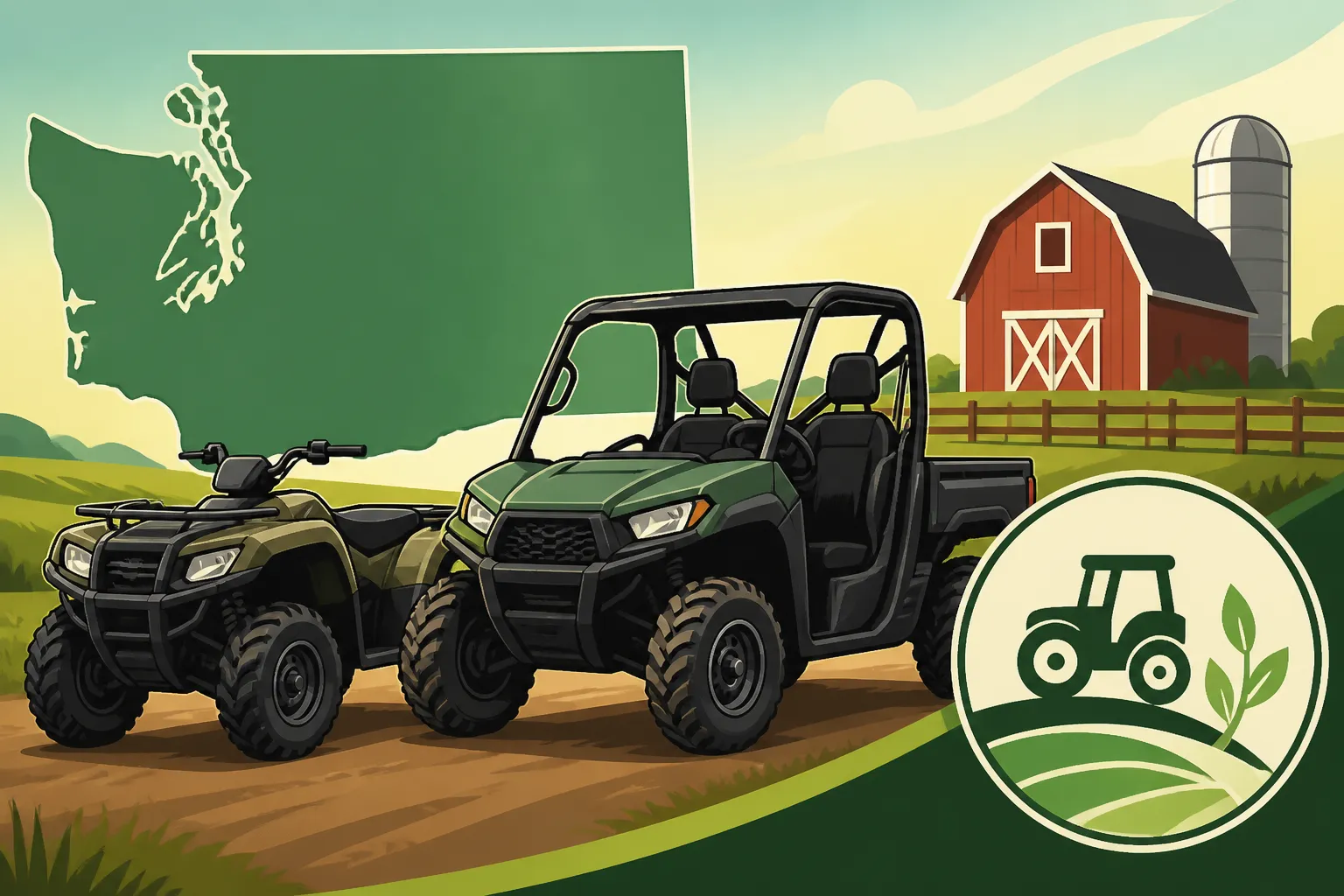
When we talk about a "farm machine" in the context of Washington's ORV laws, we're generally referring to an All-Terrain Vehicle (ATV), Utility Terrain Vehicle (UTV), or even a dirt bike that is predominantly used for agricultural purposes. This isn't just about the type of machine, but its primary function. Is it hauling hay? Spreading fertilizer? Moving livestock? These are clear indicators of farm use. The Washington State Department of Licensing (DOL) doesn't typically have a separate classification like "farm ORV" in the same way they do for farm trucks or tractors, but its intended use is what often guides its registration requirements.
For example, a side-by-side that spends 99% of its life on a sprawling apple orchard in Yakima, or a quad used to check irrigation pivots in the Columbia Basin, fits the spirit of a "farm machine." It's an indispensable tool, not primarily a recreational vehicle. The key distinction here is that its design and usage are integral to the daily operations of a farm, rather than being solely for leisure activities on designated trails. This functional definition helps set the stage for understanding any potential exemptions or special handling.
When Agricultural Use Trumps Standard ORV Rules
This is where many farmers can find some relief. Washington law provides some specific scenarios where an ORV used for farm purposes might not need the standard ORV registration tabs. Generally, if your ATV or UTV is operated exclusively on private property for farming or ranching activities, it doesn't require state ORV tabs. This means if your machine never touches public roads, state parks, or DNR-managed ORV trails, you likely won't need to register it with the Department of Licensing. It's a pragmatic approach recognizing that these are tools of the trade, not recreational vehicles in those specific private-land contexts.
However, "exclusively on private property" is a strict standard. Even if you only venture onto a public road for a short distance to get from one field to another, or to access an adjacent piece of leased land, you might enter a gray area. We'll delve into those situations shortly. The intent of this exemption is to make it easier for farmers to manage their operations without unnecessary regulatory burdens for equipment that never impacts public lands or thoroughfares. But it's absolutely crucial to be certain your use case fits this narrow definition to avoid potential fines.
The Gray Areas: When Your Farm Machine Isn't Just a Farm Machine
Life on a farm isn't always black and white, and neither are ORV rules. What if your "farm machine" is occasionally used to run into the nearest small town for parts, or to take the kids on a quick spin around the property after the chores are done? What if you need to cross a county road, even briefly, to get to another parcel of your land? These are the scenarios where your farm machine can quickly fall under standard ORV registration requirements.
If your ATV or UTV is used for any recreational purpose off your private land, such as riding on designated ORV trails, state forests, or even logging roads that are open to public use, then it absolutely needs to be registered with the appropriate [Washington's Off-Road Tab Explained]. Similarly, if you intend to operate the machine on any public road, even if it's just a short dash down a rural county road to access another field or ranch property, you'll likely need the additional [Washington's On-Road Tab Explained] and meet all the "street legal" equipment requirements. This is a common point of confusion, and ignoring it can lead to citations. It's much safer to register and comply than to risk a fine or, worse, an accident without proper legal standing.
Navigating the Standard Registration Process for Farm ATVs and UTVs
For those farm machines that do need registration, whether for mixed use, road crossings, or purely recreational ventures outside the farm, the process largely mirrors that of any other ORV in Washington. It involves a few key steps to ensure your machine is legally recognized and ready for its intended use.
Essential Paperwork for a Farm ORV
Just like buying a new tractor or a used pickup, getting your ORV registered for farm use starts with the right documentation. You'll need proof of ownership, which typically means a title in your name. If you've just purchased the machine, you'll need the original title from the seller, along with a completed bill of sale. For a machine you've owned for a while but never titled, you might have to go through a process to establish ownership first. The Department of Licensing is particular about this, as they want a clear chain of custody.
The primary document you'll need to submit is the Vehicle/Vessel Bill of Sale and Odometer Disclosure form (Form TD-420-065) if it's a private sale, along with the application for title and registration. You can find detailed information about [Washington WATV Registration Paperwork] and [Washington WATV Title Requirements] on the DOL website. If you bought your machine from a dealer, they'll often handle much of this paperwork for you, making the process a bit smoother. When drafting your own bill of sale for a private purchase, particularly for specialized farm equipment, having a clear and comprehensive document is critical. Services like LawDepot can be helpful resources for finding templates for these kinds of legal forms, ensuring all necessary details are included.
Understanding the Off-Road and On-Road Tab System for Farm Use
Washington employs a two-tab system for ORVs, and understanding which ones apply to your farm machine is crucial. The primary "off-road" tab is generally what people think of for ORV registration. It's required for riding on public lands, state parks, and designated ORV trail systems. If your farm machine occasionally leaves your private property for any form of recreational riding, even on unpaved forest service roads, then you'll need this tab. This fee contributes to the maintenance of Washington's vast network of off-road trails and staging areas.
The "on-road" tab, on the other hand, is specifically for machines that meet certain equipment requirements and are approved for use on public roads where allowed. For many farmers, the need to cross a county road or briefly travel on a public thoroughfare to move between parcels of land is a real and recurring necessity. If this describes your operation, you'll need to purchase this additional tab. This tab signals that your machine is compliant with road-use requirements, which include things like turn signals, mirrors, and a horn. Remember, just having the tab isn't enough; the machine itself must be properly equipped. You can learn more about [Washington's Off-Road Tab Explained] and [Washington's On-Road Tab Explained] to clarify the distinctions and decide which best fits your specific agricultural usage patterns.
Inspections and Special Considerations for Agricultural Machines
Unlike cars and trucks, most ORVs in Washington do not require a periodic safety inspection for registration purposes, which can be a relief for busy farmers. However, there's a significant exception: if you plan to get the "on-road" tab for your farm machine, it will require a safety inspection. This inspection verifies that your ATV or UTV meets all the equipment requirements for street-legal operation, such as functional headlights, taillights, brake lights, turn signals, mirrors, a horn, and proper tires. This isn't just a formality; it's about ensuring safety on public roads.
The cost for this inspection is capped, and it must be performed by a qualified mechanic or inspection station approved by the state. You can find more details about [Washington WATV Safety Inspection Cost] and what exactly is checked during the process. For farm machines that are solely operated on private property and don't require the on-road tab, this inspection is not typically necessary. Always double-check the latest regulations, as state laws and requirements can change, but generally, the emphasis on inspections is tied directly to public road usage.
Practical Scenarios and Staying Compliant on the Farm
Maintaining compliance isn't just about initial registration; it's about understanding the day-to-day realities of operating your farm machine legally. From crossing roads to carrying your documents, each aspect needs careful consideration.
Riding on Private Land Versus Public Roads for Farm Tasks
This is arguably the most common point of confusion for farmers. As established, if your ORV never leaves your private land, you likely don't need to register it. But what happens when your farm spans both sides of a county road, or you need to access a leased field down a public lane? In these situations, your "farm machine" immediately becomes subject to public road rules. This means having the proper on-road tab, all required safety equipment (like turn signals, mirrors, horn), a valid driver's license, and insurance. Ignoring these requirements, even for a very short distance, can result in a ticket and significant fines.
Washington law does provide specific allowances for farmers to cross public roads, but these are often limited to direct perpendicular crossings, not traveling along the road for any distance. For longer stretches, or if you regularly use the road to connect different parts of your operation, getting the on-road tab and equipping your machine properly is the only safe and legal option. It's worth researching [Washington Rules for Riding a County Road] and [Washington Rules for Getting Across a Road] to fully grasp the limitations and requirements, ensuring your essential farm tasks don't put you at odds with the law.
Carrying Your Registration and Other Required Documents
Even if your farm machine is primarily used on private land and only requires an off-road tab, or if it's fully equipped for road use, carrying your documentation is non-negotiable. Anytime your ORV is operated on public lands or roads, you must have your current registration certificate readily available. This isn't just a suggestion; it's a legal requirement. Imagine a quick trip down a forest service road to check on a distant pasture, and a ranger or sheriff's deputy pulls you over. Being unable to produce your registration can lead to delays and potential citations.
Many riders choose to keep their registration in a waterproof pouch secured to the machine itself, or in a saddlebag or tool kit that stays with the ORV. It's smart to have it laminated or kept in a heavy-duty plastic sleeve to protect it from the elements, as farm work often involves dust, mud, and rain. Beyond the registration, if you're operating on roads, you'll also need your driver's license and proof of insurance. It's all about being prepared. For more details on what needs to be kept with the machine, check out [Carrying the Registration in the Machine].
Legal Documentation and When to Seek Guidance
Beyond the standard registration paperwork, farmers sometimes face unique legal situations with their machines. Perhaps you're buying a used ATV from a neighbor who never formally titled it, or you're planning to sell an older UTV that's been on the farm for decades. In these scenarios, clear and legally sound documentation is paramount to avoid future disputes or registration headaches. A comprehensive bill of sale, for instance, protects both the buyer and the seller, detailing the machine's condition, agreed-upon price, and a clear transfer of ownership.
While the state provides basic forms, for complex transactions or if you want extra peace of mind, exploring options for legal templates can be beneficial. As mentioned earlier, resources like LawDepot provide customizable legal documents, which can be useful if you need to formalize a private sale or even draw up an agreement for shared use of a machine among family members working on the farm. If you're ever unsure about the specific legal implications of a purchase, sale, or use scenario, especially concerning titles or ownership transfers, consulting with an attorney specializing in agricultural law or vehicle titles is always a wise move. Skipping proper documentation can lead to significant problems down the line, including [Washington Fines for an Unregistered WATV] if ownership isn't clear or transfers aren't processed correctly.
Costs and Renewals for Your Farm Machine's Registration
Understanding the financial commitment and annual responsibilities tied to registering your farm machine in Washington is just as important as knowing the rules themselves. It helps in budgeting and ensures there are no surprises when it comes time to renew.
Breaking Down the Costs: Tabs, Title, and Potential Exemptions
When you register your ORV, you'll encounter a few different fees. The base cost includes the titling fee and the initial off-road tab. If you opt for the on-road tab, that's an additional charge. Remember, while there isn't a specific "farm machine" registration category that offers a discount, the main cost savings comes from the exemption for machines used exclusively on private property, which means you might not pay for any tabs at all.
However, if your farm use takes you onto public lands or roads, you'll pay the same rates as any other ORV user. These fees contribute to various state funds that support ORV recreation, education, and land management. It's a small price to pay for legal access and for maintaining the trails that many farmers also use for recreation. Keep in mind that a one-time metal tag fee is also part of the initial registration, which is required regardless of your tab choices. For a detailed breakdown, you can reference [Washington WATV Registration Cost], [Washington Off-Road Tab Cost], and [Washington On-Road Tab Cost].
Yearly Renewals and Staying Current
Once your farm machine is registered, the ORV tabs typically need to be renewed annually. Washington's ORV registration runs for one year from the date of initial registration, and it's essential to keep track of this date. The Department of Licensing usually sends out renewal notices, but it's ultimately your responsibility to ensure your tabs are current. Letting your registration lapse, even if your use is primarily agricultural, can lead to fines if you're caught operating on public lands or roads with expired tabs.
The renewal process is generally straightforward and can often be completed online, by mail, or in person at a vehicle licensing office. This consistency helps ensure that the funds generated continue to support ORV infrastructure. It's a good practice to mark your calendar or set a reminder so you don't miss the renewal deadline. Being proactive about [Renewing a Washington ORV Registration Yearly] helps avoid any last-minute stress or potential legal issues. Knowing [When a Washington ORV Registration Expires] for your specific machine is crucial for seamless operations.
What Happens If You Sell or Buy a Used Farm Machine
The rules for buying and selling a used farm machine, especially an ORV, in Washington follow the standard procedures for any other ORV. If you're selling, you'll need to sign over the title to the new owner and provide a bill of sale. It's important to complete a release of interest form with the DOL to protect yourself from any liabilities after the sale. Transparency about the machine's condition and history, particularly for a machine that has seen heavy farm use, is always advisable.
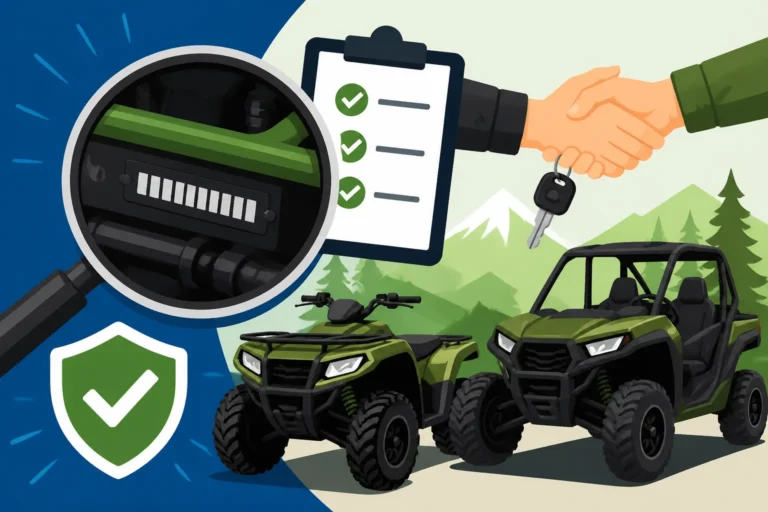
If you're buying a used farm machine, insist on receiving a properly signed-over title from the seller. A bill of sale is also critical, especially if the machine hasn't been recently registered. Always verify the VIN (Vehicle Identification Number) on the machine matches the VIN on the title and bill of sale. Without a clear title, registering the machine in your name can become a much more complicated and time-consuming process. Both [Selling a WATV in Washington] and [Buying a Used ATV in Washington] provide detailed guidance to help you navigate these transactions smoothly, protecting both parties involved.
Disclaimer
This article is for general informational purposes only and does not constitute professional advice. Laws, prices and regulations vary by location and change over time. Consult a qualified professional for guidance on your specific situation.