Washington’s Two-Tab System
Trying to figure out how to properly register your ATV, UTV, or side-by-side in Washington State can feel like decoding a secret language, especially with all the talk about "tabs." It's confusing, frustrating, and honestly, a bit intimidating when you just want to hit the trails or ride safely to a trailhead. This comprehensive guide is here to untangle the complexities of Washington's unique two-tab system, breaking down what each tab means for you and your machine.
Understanding the Foundation: What is Washington's Two-Tab System?
When you first dive into the world of ATVs and UTVs in Washington, you'll quickly encounter the phrase "two-tab system." It’s a core concept that can seem unnecessarily complicated at first glance, but it’s essentially Washington's way of distinguishing between machines used exclusively off-pavement and those that also venture onto certain public roads. It's designed to cater to different types of riding while also ensuring appropriate funding for trail maintenance and road safety.
The Core Idea Behind Two Distinct Tabs
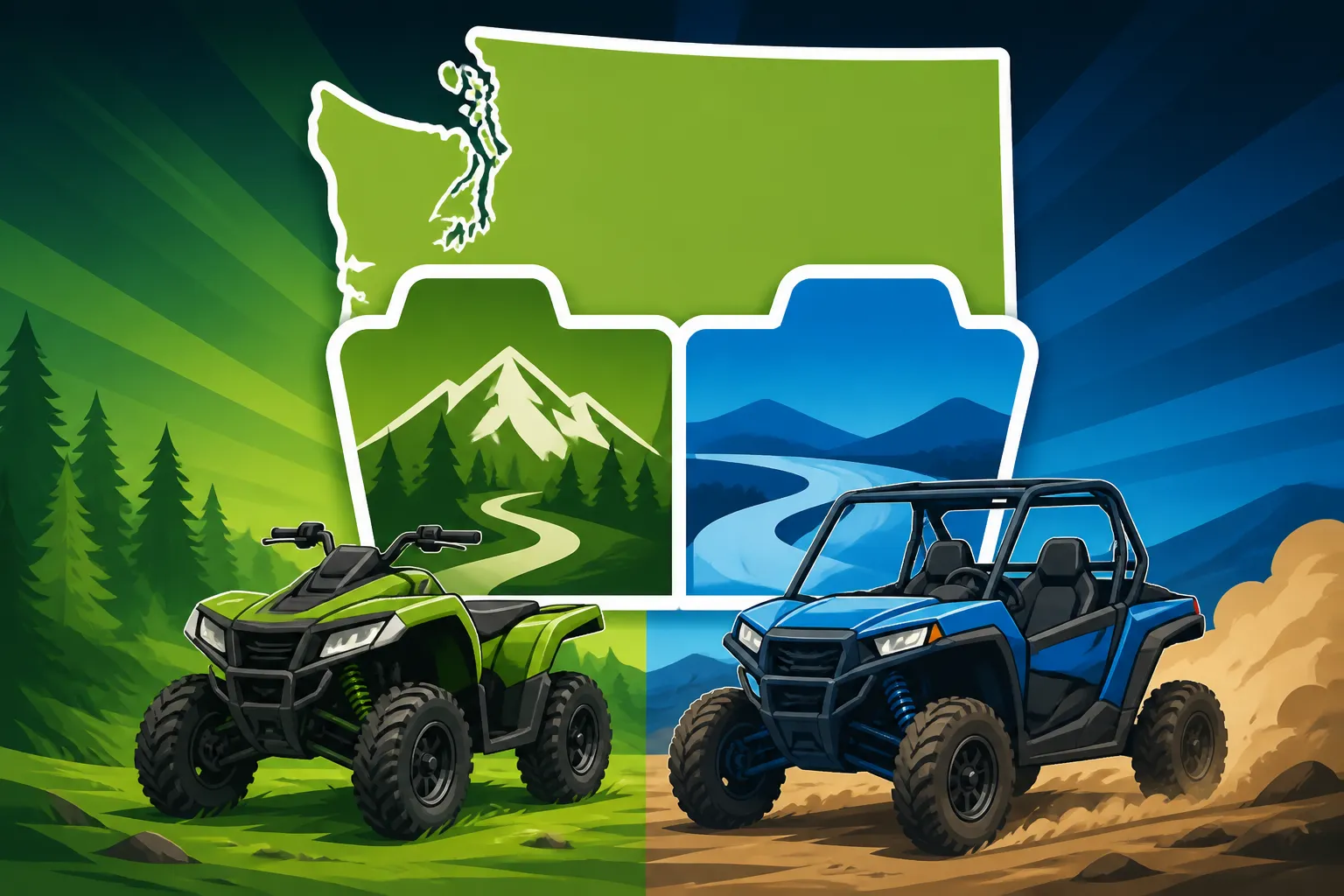
At its heart, Washington's two-tab system is about providing clarity and control over where your off-road vehicle (ORV) can legally operate. Instead of a single, all-encompassing registration that might not fit everyone's needs, the state separates the privileges into two distinct tabs: one for strictly off-road use and another that adds limited on-road capability. This separation allows the state to allocate resources more efficiently and manage the impact of ORVs on different types of infrastructure. It acknowledges that a machine spending all its time on designated dirt trails has different needs and impacts than one that also uses paved county roads to get from point A to point B.
Think of it like this: your off-road tab is your passport to the vast network of trails, forest roads, and designated ORV areas that make Washington such a paradise for riders. It’s the baseline requirement for legal operation on public lands, ensuring that you're contributing to the upkeep of the very places you love to ride. The on-road tab, on the other hand, is like an optional visa that grants you additional, conditional access to certain paved routes. It’s not automatic, and it comes with its own set of rules and inspections, reflecting the different safety considerations and responsibilities that come with sharing the road with other vehicles. This dual approach aims to strike a balance between rider freedom and public safety, funding both trail systems and multiuse road accounts through separate fee structures.
How the System Addresses Diverse Riding Needs
The beauty, and sometimes the headache, of this two-tab system is its attempt to cater to a very diverse population of riders. You have the dedicated trail enthusiast who might only ever want to ride single-track and never touch a paved road. For them, the off-road tab is perfectly sufficient, providing all the necessary permissions without the added cost or hassle of a road inspection. Then there are those who use their machines for hunting, accessing remote cabins, or even just riding from their home to a nearby trailhead. For these riders, the ability to legally use certain county roads can be incredibly convenient, opening up new possibilities for adventure and utility.
Consider a scenario: you've got a fantastic trail system just a few miles down a quiet county road from your campground. Without the on-road tab, you'd be forced to load your machine back onto a trailer, drive the short distance, unload, and then start your ride. With the on-road tab, assuming the road is designated for ORV use and you meet all the equipment requirements, you can simply ride your machine right from your campsite to the trailhead, saving a significant amount of time and effort. This flexibility is a huge draw for many riders, especially those with side-by-sides that are often too large or cumbersome to easily load and unload multiple times a day. However, it's crucial to remember that this on-road access isn't universal; it's specific to certain roads and comes with strict limitations, which we'll explore in more detail. The system tries to be adaptive, but it demands that riders understand its nuances to avoid unexpected fines or unsafe situations.
Delving Into the Off-Road Tab: Your Gateway to Trails
The off-road tab is the fundamental component of Washington's registration system for off-road vehicles. If you own an ATV, UTV, dirt bike, or any other machine designated as a "wheeled all-terrain vehicle" (WATV) in Washington, this is the tab you absolutely need to legally operate it on public lands. It's the baseline, the non-negotiable first step toward enjoying the incredible natural beauty and vast trail networks that Washington offers. This tab primarily funds the Nonhighway Vehicle Account, which directly supports the acquisition, maintenance, and development of ORV trails and recreation areas across the state.
The Purpose and Privileges of the Off-Road Tab
When you acquire an off-road tab, you're essentially buying the right to access designated public lands for recreational riding. This includes popular state forests managed by the Department of Natural Resources (DNR), such as Capitol State Forest or Tahuya State Forest, as well as many federal lands like those managed by the Forest Service. It covers you for riding on specified trails, staging areas, and primitive forest roads that are part of the ORV network. The off-road tab indicates that your machine is properly registered for these environments, contributing to the upkeep of the very trails you're enjoying. It signals that you are a responsible rider, helping to ensure these areas remain open and well-maintained for future generations.
However, and this is a critical point, the off-road tab alone does not grant you permission to ride on paved public roads, city streets, or any highway right-of-way, except for the purpose of directly crossing a road at a designated intersection, if permissible. If you're riding with only the off-road tab and find yourself on a paved surface, even briefly, you could be cited for illegal operation. This distinction is vital because it addresses a common misconception: that if a road is unpaved, it's automatically fair game. This isn't always true; some unpaved roads are still considered part of the public road system and require the on-road tab for legal use. Understanding [Washington's Off-Road Tab Explained] thoroughly can help you avoid these mistakes and ensure your riding stays within legal boundaries, keeping both you and the trails safe.
Obtaining and Maintaining Your Off-Road Tab
Getting your off-road tab is typically the first step after purchasing your machine and getting it titled. The process involves registering your vehicle with the Washington State Department of Licensing (DOL) or one of its authorized subagents. You'll need to provide proof of ownership, usually your certificate of title, and fill out the necessary registration forms. If you're buying a used machine, ensure the title is properly signed over to you. For new machines, the dealer typically handles the initial title and registration paperwork. This initial setup is straightforward for most riders, focusing on confirming ownership and vehicle details.
Once you've received your off-road tab, it's important to understand the annual renewal process. Unlike the metal tag, which lasts for seven years, your off-road tab decals need to be renewed yearly. This means paying a relatively modest fee to keep your registration current. The DOL will usually send you a renewal notice before your registration expires. You can often renew online, by mail, or in person at a subagent office. Ensuring you [Renewing a Washington ORV Registration Yearly] promptly is crucial, as riding with expired tabs can result in fines. Many riders choose to maintain just the off-road tab because their riding style is exclusively trail-based, which makes for a simpler, less expensive annual commitment. For those whose riding is strictly confined to trails and designated off-highway vehicle parks, knowing you only need [A Washington Off-Road Tab for Trails Only] simplifies your planning and budgeting, keeping you focused on the dirt beneath your tires. Make sure you understand all the [Washington WATV Registration Paperwork] requirements before heading to the DOL.
Navigating the On-Road Tab: Opening Up Paved Paths
For many Washington ATV and UTV owners, the thought of being able to legally connect trails by riding on certain public roads is incredibly appealing. That’s where the on-road tab comes into play. It’s an additional endorsement that, when added to your off-road registration, allows your wheeled all-terrain vehicle (WATV) to operate on specifically designated public roads. This isn't a free pass to drive anywhere, mind you, but it significantly expands your riding possibilities, particularly in rural areas or when transitioning between different trail systems.
What the On-Road Tab Entails for Street-Legal Riding
The on-road tab, often referred to as the "road tab," is what moves your WATV beyond the confines of strictly off-road areas. When you have both tabs, your machine can legally use county roads and city streets that have been explicitly opened for WATV use by local ordinance, provided the posted speed limit is 35 mph or less. This is a critical distinction: it's not every road, and it's certainly not state highways (except for specific, limited crossings). This additional tab allows riders to, for example, leave a campground, travel a few miles down an approved county road, and then enter a trailhead without needing to load their machine onto a trailer. This can be a game-changer for accessibility and convenience, transforming a multi-step transport process into a seamless ride.
However, gaining this privilege comes with responsibilities and requirements that go beyond those for pure off-road use. Your machine must meet specific equipment standards to be deemed safe for road use. This typically includes items like a rearview mirror, turn signals, a horn, a headlight, and taillights. You, as the operator, also need a valid driver's license. These requirements are in place to ensure that WATVs can integrate safely, albeit in a limited capacity, with regular vehicular traffic. Understanding these specific equipment mandates is essential for any rider considering the on-road tab. Familiarize yourself with all [Washington WATV Road Requirements] before you even think about applying for this added privilege. Knowing [Washington's On-Road Tab Explained] in detail will save you from potential headaches and citations.
The Additional Steps for On-Road Endorsement
Adding the on-road tab isn't as simple as checking a box on your registration form. It involves a few extra, but crucial, steps. First, you'll need to complete and submit a "Road Use Declaration" form. This form essentially affirms that your machine meets all the necessary safety equipment requirements for limited on-road use. It's a formal declaration of your intent to operate on public roads and your commitment to complying with the associated regulations. Many riders find filling out forms daunting, but resources like LawDepot offer templates for various legal documents, which can be helpful if you need to create supporting documents or simply understand the structure of such declarations. [The Washington Road Use Declaration] is not just a formality; it's a legal statement.
Beyond the paperwork, one of the most significant steps is the mandatory safety inspection. Your machine must undergo an inspection by a qualified professional to confirm it has all the required safety equipment in working order. This includes checking everything from your lights and brakes to your tires and mirrors. There is an associated cost for this inspection, and while the state sets a cap on this fee, it's an expense you'll need to budget for. Knowing [Where to Get a Washington WATV Inspection] and understanding what they'll be looking for is key to passing the first time. The combined fees for both tabs and the inspection mean that [Washington On-Road Tab Cost] will be higher than for just the off-road tab. You're paying for expanded access and the assurances that come with road readiness.
The Washington Metal Tag: Your Machine's Identity
Beyond the colorful decals on your fenders, Washington State requires a more permanent identifier for your wheeled all-terrain vehicle (WATV): the metal tag. This isn't just an ornamental piece; it's a vital component of your machine's registration, serving as a robust and long-lasting physical link to its official records. Understanding its purpose, placement, and replacement protocol is essential for every Washington rider.
What the Metal Tag Is and Why It's Essential
The Washington metal tag is a small, durable aluminum plate issued by the Department of Licensing when you first register your WATV. Unlike the annual registration decals that change color each year, the metal tag itself remains with your machine for an extended period, typically seven years. It features a unique serial number that corresponds directly to your vehicle's registration, acting as a permanent identifier for law enforcement and land managers. Think of it as your machine's social security number or a license plate in miniature, but specifically for WATVs. It’s designed to withstand the harsh conditions of off-road riding – mud, dust, branches, and water – much better than a simple sticker, ensuring that your machine can always be identified.
Its primary purpose is clear identification and traceability. In the event of an accident, theft, or any official inquiry, the metal tag provides an immediate, durable reference point. It helps prevent fraud and ensures that only properly registered machines are operating on public lands. While your annual decals show your current registration status, the metal tag is the enduring proof of your machine's registration in the state. Without it, even with current decals, your registration is incomplete, and you could face issues during a roadside stop or trail check. Familiarizing yourself with [Washington's Metal Tag Explained] ensures you understand this crucial piece of your registration.
Placement, Durability, and Replacement
The placement of the metal tag is standardized to ensure visibility and protect it from damage as much as possible. It must be securely affixed to the front or rear of your machine, in a location that is clearly visible and not obstructed by other accessories or cargo. For many ATVs, this means bolting it to the front bumper or a sturdy rack. On side-by-sides, it might go on the front grille area or rear frame. The key is that it needs to be readily identifiable. Choosing a robust mounting location is crucial, as the tag needs to endure the bumps, vibrations, and occasional impacts that are part of off-road riding. You'll want to ensure it's not in a spot where it can be easily torn off by brush or damaged by mud. Knowing [Where the Metal Tag Mounts] will help you install it correctly and keep it safe.
As mentioned, the metal tag is designed to last a long time – typically seven years. This extended lifespan is one of the reasons it's made of metal rather than a decal. It significantly reduces the frequency with which riders need to deal with replacements, making the overall registration process more convenient in the long run. However, even metal tags aren't indestructible. If your metal tag becomes unreadable due to wear, fading, or damage, or if it's lost, you are required to replace it. The good news is that replacing a damaged or lost metal tag is usually a straightforward and inexpensive process, often involving just a nominal fee at your local licensing office. It's a small cost to ensure your machine remains legally identifiable. Understanding the process for [Washington WATV Metal Tag Replacement] will save you from potential headaches if your tag ever needs to be swapped out.
Combining the Tabs: When One Machine Needs Both Worlds
For many Washington ATV and UTV enthusiasts, the ideal scenario involves the flexibility to enjoy both dedicated off-road trails and the convenience of riding on approved public roads. This is where the true power of Washington’s two-tab system comes into its own, allowing a single machine to legally navigate both environments. It’s about seamless transitions from paved surfaces to dirt trails, maximizing your riding opportunities and making every adventure more accessible.
The Synergy of Off-Road and On-Road Capabilities
Imagine a weekend trip to a popular ORV area like Capitol State Forest. You arrive at your campsite, unload your side-by-side, and want to ride to a specific trailhead a few miles away. This trailhead might require you to travel a short distance on a county road that has been opened for WATV use. Without the on-road tab, you'd be looking at packing up your machine, driving your truck to the trailhead parking, unloading, and then starting your ride. With both the off-road and on-road tabs properly affixed and your machine meeting all the road-legal requirements, you simply hop on your WATV at the campsite and ride directly to the trailhead. This kind of synergy between off-road and on-road capabilities is incredibly valuable, saving time, reducing logistical hassles, and significantly enhancing the overall riding experience.
This combined approach is particularly beneficial for riders who use their machines for a variety of purposes—not just pure recreation. Farmers might use their utility vehicles to cross public roads between fields. Hunters might need to access remote hunting grounds by combining forest roads with short stretches of paved county roads. The ability to ride from your property to a trail access point, or to connect two different trail systems separated by a short section of public road, opens up a world of possibilities. It means more time riding and less time loading and unloading. When you have [Two Tabs on One Machine], it truly expands your horizons, allowing for versatile and adaptable adventures across Washington's diverse landscapes. This blended use reflects a realistic approach to how many people genuinely use their off-road vehicles.
Navigating the Combined Registration Process
When you decide your machine needs both off-road and on-road capabilities, the initial registration process involves essentially going through both sets of requirements concurrently. You’ll first ensure your machine is titled, then proceed with the standard off-road registration. After that, you'll add the on-road endorsement by completing the Road Use Declaration and, crucially, passing the safety inspection that verifies all the necessary road-legal equipment is present and functional. This often means [Paying for Both Tabs in Washington] at the same time, along with the inspection fee. While it involves a bit more paperwork and an initial inspection, it's a one-time setup for that particular year's on-road tab.
The annual renewal for both tabs will typically align, meaning you'll renew both your off-road and on-road tabs on the same cycle. However, the system does offer some flexibility. For example, if you decide one season that you only plan to ride off-road and won't need the on-road privileges, you have the option of [Dropping the Road Tab for a Season] during your renewal. This can save you the cost of the on-road tab for that year. Conversely, if you initially only registered for off-road use and then decide mid-year that you need the road access, you can typically apply for and [Adding the $12 On-Road Tab on Top] at any time, assuming your machine passes the inspection. This adaptability means you can tailor your machine's legal capabilities to your actual riding plans, ensuring you only pay for the privileges you truly need and use.
Common Pitfalls and Misconceptions of the Two-Tab System
Despite its intent to provide clarity, Washington's two-tab system can still be a source of confusion and frustration for riders. Many assume that once they have both tabs, their WATV is fully "street legal" and can go anywhere, which is a significant misconception. Understanding the limitations and nuances of the system is just as important as knowing how to get the tabs in the first place, especially if you want to avoid costly fines or unsafe situations.
The "Street Legal" Illusion and Its Realities
Perhaps the biggest misconception among WATV owners in Washington is the idea that the on-road tab transforms their machine into a truly "street legal" vehicle, like a car or motorcycle. This simply isn't the case. While the on-road tab does grant you access to certain public roads, this access is highly conditional and restricted. You can't just drive your ATV or UTV on any road you please. The law specifically states that WATVs can only operate on roads with a posted speed limit of 35 mph or less, and only if those specific roads have been opted in by county or city ordinance. This means a road might meet the speed limit criterion, but if the local jurisdiction hasn't officially designated it for WATV use, it remains off-limits.
Furthermore, state highways, with very few exceptions for specific crossings, are generally off-limits regardless of your tabs. This is often where riders get into trouble, assuming a quiet stretch of state route is fine, only to discover it’s not. It's critical to remember that [Washington's 35 mph Road Rule] is a ceiling, not a universal permission. You must check with individual counties or cities to see which of their roads are actually open to WATVs. Many counties have specific lists or maps of approved roads, and it’s your responsibility as the rider to know them. Failing to do so can lead to citations, and more importantly, can place you in dangerous situations with faster-moving traffic. It’s a nuanced system designed to balance recreational access with public safety, but it demands diligence from riders. So, the question, [Are ATVs Street Legal in Washington?], has a much more complex answer than a simple yes or no. Knowing [Washington Counties That Allow WATVs on Roads] is crucial before you venture out.
Consequences of Non-Compliance and Misunderstanding
Riding an unregistered WATV, or riding a registered WATV on an unauthorized road, carries real consequences. Law enforcement officers, whether a county sheriff's deputy, a state patrol trooper, or a DNR ranger, are trained to look for proper registration and compliance with road use rules. The fines for operating an unregistered WATV can be substantial, often involving a citation that will make you wish you'd taken the time to get your tabs. It’s not just a slap on the wrist; it’s a financial hit that can really sting. Beyond the financial penalty, you also risk having your machine impounded in more severe or repeated instances, which is an even bigger headache and expense.
But it’s not just about avoiding fines. Understanding and following the rules is about safety—both yours and others'. Riding on roads not designed or approved for WATV use, or without the proper safety equipment, increases the risk of accidents. Beyond legal compliance, it's also your responsibility to carry proof of registration with you whenever you ride. While the metal tag is permanent, your physical registration card and current decals are what an officer will want to see during a stop. Keeping [Carrying the Registration in the Machine] is not just a good idea, it's a legal requirement. Make sure it's in a waterproof bag or container to protect it from the elements. Ignoring these rules isn't just a gamble with your wallet; it's a gamble with your safety and the reputation of all responsible WATV riders. Familiarize yourself with [Washington Fines for an Unregistered WATV] to understand the potential costs of non-compliance.
Streamlining Your Registration Journey
Navigating the registration and titling process for your Washington WATV doesn't have to be a bewildering experience. While the system has its complexities, being prepared with the right documents and understanding the steps involved can make the journey much smoother. A little upfront planning can save you a lot of time and frustration at the Department of Licensing (DOL) or a subagent's office.
Essential Documents and Where to Start
The very first step in registering your WATV, whether it’s a new purchase or a used machine, is ensuring you have a clear and properly executed title. Washington requires all WATVs to be titled before they can be registered. If you're buying a new machine from a dealer, they will typically handle the initial titling and often the registration on your behalf. If you’re purchasing a used WATV from a private seller, you must ensure the seller provides you with a signed-over title. Without a proper title in your name, you won't be able to register the machine. [Do You Need a Title for a WATV in Washington?] Absolutely, yes.
Beyond the title, you'll need proof of identity (such as a driver's license), and if it's a private sale, a bill of sale. A detailed bill of sale protects both the buyer and the seller, clearly stating the purchase price, vehicle information (including VIN), and the date of sale. While Washington provides standard forms, resources like LawDepot can offer robust, legally sound bill of sale templates that ensure all necessary information is included. This is especially helpful if you're dealing with an older machine or a less common transaction. Having a completed and accurate [A Washington Bill of Sale for a WATV] will significantly speed up your visit to the DOL. Ensure you review all the [Washington WATV Title Requirements] before you even walk in the door.
Tips for a Smooth Experience at the Licensing Office
Once you've gathered all your documents, a few simple tips can help ensure your visit to the DOL or a subagent is as efficient as possible. First, if possible, fill out any required forms in advance. Many forms are available for download on the DOL website. Coming in with completed paperwork minimizes potential errors and speeds up the transaction time. While LawDepot is great for custom legal documents, the DOL's own forms are specific and readily available for things like title applications and declarations.
Secondly, consider visiting during off-peak hours, if your schedule allows, to avoid long wait times. Mid-morning or mid-afternoon on a weekday are often less busy than first thing in the morning, lunch hour, or late afternoon. Thirdly, don't be afraid to ask questions. The staff at the DOL and its subagents are there to help you navigate the process. If something is unclear, it’s always better to ask for clarification than to guess and potentially make a mistake that could lead to delays or issues down the road. They are your primary resource for understanding the specifics of [Where to Register a WATV in Washington] and how [The Department of Licensing and Washington ORVs] work together. Being prepared and patient will undoubtedly make your registration journey much more pleasant.
Disclaimer
This article is for general informational purposes only and does not constitute professional advice. Laws, prices and regulations vary by location and change over time. Consult a qualified professional for guidance on your specific situation.